

1. Introduction
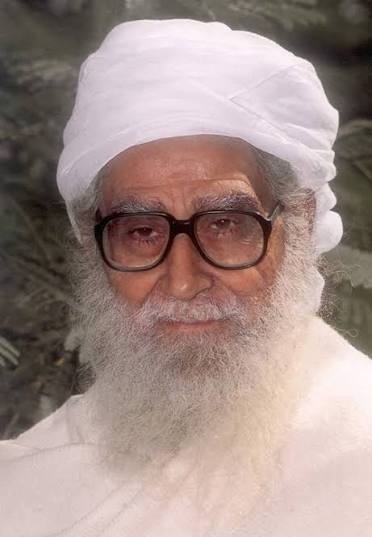
Maulana Wahiduddin Khan (1925–2021) was an internationally acclaimed Islamic scholar, peace activist, and spiritual guide widely celebrated as “Islam’s spiritual ambassador to the world.” Best known for his uncompromising advocacy of peace, interfaith dialogue, and a modern, rational interpretation of Islamic scriptures, he dedicated over 80 years of his life to harmonizing religious teachings with contemporary scientific thought. Founder of the Centre for Peace and Spirituality (CPS), he authored over 200 books and translated the Quran into simple, contemporary English and Urdu (Tazkirul Quran) to make its profound message accessible to modern readers.
2. Quick Facts
- Full Name: Wahiduddin Khan
- Honorific / Title: Maulana
- Date of Birth: January 1, 1925
- Place of Birth: Badharia village, Azamgarh district, Uttar Pradesh, India
- Nationality: Indian
- Occupation / Profession: Islamic Scholar, Peace Activist, Author, and Columnist
- Field of Achievement: Islamic Theology, Inter-faith Relations, Peace-building, and Quranic Exegesis
- Years Active: 1940s–2021
3. Award Information (Focus: Padma Vibhushan)
- Award Name: Padma Vibhushan
- Award Category: Civil Honours (Second Highest Civilian Award in India)
- Award Year: January 2021 (Awarded posthumously)
- Presented By: The President of India (at Rashtrapati Bhavan, New Delhi)
- Citation / Official Reason: Recognized for his exceptional and distinguished service and lifelong contributions to spiritualism, world peace, and social harmony.
- Previous Recipients: Eminent national icons, statesmen, artists, and scientists across India.
- Next Recipients: Succeeding batches of national laureates in subsequent years.
4. Why They Received the Award
Maulana Wahiduddin Khan was honored with the Padma Vibhushan (and earlier the Padma Bhushan in 2000) for his tireless global crusade promoting peace, non-violence, and communal harmony. Through his writing, public lectures, and peace foundations, he countered radical ideologies by anchoring Islamic teachings firmly in principles of compassion, forgiveness, and coexistence. His intellectual framework provided millions with a blueprint for navigating modern pluralistic societies without compromising spiritual integrity.
5. Early Life
Born in Azamgarh, Uttar Pradesh, in 1925, Wahiduddin lost his father, Fariduddin Khan, at an early age. Raised by his mother and his uncle—a Sufi practitioner—he grew up amidst an environment steeped in spiritual reflection and traditional Islamic learning. In his youth, he was deeply influenced by India’s freedom struggle and the Gandhian ideals of nationalism, non-violence, and communal unity, which permanently shaped his lifelong pacifist worldview.
6. Education
- Traditional Islamic Education: Graduated from the historic Madrasatul Islah in Sarai Mir, Azamgarh, where he mastered classical Arabic, Islamic jurisprudence, and Quranic commentary.
- Modern Self-Education: Recognizing a widening gap between traditional religious thought and modern science, he undertook extensive independent study of modern science, philosophy, history, and English literature to bridge the two worlds.
7. Career Journey
- Early Journalism & Activism: Initially associated with the Jamaat-e-Islami in his early career, he later parted ways due to ideological differences regarding political interpretations of Islam, choosing instead a strictly spiritual and peaceful path.
- Founding the Islamic Centre (1970): Established the Islamic Centre in New Delhi to foster open dialogue on religious and social issues.
- Editor of Al-Risala: Launched the Urdu monthly magazine Al-Risala in 1976 (followed by English and Hindi editions) to propagate a peaceful, spiritual message of Islam.
- Centre for Peace and Spirituality (2001): Founded the CPS in New Delhi to promote interfaith harmony and spiritual awareness on a global scale.
8. Major Achievements
- Literary Prolificacy: Authored over 200 books addressing spirituality, science, and peace, including notable titles like The Prophet of Peace, Islam Rediscovered, and God Arises.
- Translation of the Quran: Translated the Quran into clear, contemporary English and Urdu (Tazkirul Quran), emphasizing its spiritual and peaceful dimensions rather than political ones.
- Global Recognition: Listed consistently among “The 500 Most Influential Muslims” globally, earning global praise for framing Islam as a religion of love, nature, and inner peace.
9. Contribution to the Nation
Maulana Wahiduddin Khan played a crucial stabilizing role in post-independent India by constantly counseling patience, dialogue, and legal recourse during communal tensions. He taught Indian Muslims to look past grievances, focus on self-development, education, and positive contributions to society, thereby strengthening secularism, national integration, and communal peace across the country.
10. Other Awards and Honours
- Padma Bhushan (2000): India’s third-highest civilian honor, conferred by the Government of India.
- Demiurgus Peace International Award: Presented under the patronage of former Soviet President Mikhail Gorbachev.
- National Citizens’ Award: Presented by Mother Teresa.
- Rajiv Gandhi National Sadbhavana Award (2009): For promoting communal harmony and national integration.
- Sayyidina Imam Al Hassan Ibn Ali Peace Award (2015): Received in Abu Dhabi for peace efforts in Muslim societies.
- Lifetime Achievement Award: Conferred by the Islamic Society of North America (ISNA) in Chicago (2015).
11. Legacy and Influence
Maulana Wahiduddin Khan’s legacy is defined by his de-politicization of Islam and his emphasis on spirituality, pluralism, and non-violence. Through the Centre for Peace and Spirituality, his teachings continue to guide seekers, students, and scholars worldwide. He proved that religious devotion and modern scientific temper can coexist harmoniously, leaving behind a timeless roadmap for human coexistence.
12. Interesting Facts
- Lifelong Gandhian: He maintained a deep ideological alignment with Mahatma Gandhi’s philosophy of non-violent resistance, applying it systematically to theological and social contexts.
- Global Curriculum: His books have been translated into 16 languages and integrated into university curricula across multiple countries.
13. Quotes
“Peace is the only religion for both man and the universe. True spirituality begins when you find God through reflection on His creation, not through confrontation.” — Maulana Wahiduddin Khan
14. Timeline
- 1925: Born on January 1 in Badharia, Azamgarh, Uttar Pradesh.
- 1970: Established the Islamic Centre in New Delhi.
- 1976: Launched the socio-spiritual magazine Al-Risala.
- 2000: Conferred the Padma Bhushan by the Government of India.
- 2001: Founded the Centre for Peace and Spirituality (CPS).
- 2010: Awarded the Rajiv Gandhi National Sadbhavana Award.
- 2015: Received the Sayyidina Imam Al Hassan Ibn Ali Peace Award in Abu Dhabi.
- 2021: Awarded the Padma Vibhushan (January); passed away due to COVID-19 complications in New Delhi at age 96 (April 21).
15. References
- Wikipedia contributors. “Wahiduddin Khan.” Wikipedia, The Free Encyclopedia.
- Centre for Peace and Spirituality (CPS Global). “Founder: Maulana Wahiduddin Khan – Biography & Vision.”
- Official Website of Maulana Wahiduddin Khan. “Awards and Recognitions.”
- Walisongo State Islamic University Academic Repository. “Chapter III: Wahiduddin Khan’s Biography and Interpretation of Jihad.”
16. Related Personalities
- Mahatma Gandhi (Philosophical influence regarding non-violence)
- Mikhail Gorbachev (Former Soviet President and international peace peer)
- Mother Teresa (Fellow recipient of national civilian recognition)
17. Frequently Asked Questions (FAQ)
- Q: What was Maulana Wahiduddin Khan’s primary message?A: His primary message was that peace is the foundation of all success, framing Islam as a peaceful, God-oriented, and spiritually grounded way of life rather than a political ideology.
- Q: What are his most famous literary works?A: His notable works include Tazkirul Quran (his commentary and translation of the Quran), The Prophet of Peace, and Islam Rediscovered.
- Q: When did he receive India’s highest civilian honors?A: He received the Padma Bhushan in 2000 and was posthumously awarded the Padma Vibhushan in January 2021.
About the Author




