1. Introduction
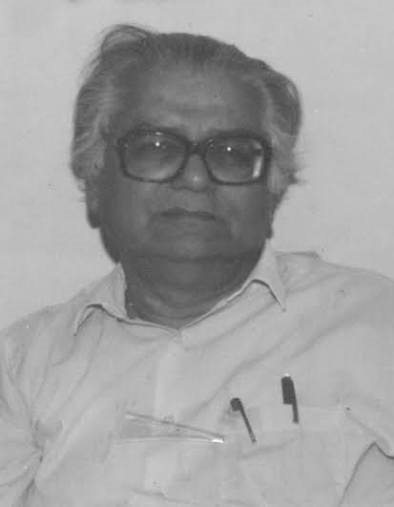
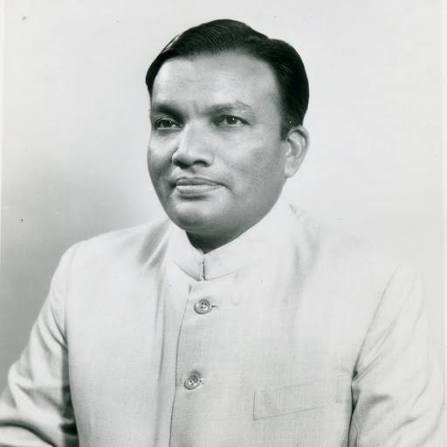
Dr. Ashesh Prosad Mitra (A.P. Mitra) was one of India’s most distinguished radio and space physicists, environmental scientists, and institutional leaders. Internationally renowned for his pioneering work on the ionosphere, the Earth’s near-space environment, and global climate change, he played a foundational role in shaping modern atmospheric sciences in India and globally. He served as the Director-General of the Council of Scientific and Industrial Research (CSIR) and was a Fellow of the Royal Society (FRS).
2. Quick Facts
- Full Name: Ashesh Prosad Mitra
- Native Name: অশেষ প্রসাদ মিত্র
- Date of Birth: 21 February 1927
- Place of Birth: Calcutta (now Kolkata), West Bengal, British India
- Nationality: Indian
- Occupation / Profession: Physicist, Climatologist, Research Scientist, Science Administrator
- Field of Achievement: Radio Physics, Ionospheric Research, Space Science, and Environmental Physics
- Years Active: 1948 – 2007
3. Award Information (Focus: Padma Bhushan, 1989)
- Award Name: Padma Bhushan
- Award Category: India’s Third-Highest Civilian Award
- Award Year: 1989
- Presented By: The President of India
- Date of Ceremony: March/April 1989 (Rashtrapati Bhavan, New Delhi)
- Citation / Official Reason: In recognition of his exceptional and distinguished contributions to science, technology, and public leadership, specifically for revolutionizing radio communication studies and environmental physics in India.
- Previous Recipients (Contextual): Noted scientists, academicians, and public figures from preceding years.
- Next Recipients (Contextual): Distinguished achievers of the subsequent civilian honors cycle.
4. Why He Received the Award
Dr. Mitra was conferred the Padma Bhushan for his monumental scientific breakthroughs and visionary leadership in building India’s technological capacity. His pioneering techniques using cosmic radio noise to study the upper atmosphere, his development of critical radio flare monitoring systems, and his foundational leadership at the National Physical Laboratory (NPL) and the Council of Scientific and Industrial Research (CSIR) positioned India as a prominent global player in space and atmospheric research.
5. Early Life
Born in Calcutta in 1927 as the eighth child to Ambika Charan Mitra (a school mathematics teacher) and Subama Prova, young Ashesh grew up in an intellectually disciplined environment. Affectionately nicknamed “Gopal,” he imbibed core values of honesty, modesty, and academic rigor from his father. Growing up in pre-independence Bengal, his early exposure to structured education sparked a lifelong fascination with physical geography, mathematics, and natural sciences.
6. Education
- Schooling: Town School, Calcutta (1932–1942), graduating with record marks and a Calcutta University gold medal.
- Intermediate (I.Sc.): Bangabasi College, Calcutta (completed in 1944 with multiple distinctions and gold medals).
- Undergraduate: B.Sc. in Physics (First Class) from the renowned Presidency College, Calcutta (1946).
- Postgraduate: M.Sc. in Pure Physics from Calcutta University (1948), topping his year and winning the Prem Chand Roy Chand Studentship.
- Doctorate: D.Phil. in Physics under the tutelage of Prof. S.K. Mitra (doyen of Indian ionospheric science) at Rajabazar Science College, Calcutta.
7. Career Journey
- Early Research & Faculty: Trained under legendary figures like Sisir Kumar Mitra, Meghnad Saha, and Satyendra Nath Bose.
- National Physical Laboratory (NPL): Served as Scientist and later as Director of NPL, New Delhi (1982–1986), establishing extensive radio flare systems and India’s first SODAR (Sonic Detection and Ranging) system for environmental monitoring.
- Director-General, CSIR (1986–1991): Headed India’s apex scientific research body, steering industrial and scientific research priorities under national leadership (closely supported by Prime Minister Rajiv Gandhi).
- International Leadership: Served as President of the International Union of Radio Science (URSI) (1984–1987) and later elected as its Lifetime Honorary President.
8. Major Achievements
- Elected Fellow of the Royal Society (FRS): Inducted as a Fellow of the prestigious Royal Society of London in 1988 for his foundational contributions to atmospheric physics.
- Shanti Swarup Bhatnagar Prize (1968): Awarded India’s highest science award in the Physical Sciences category for his stellar work on ionospheric structure and cosmic radio noise.
- Global Climate Pioneer: Early visionary who steered India’s active participation in the International Geosphere-Biosphere Programme (IGBP), warning early on about global warming, ozone depletion, and environmental changes.
9. Contribution to the Nation
Dr. Mitra built the indigenous scientific framework that allowed India to understand and protect its near-space and communication networks. His research directly assisted the Indian Air Force and telecommunication grids by mapping ionospheric disruptions caused by solar flares. Furthermore, as the head of CSIR, he modernized national laboratories, fostered a culture of collaborative industrial research, and laid the cornerstone for India’s modern climate change tracking policies.
10. Other Awards and Honours
- Fellow, Indian National Science Academy (FNA, 1961)
- Shanti Swarup Bhatnagar Prize (1968)
- Fellow, Indian Academy of Sciences (FASc, 1974)
- Jawaharlal Nehru Fellowship (1978–1980)
- Padma Bhushan (1989)
- Fellow of the Royal Society, London (FRS, 1988)
- Shanti Swarup Bhatnagar Fellowship (1991–1996)
- Honorary President, URSI (2002)
- D.Sc. (Honoris Causa) from multiple universities including Calcutta, Jadavpur, and Burdwan.
11. Legacy and Influence
Dr. A.P. Mitra’s legacy lives on in every facet of modern Indian atmospheric and radio physics. He bridged classical Indian scientific excellence (having studied under stalwarts like S.N. Bose and M.N. Saha) with cutting-edge international space research. Even in his late years, he served as an Honorary Scientist of Eminence at NPL, maintaining an insatiable passion for research until his passing on September 3, 2007.
12. Interesting Facts
- Unwavering Dedication to Work: Hours before passing away due to kidney failure at AIIMS, New Delhi, at age 81, he asked his doctor if he could be discharged in time to attend an official environmental conference at the Ministry of Environment and Forests.
- Creative Soul: Aside from his dense mathematical and physical formulas, Dr. Mitra was fond of composing sonnets in his youth and possessed an extensive collection of classical music recordings.
- Academic Pedigree: He was taught by three independent Fellows of the Royal Society (S.K. Mitra, Meghnad Saha, and S.N. Bose) during his master’s studies—a rare and legendary academic lineage.
13. Quotes
“Dr. Mitra is one of the acknowledged authorities on ionosphere and on some aspects of space research. His pioneering work on the use of cosmic radio noise for upper atmosphere studies resulted in a whole series of scientific discoveries…” — Shanti Swarup Bhatnagar Prize Citation
14. Timeline
- 1927: Born on February 21 in Calcutta, British India.
- 1948: Completes M.Sc. in Pure Physics from Calcutta University.
- 1968: Awarded the Shanti Swarup Bhatnagar Prize.
- 1982–1986: Serves as Director of the National Physical Laboratory (NPL), New Delhi.
- 1984–1987: Serves as President of the International Union of Radio Science (URSI).
- 1986–1991: Serves as Director-General of the Council of Scientific and Industrial Research (CSIR).
- 1988: Elected a Fellow of the Royal Society (FRS), London.
- 1989: Conferred the Padma Bhushan by the Government of India.
- 2007: Passes away on September 3 in New Delhi.
15. References
- Biographical Memoirs of Fellows of the Royal Society – Ashesh Prosad Mitra (2024).
- Indian National Science Academy (INSA) Biographical Archives.
- Government of India – Padma Awards Directory.
- Wikipedia – Ashesh Prosad Mitra.
16. Related Personalities
- Sisir Kumar Mitra (Doyen of Indian ionospheric physics and his doctoral mentor)
- Meghnad Saha (Legendary astrophysicist and teacher)
- Satyendra Nath Bose (Iconic physicist, co-creator of Bose-Einstein statistics, and teacher)
- Rajiv Gandhi (Former Prime Minister who worked closely with him on scientific institutional growth)
17. Frequently Asked Questions (FAQ)
Q1: Who was Ashesh Prosad Mitra?
A: Dr. A.P. Mitra was a world-renowned Indian radio and space physicist, climatologist, and the Director-General of CSIR who made pioneering contributions to ionospheric science and global climate research.
Q2: What are his major international honors?
A: He was elected a Fellow of the Royal Society (FRS) in London (1988) and served as the President of the International Union of Radio Science (URSI).
Q3: When did he receive the Padma Bhushan?
A: He was awarded the Padma Bhushan by the Government of India in 1989.
About the Author