1. Introduction
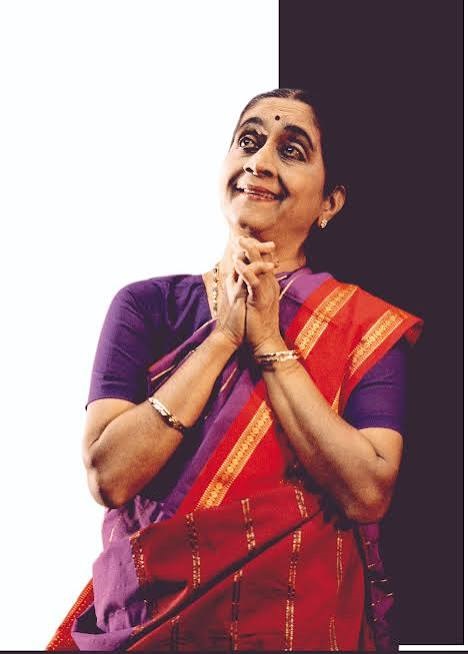
In the rich tapestry of Indian classical dance, few names evoke as much reverence as Kalanidhi Narayanan. Often hailed as the absolute icon of abhinaya (the art of expression and mime), she transformed how emotional nuances are communicated on stage. Though her early performance career was cut short in her youth, she staged a triumphant comeback in her forties, going on to shape generations of world-class Bharatanatyam dancers and earning status as a global treasure trove of classical instruction.
2. Quick Facts
- Full Name: Kalanidhi Narayanan
- Native Name:கலாநிதி நாராயணன் (Tamil)
- Date of Birth: December 7, 1928
- Place of Birth: Chennai (formerly Madras), Tamil Nadu, India
- Nationality: Indian
- Occupation/Profession: Classical Dancer, Choreographer, and Guru
- Field of Achievement: Indian Classical Dance (Bharatanatyam / Abhinaya)
- Years Active: 1935–1944 (First Phase); 1973–2016 (Second Phase / Teaching Career)
3. Award Information (Focus: Padma Bhushan)
- Award Name: Padma Bhushan
- Award Category: India’s Third-Highest Civilian Honor
- Award Year: 1985
- Presented By: President of India (Giani Zail Singh)
- Date of Ceremony: 1985 (Annual Rashtrapati Bhavan Investiture)
- Citation/Official Reason: For distinguished service and exceptional contribution to the field of art and classical Bharatanatyam dance, particularly pioneering the revival of padams and javalis.
- Previous Recipients (Notable context): Eminent artists, scientists, and public servants recognized for supreme national service.
- Next Recipients: Succeeding batches of cultural icons and artists honored in subsequent years.
4. Why Did She Receive the Award?
Kalanidhi Narayanan received the Padma Bhushan in recognition of her lifelong dedication to saving, refining, and propagating the highly intricate, delicate art of abhinaya. At a time when Bharatanatyam was shifting heavily toward complex rhythmic patterns (nritta), she kept alive the soulful storytelling of padams and javalis. Her capacity to manifest deep philosophical, romantic, and spiritual dimensions through subtle facial expressions and eye movements set a gold standard globally.
5. Early Life
Born as Kalanidhi Ganapathi into a cultured Brahmin family to parents Sumitra and S.V. Ganapathy, she showed an affinity for the arts early on. Her mother, deeply inspired by the cultural renaissance of the 1930s, was eager for her daughter to learn dance. Breaking social norms of the era, she became one of the earliest non-devadasi girls to systematically learn and perform traditional temple dance styles on public platforms.
6. Education
Kalanidhi received rigorous training under legendary masters of her time:
- Abhinaya: Taught by Mylapore Gowri Ammal (the last of the temple devadasis of the Kapaleeshwara Temple) and Chinnayya Naidu.
- Nritta (Pure Dance): Trained under the veteran guru Kannappa Pillai of Kanchipuram.
- Music & Repertoire: Studied Carnatic vocal music under Manakkal Sivarajan and mastered specialized padams and javalis under Kamakshi Ammal (daughter of the legendary Veena Dhanammal).
- She later formally studied dance theory under Dr. Padma Subrahmanyam to back her practical craft with academic depth.
7. Career Journey
- First Phase (1930s–1940s): She gave her arangetram (debut) at age 12 at the Senate House for the Madras Music Academy. She performed actively until age 16, when her mother passed away and she married into a conservative family, bringing her stage career to an abrupt halt.
- The 30-Year Hiatus: For three decades, she focused entirely on her family life.
- Second Phase (1973–Onward): Encouraged by art connoisseur Y.G. Doraiswamy and her grown sons, she stepped back into the dance world to teach young rising star Alarmel Valli. This sparked a legendary second career. She established Abhinaya Sudha in Chennai and became the most sought-after mentor for interpretation and expression.
8. Major Achievements
- Revived interest in forgotten musical-dance compositions like Padams, Javalis, and Ashtapadis.
- Mentored generations of internationally acclaimed dancers, including Alarmel Valli, Malavika Sarukkai, Priyadarshini Govind, Bragha Bessell, and Ramya Harishankar.
- Released globally recognized instructional CDs and DVDs detailing the subtle nuances of navarasa (nine emotions).
- Spread Indian classical art forms globally through workshops across North America and Europe.
9. Contribution to the Nation
Kalanidhi Narayanan single-handedly rescued a vital component of India’s intangible cultural heritage. By preserving the sophisticated emotional vocabulary of the devadasi traditions and blending it with a refined, interiorized aesthetic, she elevated Indian classical dance on the global stage. Her efforts ensured that the poetic depth of South Indian regional literature (Telugu, Tamil, and Sanskrit compositions) remained a living, breathing tradition rather than a museum artifact.
10. Other Awards and Honours
- Kalaimamani Award (Tamil Nadu Government, 1990)
- Sangeet Natak Akademi Award for Bharatanatyam (1990)
- Nritya Choodamani (Sri Krishna Gana Sabha, 1990)
- Kalidas Samman (Madhya Pradesh Government, 1998)
- Sangeet Natak Akademi Tagore Ratna (2011)
11. Legacy and Influence
Fondly remembered as “Kalanidhi Mami” by her students worldwide, she created a paradigm shift: she taught her disciples not just how to mimic expressions, but how to look inward, understand a character’s psychology, and generate honest, spontaneous emotional responses. Her legacy lives on through hundreds of her disciples who continue to run major dance institutions across the globe.
12. Interesting Facts
- She made her historic stage debut at age 12—three months prior to another legendary peer, Rukmini Devi Arundale, though she rarely publicized the milestone.
- When she returned to dance in 1973 after 30 years away, she had to rebuild her mental repository of items entirely from scratch, relying on old notebooks that survived from her teenage years.
- She was affectionately referred to as a “living dictionary of expression” by international dance scholars.
13. Quotes
“Abhinaya is not just about moving your eyes or face; it is about bringing an inner realization to the surface so that the audience feels what the character feels.” — Kalanidhi Narayanan
14. Timeline
- 1928: Born on December 7 in Madras (Chennai).
- 1940: Gives her formal arangetram at the Senate House.
- 1944: Steps away from active performance following her marriage and mother’s passing.
- 1973: Returns to the dance ecosystem; begins teaching Alarmel Valli and founds her school.
- 1985: Honored with the Padma Bhushan by the Government of India.
- 1990: Receives the prestigious Sangeet Natak Akademi Award.
- 2016: Passes away on February 21 at the age of 87.
15. References
- Wikipedia: Kalanidhi Narayanan Profile
- The Dance India: “Kalanidhi: A Treasure Trove of Abhinaya”
- Noopura Brahmari: Historical Archives on Bharatanatyam Exponents
16. Related Personalities
- Balasaraswati (Legendary Bharatanatyam exponent)
- Alarmel Valli (Prominent disciple and leading exponent)
- Rukmini Devi Arundale (Founder of Kalakshetra)
- Dr. Padma Subrahmanyam (Renowned dance scholar and theoretician)
17. Frequently Asked Questions (FAQ)
Q1: What is Kalanidhi Narayanan most famous for?
A: She is globally famous as the ultimate authority on Abhinaya (expression and dramatic storytelling) in Bharatanatyam, especially for reviving traditional padams and javalis.
Q2: Why did she stop dancing for 30 years?
A: After her mother passed away and she was married into a conservative family in her teens, she chose to step away from the stage entirely to focus on homemaking and raising her family.
Q3: Who were some of her notable students?
A: Her prominent disciples include Alarmel Valli, Malavika Sarukkai, Priyadarshini Govind, Bragha Bessell, A. Lakshmanaswamy, and Ramya Harishankar, among many others.
About the Author