1. Introduction
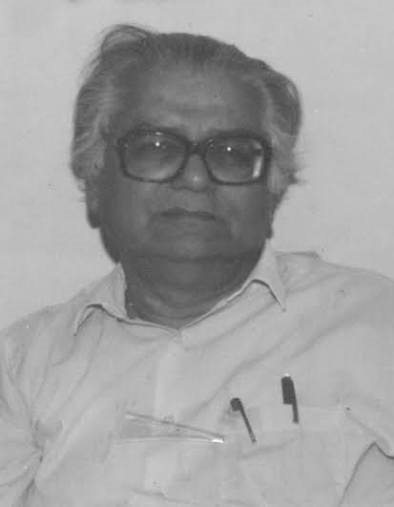
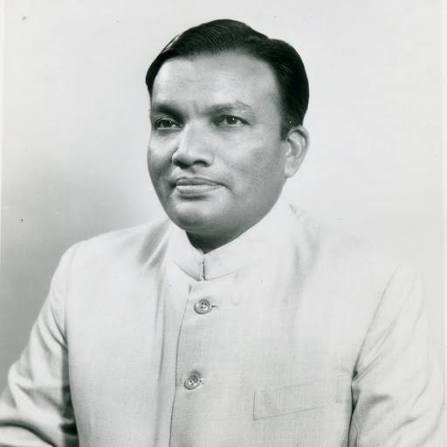
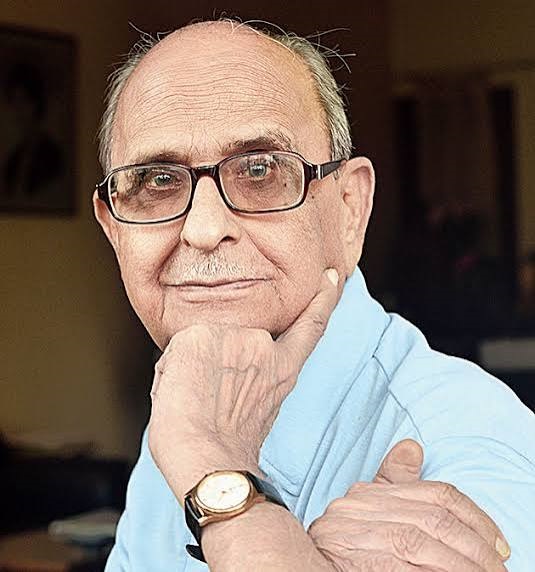
Prof. Eknath Vasant Chitnis (25 July 1925 – 22 October 2025) was an Indian space scientist, physicist, science educator and institution builder who played an important role in the early development of India’s space programme.
A close associate of Dr. Vikram Sarabhai, Chitnis was among the scientists who helped establish the institutional and scientific foundations of India’s space programme. He was associated with the Indian National Committee for Space Research (INCOSPAR), the organisation that preceded the Indian Space Research Organisation (ISRO).
One of his best-known contributions was his role in the selection of Thumba in Kerala as the site for India’s first rocket-launching station. He also worked on the use of space technology for social development, including satellite-based education and communications.
Chitnis later served as Director of ISRO’s Space Applications Centre (SAC), Ahmedabad, from 1981 to 1985. He was also associated with the development of satellite communication and remote-sensing applications in India.
The Government of India awarded him the Padma Bhushan in 1985. The official notification lists him as “Prof. Eknath Vasant Chitnis, Director, SAC, Ahmedabad.”
He died in Pune on 22 October 2025 at the age of 100.
2. Quick Facts About Eknath Vasant Chitnis
| Detail | Information |
|---|---|
| Full Name | Eknath Vasant Chitnis |
| Native Name | एकनाथ वसंत चिटणीस |
| Popular Name | Prof. E. V. Chitnis |
| Date of Birth | 25 July 1925 |
| Place of Birth | Kolhapur, Maharashtra, British India |
| Nationality | Indian |
| Profession | Space scientist, physicist, educator and science administrator |
| Field of Achievement | Space science, cosmic-ray research, satellite communication and space applications |
| Major Organisations | Physical Research Laboratory, INCOSPAR, ISRO and Space Applications Centre |
| Years Active | Mainly from the 1950s to the 1980s, with continued academic work afterward |
| Major National Honour | Padma Bhushan, 1985 |
| Date of Death | 22 October 2025 |
| Place of Death | Pune, Maharashtra |
| Age at Death | 100 |
His birth date and birthplace are documented in biographical sources, while his professional association with SAC and the Padma Bhushan are confirmed by government and institutional records.
3. Award Information
Padma Bhushan
Eknath Vasant Chitnis received the Padma Bhushan in 1985, one of India’s highest civilian honours.
The original Government of India notification dated 26 January 1985 lists:
“Prof. Eknath Vasant Chitnis, Director, SAC, Ahmedabad.”
This is the most authoritative source for the award.
| Award Detail | Information |
|---|---|
| Award Name | Padma Bhushan |
| Award Category | Padma Bhushan |
| Award Year | 1985 |
| Field | Science & Engineering |
| Official Notification Description | Director, SAC, Ahmedabad |
| Presented By | President of India |
| President in 1985 | Giani Zail Singh |
| Notification Date | 26 January 1985 |
| Ceremony Date | Exact ceremony date is not established in the sources consulted |
| Recognition | Contribution to science and India’s space programme |
The official notification itself does not provide a lengthy citation; it identifies Chitnis by his position as Director of SAC. Modern Padma-award lists classify him under Science & Engineering.
Previous Recipients
The Padma Bhushan is awarded to multiple recipients every year, so there is no single predecessor to Chitnis. The 1984 Padma Bhushan recipients were the previous year’s awardees.
Next Recipients
The 1986 Padma Bhushan recipients followed the 1985 awardees. There is no individual successor because the Padma Bhushan is an annual honour awarded to multiple people.
4. Why Did Eknath Vasant Chitnis Receive the Award?
Eknath Vasant Chitnis received the Padma Bhushan in 1985 in recognition of his contribution to science and India’s developing space programme.
His career covered several important areas:
- Early space-science research
- Cosmic-ray studies
- Development of scientific instruments
- Establishment of India’s early space institutions
- Selection of Thumba for rocket launches
- Satellite communication
- Space applications for education and rural development
- Remote sensing
- Development of India’s satellite programmes
- Training and mentoring young scientists
The official award notification identifies him as the Director of the Space Applications Centre, Ahmedabad, while later accounts describe his wider contribution to India’s space and communication programmes.
5. Early Life
Eknath Vasant Chitnis was born on 25 July 1925 in Kolhapur, Maharashtra.
He lost both his parents when he was young and was raised by his grandmother. His childhood and education took place largely in Maharashtra.
He developed a strong interest in science and later pursued physics at university.
His early life coincided with a period when India was developing its scientific and educational institutions. After independence, this generation of scientists became important in establishing India’s capabilities in areas such as nuclear science, space research, electronics and communications.
6. Education
Chitnis received his schooling and higher education in Pune.
He completed a Master’s degree in Physics from the University of Pune with first-class honours.
After completing his studies, he briefly worked with All India Radio after clearing the UPSC examination. However, he chose scientific research instead of pursuing a conventional government career.
His scientific career began at the Physical Research Laboratory (PRL) in Ahmedabad, founded by Vikram Sarabhai.
At PRL, he worked on cosmic-ray research and scientific instrumentation.
During his research career, he also collaborated with scientists associated with the Massachusetts Institute of Technology, including the group of physicist Bruno Rossi.
7. Career Journey
Beginning at Physical Research Laboratory
Chitnis joined the Physical Research Laboratory in Ahmedabad, where he became involved in research into cosmic rays and space physics.
One of his important technical contributions was the development of Cerenkov counters, instruments used in cosmic-ray research. Between 1956 and 1958, he worked on an extensive air-shower experiment at Kodaikanal in collaboration with the research group of Bruno Rossi at MIT.
Association with Vikram Sarabhai
His work at PRL brought him into close contact with Vikram Sarabhai, who was developing India’s scientific capabilities in space research.
Chitnis became part of the group that helped establish India’s early space programme.
INCOSPAR
Chitnis was associated with the Indian National Committee for Space Research (INCOSPAR), the precursor to ISRO.
He served as its Member Secretary and contributed to the organisation’s early development.
Selection of Thumba
One of Chitnis’s most important assignments was to search for a suitable site for India’s first rocket-launching facility.
His field studies helped identify Thumba, near Thiruvananthapuram in Kerala, as an appropriate location because of its proximity to the magnetic equator.
Thumba subsequently became the site of the Thumba Equatorial Rocket Launching Station (TERLS) and played a foundational role in India’s early space-launch programme.
Space Applications Centre
From 1981 to 1985, Chitnis served as the second Director of ISRO’s Space Applications Centre (SAC) in Ahmedabad.
His work at SAC focused on practical applications of space technology, including communication, education and remote sensing.
Later Academic Work
After retiring from ISRO, Chitnis moved to Pune and continued his involvement in education and science communication.
He became associated with Pune University, where he taught and worked on communication and educational applications of technology for many years.
8. Major Achievements
1. Helped establish India’s early space programme
Chitnis belonged to the first generation of scientists who helped build India’s space research infrastructure.
He worked closely with Vikram Sarabhai and was associated with INCOSPAR, the precursor to ISRO.
2. Helped identify Thumba as a launch site
His location survey contributed to the selection of Thumba in Kerala for India’s early rocket launches.
The location’s proximity to the magnetic equator made it particularly useful for certain atmospheric and space research activities.
3. Cosmic-ray research
Before becoming involved primarily with India’s space programme, Chitnis conducted research in cosmic rays and space physics.
His work included developing Cerenkov counters and participating in extensive air-shower experiments.
4. Satellite communication
Chitnis contributed to India’s efforts to use satellites for communication and development.
One important project associated with his career was the Satellite Instructional Television Experiment (SITE).
5. Satellite Instructional Television Experiment
SITE was conducted in 1975–76 using NASA’s ATS-6 satellite.
Educational programmes were transmitted to approximately 2,400 villages across six states. The experiment demonstrated the potential of satellite technology for education and rural development.
6. Contribution to INSAT and remote sensing
His work on satellite communications and applications contributed to the development of India’s wider satellite-technology capabilities, including the INSAT programme and remote-sensing applications.
7. Mentoring A. P. J. Abdul Kalam
Chitnis is also remembered for recognising the potential of a young A. P. J. Abdul Kalam.
Accounts of his career state that he reviewed Kalam’s résumé and recommended him for an international training programme associated with NASA.
This episode became one of the notable connections between Chitnis’s career and the later career of Kalam.
8. Padma Bhushan
The Government of India awarded Chitnis the Padma Bhushan in 1985.
9. Contribution to the Nation
Eknath Vasant Chitnis contributed to India primarily through science, space technology, communications and education.
His work demonstrated that space technology could be used not only for scientific research but also for solving practical social problems.
Education
The SITE experiment demonstrated how satellite technology could bring educational programmes to remote villages.
Rural communication
His work contributed to the development of satellite communication systems capable of reaching areas where conventional communication infrastructure was limited.
Remote sensing
He contributed to the development of space-based applications for observing and understanding India’s natural and human environment.
Institution building
His work with INCOSPAR and later ISRO contributed to the development of India’s early space institutions.
Scientific education
After his retirement, he continued teaching and worked on educational multimedia and science communication in Pune.
10. Other Awards and Honours
In addition to the Padma Bhushan, Chitnis received several awards and honours during his long career.
| Year | Award / Honour |
|---|---|
| 1983 | L. N. Gupta Award |
| 1985 | Padma Bhushan |
| 1997 | Aryabhata Award, Astronomical Society of India |
| Various years | Phi Foundation Award |
| Various years | University Grants Commission recognition for research connecting science and society |
| Various years | Special recognition/medal associated with India’s space programme for contributions to telecommunications |
| 2025 | Jeevan Sadhana Award, Savitribai Phule Pune University |
The Marathi Vishwakosh biography records the Aryabhata Award (1997), L. N. Gupta Award, Phi Foundation Award, UGC recognition and a special medal associated with space-sector telecommunications work. It also records a Jeevan Sadhana Award from Savitribai Phule Pune University in 2025.
11. Legacy and Influence
Eknath Vasant Chitnis’s legacy is closely connected with the formative years of India’s space programme.
While public attention often focuses on figures such as Vikram Sarabhai, Satish Dhawan and A. P. J. Abdul Kalam, Chitnis belonged to the generation that helped establish the scientific institutions and applications on which India’s later space achievements were built.
His legacy includes:
- Early space-science research
- Development of India’s space institutions
- Identification of Thumba as an early rocket-launch site
- Satellite communication
- Satellite-based education
- Remote sensing
- Science communication
- Mentoring young scientists
- Academic work in Pune
His work on SITE is particularly significant because it demonstrated that advanced space technology could have direct educational and social applications.
He also continued interacting with students well into old age. In an interview around his 100th birthday, he said that interaction with young students helped keep him active.
12. Interesting Facts About Eknath Vasant Chitnis
- He was born on 25 July 1925 in Kolhapur.
- He lost his parents at a young age and was raised by his grandmother.
- He studied physics and earned a master’s degree with first-class honours from Pune University.
- He initially had an opportunity to work with All India Radio, but chose scientific research instead.
- He joined Vikram Sarabhai’s Physical Research Laboratory in Ahmedabad.
- He conducted important cosmic-ray research.
- He developed Cerenkov counters for cosmic-ray studies.
- He helped identify Thumba, Kerala, as the site for India’s early rocket launches.
- He was associated with INCOSPAR, the precursor to ISRO.
- He served as Director of the Space Applications Centre from 1981 to 1985.
- He played an important role in India’s satellite-communication experiments.
- SITE reached about 2,400 villages using NASA’s ATS-6 satellite.
- He was associated with the development of INSAT-related applications and remote sensing.
- He helped recognise the potential of a young A. P. J. Abdul Kalam and recommended him for international training.
- He received the Padma Bhushan in 1985.
- He continued teaching and academic work in Pune after retirement.
- He lived to the age of 100 and died in Pune on 22 October 2025.
- His son, Dr. Chetan Chitnis, is a malaria researcher who received the Padma Shri in 2025, making the family a notable father-son Padma-awardee pair.
13. Quotes
A particularly useful documented quotation from Chitnis comes from an interview published around his 100th birthday.
“Be curious to solve issues and start from scratch.”
He offered this advice while discussing his approach to science and problem-solving.
Another statement attributed to him while discussing the Satellite Instructional Television Experiment described the satellite as a “teacher in the sky.”
These quotations reflect themes that ran through his career: curiosity, problem-solving and using technology for education.
For publication, it is best to retain the source attribution when using these quotations.
14. Timeline of Eknath Vasant Chitnis’s Life
| Year | Event |
|---|---|
| 1925 | Born on 25 July in Kolhapur, Maharashtra |
| 1940s | Pursued higher education in physics in Pune |
| 1950 | Heard Vikram Sarabhai discuss his vision for space research |
| Early 1950s | Joined the Physical Research Laboratory in Ahmedabad |
| 1950s | Began research in cosmic rays and space physics |
| 1956–1958 | Worked on extensive air-shower experiments at Kodaikanal |
| Early 1960s | Became involved in India’s emerging space programme |
| 1961 | Conducted location studies for India’s first rocket-launch site |
| 1962 | INCOSPAR was established; Chitnis became part of its early leadership |
| 1960s | Contributed to India’s early rocket and space research activities |
| 1970s | Worked on satellite communication and space applications |
| 1975–1976 | Satellite Instructional Television Experiment (SITE) reached about 2,400 villages |
| 1981 | Became Director of ISRO’s Space Applications Centre |
| 1985 | Received the Padma Bhushan |
| 1985 | Completed his term as Director of SAC |
| 1980s–1990s | Continued work in science education and communication |
| 1997 | Received the Aryabhata Award |
| 2025 | Celebrated his 100th birthday |
| 2025 | Received the Jeevan Sadhana Award from Savitribai Phule Pune University |
| 22 October 2025 | Died in Pune at age 100 |
The dates of his SAC directorship, SITE involvement, Padma Bhushan and death are supported by government records and contemporary reporting.
15. References
For your blog, these sources are useful and should be cited alongside the relevant claims:
1. Government of India – Padma Awards
The official 1985 President’s Secretariat notification confirms Eknath Vasant Chitnis as a Padma Bhushan recipient and identifies him as Director of SAC, Ahmedabad.
2. Indian Express
The Indian Express published a detailed profile around Chitnis’s 100th birthday, covering his education, work at PRL, cosmic-ray research, SITE and later academic career.
3. Marathi Vishwakosh
The Marathi Vishwakosh biography provides information on his career at the Space Applications Centre, INSAT, satellite technology, awards and later activities.
4. Hindustan Times
Hindustan Times reported on his role in India’s early space programme, SAC directorship, mentoring of young scientists and post-retirement educational work.
5. India Today
India Today provides biographical information about his early life, PRL career, relationship with Vikram Sarabhai and role in selecting Thumba.
6. Onmanorama / PTI
The report covers his role in INCOSPAR, SITE, INSAT, remote sensing and his death in October 2025.
16. Related Personalities
Readers interested in Eknath Vasant Chitnis may also want to learn about:
- Vikram Sarabhai – founder of India’s space programme and Chitnis’s close colleague
- A. P. J. Abdul Kalam – aerospace scientist and former President of India
- Satish Dhawan – former ISRO chairman who led India’s space programme during a major period of expansion
- Yash Pal – space scientist and former director of the Space Applications Centre
- Bruno Rossi – physicist associated with cosmic-ray research and MIT
- Homi J. Bhabha – physicist and architect of India’s early atomic-energy programme
- U. R. Rao – space scientist associated with India’s satellite programme
- K. Kasturirangan – space scientist and former ISRO chairman
Together, these scientists provide context for the development of India’s space research, satellite technology and scientific institutions.
17. Frequently Asked Questions (FAQ)
Who was Eknath Vasant Chitnis?
Eknath Vasant Chitnis was an Indian space scientist, physicist, educator and institution builder who contributed to the early development of India’s space programme.
When was Eknath Vasant Chitnis born?
He was born on 25 July 1925 in Kolhapur, Maharashtra.
When did Eknath Vasant Chitnis die?
He died on 22 October 2025 in Pune at the age of 100.
Which award did Eknath Vasant Chitnis receive?
He received the Padma Bhushan in 1985.
What was the official description in his Padma Bhushan notification?
The 1985 Government of India notification describes him as “Prof. Eknath Vasant Chitnis, Director, SAC, Ahmedabad.”
What was Eknath Vasant Chitnis famous for?
He was known for his contribution to India’s early space programme, space physics, satellite communications, space applications and science education.
Did Eknath Vasant Chitnis work with Vikram Sarabhai?
Yes. Chitnis worked with Vikram Sarabhai at the Physical Research Laboratory and became involved in the development of India’s early space programme.
What was INCOSPAR?
INCOSPAR stands for the Indian National Committee for Space Research. It was an early organisation for India’s space research activities and preceded ISRO.
Did Chitnis help select the Thumba rocket-launching site?
Yes. He conducted location studies that contributed to the selection of Thumba in Kerala for India’s early rocket launches.
What was SITE?
SITE, or the Satellite Instructional Television Experiment, was a major 1975–76 experiment that used NASA’s ATS-6 satellite to transmit educational programmes to approximately 2,400 villages across six Indian states.
What was Eknath Vasant Chitnis’s role in ISRO?
He was associated with the early Indian space programme and served as Director of the Space Applications Centre in Ahmedabad from 1981 to 1985.
Did Eknath Vasant Chitnis mentor A. P. J. Abdul Kalam?
Accounts of his career state that Chitnis reviewed Kalam’s résumé and recommended him for an international training opportunity connected with NASA.
What did Chitnis study?
He studied physics and completed a master’s degree with first-class honours from Pune University.
What was Chitnis’s contribution to rural India?
He worked on applications of satellite communication for education and rural development. The SITE experiment demonstrated the ability of satellite technology to deliver educational content to remote communities.
What other awards did he receive?
His honours included the L. N. Gupta Award, Padma Bhushan, Aryabhata Award, Phi Foundation Award and other recognitions for scientific and social applications of technology.
How old was Eknath Vasant Chitnis when he died?
He was 100 years old when he died in October 2025.
Was Eknath Vasant Chitnis related to another Padma awardee?
Yes. His son, Dr. Chetan Chitnis, received the Padma Shri in 2025 for his work in medical research, making them a father-son pair of Padma award recipients.
Conclusion
Prof. Eknath Vasant Chitnis was one of the scientists who helped build the foundations of India’s space programme during its formative years. His work extended from cosmic-ray research and scientific instrumentation to rocket-launch site selection, satellite communication, remote sensing and educational broadcasting.
His association with Vikram Sarabhai, his contribution to INCOSPAR, his role in identifying Thumba and his leadership at the Space Applications Centre made him an important figure in the history of Indian space science.
His work on the Satellite Instructional Television Experiment also demonstrated an important idea: space technology could be used not only to explore space but also to improve education, communication and development on Earth.
The Government of India recognised his contribution by conferring the Padma Bhushan in 1985.
Chitnis continued to engage with education and science communication after retirement and remained active into his later years. He died in Pune on 22 October 2025 at the age of 100, leaving behind a legacy connected to the early institutional and technological development of India’s space programme.
About the Author