1. Introduction
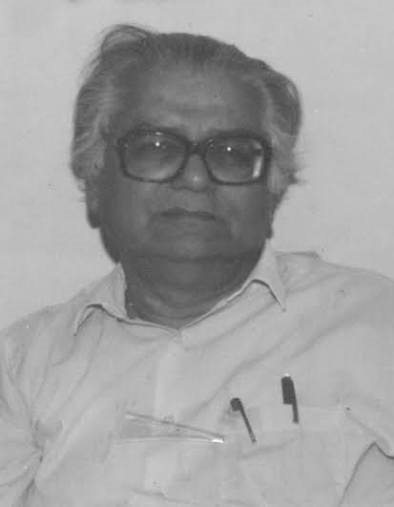
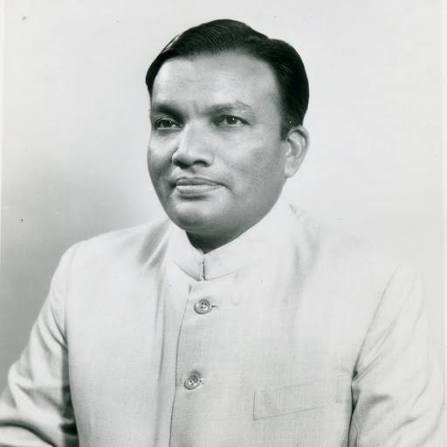
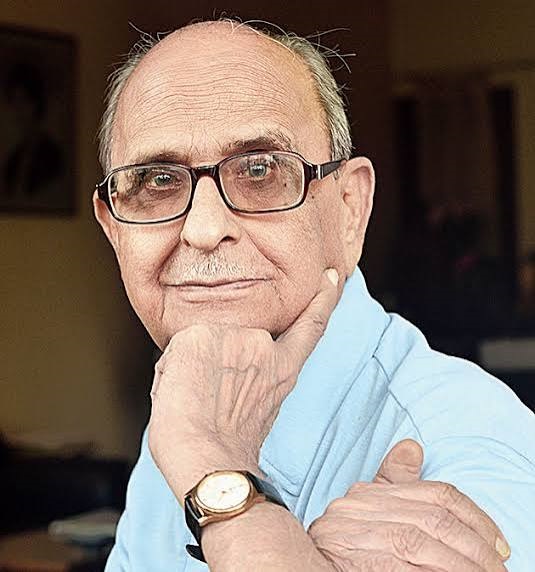
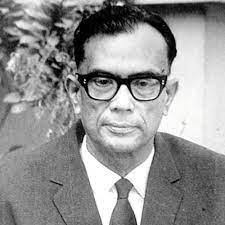
Shiba Prasad Chatterjee (22 February 1903 – 27 February 1989), popularly known as S. P. Chatterjee, was one of India’s leading geographers, cartographers, teachers and academic administrators. He played an important role in the development of modern geography and cartography in India.
He served as a professor of Geography at the University of Calcutta, became a prominent international geographer, and served as President of the International Geographical Union (IGU) from 1964 to 1968. He was also the founder-director of the National Atlas & Thematic Mapping Organisation (NATMO).
Chatterjee is particularly remembered for his work in Indian geography, regional studies, cartography and geographical education. He is also widely associated with the name “Meghalaya”, which he used for the Garo-Khasi-Jaintia plateau in his geographical research.
In recognition of his contribution to education and geography, the Government of India awarded him the Padma Bhushan in 1985. The official notification lists him as “Prof. Shiba Prasad Chatterjee, Educationist, Calcutta.”
2. Quick Facts About Shiba P. Chatterjee
| Detail | Information |
|---|---|
| Full Name | Shiba Prasad Chatterjee |
| Native Name | শিব প্রসাদ চট্টোপাধ্যায় |
| Commonly Known As | S. P. Chatterjee |
| Date of Birth | 22 February 1903 |
| Place of Birth | Calcutta (present-day Kolkata), Bengal Presidency, British India |
| Nationality | Indian |
| Profession | Geographer, educationist, professor, cartographer, researcher and academic |
| Field of Achievement | Geography, Cartography, Geographical Education and Regional Planning |
| Major Institution | University of Calcutta |
| International Position | President, International Geographical Union, 1964–1968 |
| Major Organisation Founded/Directed | National Atlas & Thematic Mapping Organisation |
| Years Active | Mainly from the 1920s to the 1980s |
| Date of Death | 27 February 1989 |
| Place of Death | Kolkata, West Bengal, India |
| Major National Honour | Padma Bhushan, 1985 |
NATMO’s official biography states that Chatterjee was born in Kolkata on 22 February 1903 and describes him as a geologist by academic qualification, a geographer professionally and a dedicated cartographer.
3. Award Information
Padma Bhushan
Shiba P. Chatterjee received the Padma Bhushan in 1985.
The original Government of India notification dated 26 January 1985 lists:
“Prof. Shiba Prasad Chatterjee, Educationist, Calcutta.”
He appears in the Padma Bhushan section of the official notification.
| Award Detail | Information |
|---|---|
| Award Name | Padma Bhushan |
| Award Category | Padma Bhushan |
| Award Year | 1985 |
| Field / Official Description | Educationist |
| Recipient’s Location | Calcutta |
| Presented By | President of India |
| President in 1985 | Giani Zail Singh |
| Official Notification Date | 26 January 1985 |
| Ceremony Date | Exact ceremony date not established from the official notification consulted |
| Official Notification Wording | “Prof. Shiba Prasad Chatterjee, Educationist, Calcutta.” |
The Government of India’s notification is the most reliable source for the award information. It does not provide a detailed citation beyond “Educationist, Calcutta”, so a blog should not invent a more specific official citation.
Previous Recipients
There is no single “previous recipient” because the Padma Bhushan is awarded to multiple people every year across different fields.
The 1984 Padma Bhushan recipients were the preceding year’s awardees.
Next Recipients
The 1986 Padma Bhushan recipients followed the 1985 awardees. There is no individual successor because the Padma Bhushan is an annual national honour awarded to multiple recipients.
4. Why Did Shiba P. Chatterjee Receive the Padma Bhushan?
Shiba P. Chatterjee received the Padma Bhushan in 1985, with the official notification identifying him as an Educationist.
His recognition came after decades of work in geography, education, research and cartography.
He helped establish geography as an important academic discipline in India and contributed to geographical research, mapping and geographical education. He also played an important role in the development of India’s national atlas and thematic mapping activities.
NATMO describes him as a major figure in Indian geography and credits him with a multifaceted career as a teacher, mentor, writer, researcher, academician, organiser and executor.
5. Early Life
Shiba Prasad Chatterjee was born on 22 February 1903 in Calcutta, then part of British India.
He grew up during a period when modern scientific and geographical education was developing in India. His academic interests eventually led him toward geology and geography.
His early academic development was particularly important because his career later combined several related disciplines:
- Geology
- Geography
- Cartography
- Regional studies
- Environmental and physical geography
- Geographical education
His work eventually helped establish geography as an important academic discipline in Indian universities.
6. Education
Chatterjee had a strong academic background.
He completed his Master’s degree in Geology from Banaras Hindu University in 1926. After completing his master’s degree, he travelled to France for higher studies.
In France, he conducted geographical research under the guidance of the renowned French geographer Emmanuel de Martonne.
One of his important research subjects was the Meghalaya plateau, then known in geographical terminology through the Garo, Khasi and Jaintia hill regions.
This international academic experience helped shape his later work as an Indian geographer.
7. Career Journey
Early Academic Career
After completing his master’s degree, Chatterjee began his professional career in education.
In 1928, he joined Rangoon University as head of the Department of Geology and Geography.
His experience at Rangoon was followed by further academic work and research in Europe.
Career at the University of Calcutta
After returning to India, Chatterjee joined the University of Calcutta.
He played an important role in introducing and developing Geography as an academic subject.
According to a biographical account, he introduced Geography in the Teachers’ Training Department and subsequently helped establish the subject at the Honours and Master’s levels. He later became Professor and Head of the Geography Department.
He remained associated with the university for much of his professional life and became Emeritus Professor after his retirement in 1967.
Development of Indian Cartography
One of his most important contributions was to Indian cartography.
He became the founder-director of the National Atlas & Thematic Mapping Organisation (NATMO).
NATMO’s official biography describes him as a dedicated cartographer and states that geographical studies and practices in India and other developing countries benefited greatly from his work.
International Geographical Union
Chatterjee’s reputation extended beyond India.
He served as President of the International Geographical Union from 1964 to 1968.
This was an important international position and reflected his standing within the global geographical community.
8. Major Achievements
1. Development of Geography in India
Chatterjee played an important role in establishing Geography as a university-level academic discipline in India.
His work at the University of Calcutta contributed to the development of formal geographical education and research.
2. Founder-Director of NATMO
He was the founder-director of the National Atlas & Thematic Mapping Organisation.
NATMO became an important institution for mapping India’s physical, economic, demographic and cultural characteristics.
3. International Geographical Union Presidency
He served as President of the International Geographical Union from 1964 to 1968.
4. Research on Meghalaya
Chatterjee carried out research on the Meghalaya plateau during his studies in France.
He used the name Meghalaya for the Garo-Khasi-Jaintia plateau, and the name later became associated with India’s northeastern state of Meghalaya.
5. Contributions to Indian Mapping
He was involved in the development of the National Atlas of India and thematic mapping.
Bibliographic records list National Atlas of India among his major works and publications.
6. International Recognition
In 1959, he received the Murchison Award from the Royal Geographical Society for his contributions to geographical science.
7. Padma Bhushan
The Government of India awarded him the Padma Bhushan in 1985.
9. Contribution to the Nation
Shiba P. Chatterjee’s contribution to India extended beyond academic research.
His work helped develop three important areas:
Geographical Education
He helped establish Geography as a formal university discipline and trained generations of students and researchers.
National Mapping
Through his leadership in the development of NATMO, he contributed to India’s national mapping infrastructure.
Maps were important for understanding:
- Physical geography
- Population distribution
- Natural resources
- Agriculture
- Industry
- Transport
- Regional development
- Administrative areas
International Representation
As President of the International Geographical Union, he represented Indian geography within the international geographical community.
Geographical Understanding of India
His research and publications helped document India’s physical and human geography.
His bibliographic record includes works on Indian geography, population distribution, regional patterns, physiography and mapping.
10. Other Awards and Honours
Shiba P. Chatterjee received several important honours during his career.
| Year | Award / Honour |
|---|---|
| 1959 | Murchison Award, Royal Geographical Society |
| 1964–1968 | President, International Geographical Union |
| 1985 | Padma Bhushan |
| Various years | International and academic honours for geographical scholarship |
The Murchison Award is particularly notable because it is an established Royal Geographical Society award recognizing significant geographical publications or contributions. Chatterjee received it in 1959.
His presidency of the International Geographical Union from 1964 to 1968 was itself a major international distinction.
11. Legacy and Influence
Shiba P. Chatterjee is remembered as an important figure in the development of modern Indian geography.
His legacy includes:
- Development of geographical education in India
- Advancement of Indian cartography
- Establishment and development of NATMO
- Research on India’s physical and regional geography
- Development of geographical institutions
- International recognition of Indian geography
- Training of generations of geographers
- Promotion of thematic mapping
NATMO continues to remember him as its founder-director and describes his contribution to Indian geography and cartography as highly significant.
A memorial volume, The Roots of Indian Geography: Search and Research — Homage to S.P. Chatterjee, was published in 1992 by the National Geographical Society of India at Banaras Hindu University, demonstrating the continuing scholarly interest in his work after his death.
12. Interesting Facts About Shiba P. Chatterjee
- He was born in 1903 in Calcutta.
- His academic qualification was originally in geology, but he became one of India’s leading geographers.
- He completed his Master’s degree in Geology from Banaras Hindu University in 1926.
- He went to France for higher studies.
- He conducted geographical research under the famous French geographer Emmanuel de Martonne.
- He worked at Rangoon University before establishing his major academic career in India.
- He helped develop Geography as a university discipline at the University of Calcutta.
- He became the founder-director of NATMO.
- He served as President of the International Geographical Union from 1964 to 1968.
- He received the Murchison Award in 1959.
- He is widely associated with the naming of Meghalaya.
- He received the Padma Bhushan in 1985.
- He died on 27 February 1989, five days after his 86th birthday. NATMO records his death in Kolkata.
13. Quotes
There are relatively few short, reliably sourced quotations by Shiba P. Chatterjee available online.
For a factual biography, it is better not to use quotations attributed to him by unsourced quotation websites.
Instead, a blog can highlight his documented ideas and work through his publications. His bibliography includes works such as:
- The Teaching of Geography
- The Partition of Bengal: A Geographical Study
- The Gazetteer of India
- National Atlas of India
- Junior College Geography
- Works on population distribution and regional geography
His bibliographic record shows the breadth of his work in geographical education, regional analysis, population geography and mapping.
14. Timeline of Shiba P. Chatterjee’s Life
| Year | Event |
|---|---|
| 1903 | Born on 22 February in Calcutta |
| 1926 | Obtained Master’s degree in Geology from Banaras Hindu University |
| 1920s | Travelled to France for higher studies and geographical research |
| 1928 | Joined Rangoon University as head of Geology and Geography |
| 1930s | Continued geographical research and academic work |
| 1937 | Published research concerning the Meghalaya plateau |
| 1939 | Geography introduced at Honours level at the University of Calcutta under his academic leadership |
| 1941 | Geography developed to Master’s level at the University of Calcutta |
| 1940s–1960s | Expanded his teaching, research and institutional work in Indian geography |
| 1959 | Received the Murchison Award from the Royal Geographical Society |
| 1964 | Became President of the International Geographical Union |
| 1967 | Retired from the University of Calcutta and became associated as Emeritus Professor |
| 1968 | Completed his term as President of the International Geographical Union |
| 1968 onward | Continued work in geographical research and national mapping |
| 1985 | Received the Padma Bhushan |
| 1989 | Died on 27 February in Kolkata |
| 1992 | A commemorative volume, The Roots of Indian Geography, was published in his honour |
The dates concerning his academic career and university development are documented in biographical accounts, while the Padma Bhushan date is confirmed by the official Government of India notification.
15. References
For a blog, the following sources are particularly useful:
1. National Atlas & Thematic Mapping Organisation (NATMO)
The official NATMO biography provides information about Chatterjee’s birth, education, research, career and role as founder-director.
Source: National Atlas & Thematic Mapping Organisation, Government of India.
2. Government of India – Padma Awards
The official 1985 President’s Secretariat notification confirms Chatterjee’s Padma Bhushan and describes him as an Educationist, Calcutta.
Source: Government of India, President’s Secretariat, 26 January 1985.
3. University / Academic Sources
Academic sources and institutional publications record his contributions to Indian geography, his role at the University of Calcutta and his international work.
4. Persée – Bibliographic Authority
Persée’s authority record provides bibliographic information about Chatterjee and lists numerous works associated with geography, mapping and geographical education.
5. National Geographical Society of India
The commemorative volume The Roots of Indian Geography: Search and Research — Homage to S.P. Chatterjee provides evidence of his continuing influence on Indian geographical scholarship.
16. Related Personalities
Readers interested in Shiba P. Chatterjee may also explore:
- R. L. Singh – prominent Indian geographer
- S. M. Ali – Indian geographer and cartographer
- D. N. Wadia – Indian geologist and scientific administrator
- Emmanuel de Martonne – French geographer who influenced Chatterjee’s research
- Prasanta Chandra Mahalanobis – Indian statistician associated with geographic and regional data analysis
- Meghnad Saha – Indian scientist and institution builder
- P. C. Mahalanobis – important figure in Indian statistical and planning institutions
- M. S. Randhawa – Indian civil servant, agricultural scientist and writer
- Ramesh Chandra Majumdar – historian and academic associated with the University of Calcutta
These personalities provide additional context for the development of geography, geology, cartography, scientific education and regional studies in India.
17. Frequently Asked Questions (FAQ)
Who was Shiba P. Chatterjee?
Shiba P. Chatterjee was an Indian geographer, educationist, professor, cartographer and researcher who played an important role in developing modern geography and cartography in India.
What was Shiba P. Chatterjee’s full name?
His full name was Shiba Prasad Chatterjee.
When was Shiba P. Chatterjee born?
He was born on 22 February 1903 in Calcutta, now Kolkata.
When did Shiba P. Chatterjee die?
He died on 27 February 1989 in Kolkata.
What was Shiba P. Chatterjee famous for?
He was famous for his contributions to Indian geography, geographical education, cartography and national mapping.
Which award did Shiba P. Chatterjee receive?
He received the Padma Bhushan in 1985.
What was the official reason for his Padma Bhushan?
The official 1985 notification described him as “Educationist, Calcutta.”
Who was the President of India when Shiba P. Chatterjee received the Padma Bhushan?
The President of India in 1985 was Giani Zail Singh.
What did Shiba P. Chatterjee study?
He obtained a Master’s degree in Geology from Banaras Hindu University in 1926 and subsequently pursued higher studies in France.
Where did Shiba P. Chatterjee work?
He worked at institutions including Rangoon University and the University of Calcutta. He later became associated with national mapping through NATMO.
What was NATMO?
NATMO stands for the National Atlas & Thematic Mapping Organisation. Shiba P. Chatterjee was its founder-director.
Was Shiba P. Chatterjee associated with Meghalaya?
Yes. He conducted research on the Meghalaya plateau and is widely credited with introducing the name Meghalaya for the Garo-Khasi-Jaintia plateau.
Was Shiba P. Chatterjee an international geographer?
Yes. He served as President of the International Geographical Union from 1964 to 1968.
What other major award did he receive?
He received the Murchison Award from the Royal Geographical Society in 1959.
Why is Shiba P. Chatterjee remembered today?
He is remembered for helping develop geographical education, research and cartography in India, for his leadership in national mapping, and for representing Indian geography internationally.
Conclusion
Shiba P. Chatterjee was a pioneering figure in the development of modern Indian geography and cartography. From his early training in geology to his work as a professor, researcher, international geographer and founder-director of NATMO, his career connected academic geography with practical national mapping.
His presidency of the International Geographical Union, his Murchison Award and his extensive geographical scholarship established his international reputation. His association with the name Meghalaya is another enduring part of his legacy.
The Government of India recognized his contribution by awarding him the Padma Bhushan in 1985, officially identifying him as an Educationist.
His legacy continues through India’s geographical institutions, mapping traditions and the generations of students and researchers influenced by his work.
About the Author