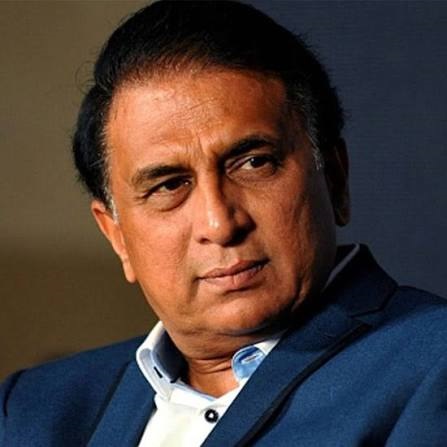
1. Introduction
Sunil Manohar Gavaskar (born 1949), affectionately nicknamed “Sunny” and “Little Master,” is widely regarded as one of the greatest opening batsmen in the history of cricket. In an era before modern protective helmets, Gavaskar stood tall against the most lethal fast-bowling attacks the sport has ever seen—most notably the fearsome West Indian pace quartet. He was the first player in Test cricket history to cross the milestone of 10,000 runs, setting a benchmark for resilience, technical perfection, and unmatched grit that inspired a generation of Indian cricketers.
2. Quick Facts
- Full Name: Sunil Manohar Gavaskar
- Native Name: सुनील मनोहर गावस्कर
- Date of Birth: July 10, 1949
- Place of Birth: Bombay (now Mumbai), India
- Nationality: Indian
- Occupation/Profession: Former Cricketer, Cricket Commentator, Analyst, and Columnist
- Field of Achievement: International Cricket and Sports Journalism
- Years Active: 1971 – 1987 (Playing Career); 1987 – Present (Media & Administration)
3. Award Information (Focus: Padma Bhushan)
- Award Name: Padma Bhushan
- Award Category: Civil Honour (Third-highest civilian award in India)
- Award Year: 1980
- Presented By: Government of India
- Date of Ceremony: 1980 (Annual Investiture Ceremony, Rashtrapati Bhavan)
- Citation/Official Reason: For exceptional and distinguished service in the field of sports and extraordinary achievements in international cricket.
- Previous Recipients: Notable sports personalities, artists, and public servants from preceding years.
- Next Recipients: Notable athletes and public figures from subsequent years.
4. Why They Received the Award
Sunil Gavaskar received the Padma Bhushan in 1980 for his phenomenal sportsmanship and for putting Indian cricket firmly on the global map. Having broken multiple world batting records during the 1970s—including scoring over 700 runs in his debut Test series against the West Indies—he became a national sporting hero and an ambassador of excellence.
5. Early Life
Born in Bombay into a middle-class Maharashtrian family, cricket ran in his blood; his father, Manohar Gavaskar, was a good club cricketer, and his uncle, Madhav Mantri, played Test cricket for India. A famous family legend surrounds his birth: a perceptive hospital nurse noticed that a birthmark near his ear was missing after a baby mix-up. Thanks to his uncle’s sharp eye, the infant Gavaskar was found sleeping next to a fisherwoman, ensuring he remained with his true family. From a young age, he dominated school cricket, winning the prestigious India’s Best Schoolboy Cricketer award in 1966.
6. Education
- Schooling: St. Xavier’s High School, Fort, Bombay.
- Higher Education: Graduated with a Bachelor of Arts (BA) degree from St. Xavier’s College, Mumbai, where he continued to balance his academic studies with heavy domestic cricket commitments.
7. Career Journey
- Test Debut (1971): Burst onto the international stage during India’s historic 1971 tour of the West Indies, scoring 774 runs in 4 tests—a record for a debut series that still stands.
- Captaincy: Led the Indian Test team in various stints during the late 1970s and 1980s, famously steering India to victory in the 1985 Benson & Hedges World Championship of Cricket in Australia.
- Retirement (1987): Played his final Test match against Pakistan in Bangalore in 1987, scoring a masterclass 96 on a treacherous turning track before transitioning into an authoritative voice in cricket commentary and journalism.
8. Major Achievements
- 10,000 Test Runs: Became the first batsman in cricket history to cross 10,000 Test runs, finishing his career with 10,122 runs.
- Century Milestone: Scored 34 Test centuries, which stood as the world record for most Test hundreds for nearly two decades until broken by Sachin Tendulkar.
- World Cup Winner: Played a key role as a member of the victorious Indian squad that won the 1983 Cricket World Cup in England.
9. Contribution to the Nation
Sunil Gavaskar transformed the psychological mindset of Indian sport. Before his emergence, Indian cricket teams were often viewed as polite underdogs, especially away from home. Gavaskar’s technical mastery, immense courage against hostile fast bowling, and refusal to back down instilled a fierce winning mentality in Indian cricket. Later, as an administrator, commentator, and interim BCCI president, he continued to safeguard the interests of players and shape modern cricket broadcasting.
10. Other Awards and Honours
- Arjuna Award (1975) – Conferred by the Government of India
- Padma Bhushan (1980) – Conferred by the Government of India
- ICC Cricket Hall of Fame (2009) – Inducted as an inaugural member
- Col. C. K. Nayudu Lifetime Achievement Award (1994) – Highest honor bestowed by the BCCI
- Order of Australia (Honorary Member, 2009) – For services to cricket relations between India and Australia
11. Legacy and Influence
Gavaskar set the golden standard for opening batsmanship. His straight drive, watertight defense, and supreme concentration against express pace became textbook material for aspiring cricketers. He also paved the way for professional financial remuneration in Indian cricket through his work as an elite player, analyst, and writer.
12. Interesting Facts
- The “Sunny” Gavaskar Bat: His name became synonymous with quality cricket gear when he endorsed bats that bore his signature, a massive trend in South Asian markets during the 1980s.
- Actor and Singer: He once acted in a Marathi movie titled Savli Premachi (1980) and recorded a semi-classical Marathi song (“Yei Tevha Me”) for charity.
- The Infamous 36 Not Out: In his very first ODI against England in 1974, he played a strangely slow innings of 36 not out off 174 balls—an uncharacteristic anomaly in an otherwise legendary career.
13. Quotes
“I have always believed that excellence is not an act, but a habit. You are what you repeatedly do.”
14. Timeline
- 1949: Born on July 10 in Bombay
- 1971: Makes his sensational Test debut against the West Indies
- 1975: Awarded the Arjuna Award
- 1980: Conferred the Padma Bhushan by the Government of India
- 1983: Wins the Cricket World Cup with India in England
- 1987: Retires from international cricket after a brilliant 96 against Pakistan in Bangalore
- 1994: Receives the BCCI’s C. K. Nayudu Lifetime Achievement Award
- 2009: Inducted into the ICC Cricket Hall of Fame
15. References
- Wikipedia contributors. Sunil Gavaskar. Wikipedia, The Free Encyclopedia.
- ESPNcricinfo – Player Profile, Statistics, and Archives: Sunil Gavaskar.
- Board of Control for Cricket in India (BCCI) – Historical Archives.
- Gavaskar, Sunil. Sunny Days: An Autobiography (Rupa Publications).
16. Related Personalities
- Sachin Tendulkar – Legendary Indian batsman who idolized Gavaskar and eventually broke many of his records.
- Gundappa Viswanath – Legendary Indian batsman and Gavaskar’s brother-in-law and close teammate.
- Sir Vivian Richards – Iconic West Indian batsman and contemporary opponent of Gavaskar.
17. Frequently Asked Questions (FAQ)
Q: What is Sunil Gavaskar famous for?
A: He is famous for being one of the greatest opening batsmen in cricket history and the first player to score 10,000 runs in Test cricket.
Q: How many Test centuries did Sunil Gavaskar score?
A: He scored 34 Test centuries during his illustrious career.
Q: Did Sunil Gavaskar win the World Cup?
A: Yes, he was a member of the Indian team that won the 1983 Cricket World Cup.
Q: What civilian awards has he received?
A: He was awarded the Padma Bhushan in 1980 and the Arjuna Award in 1975 by the Government of India.
About the Author