Early Life and Education
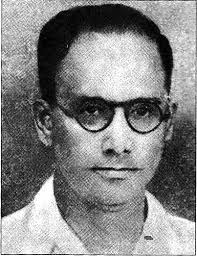
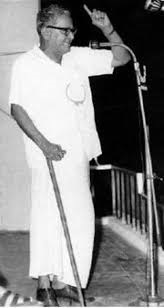
P. Ramamurthi, also known as P. Ramamurti, was born on 20 September 1908 in Vepathur, near Kumbakonam in present-day Tamil Nadu. He was born into a middle-class Brahmin family that valued education and public service.
He completed his early education in Tamil Nadu and later pursued higher studies in Madras (now Chennai). During his student years, he became deeply influenced by the growing nationalist movement and the ideas of social equality and workers’ rights. The political atmosphere of the period shaped his commitment to India’s struggle for independence and social justice.
Education & Skills
Educational Background
- Received his primary and secondary education in Tamil Nadu.
- Pursued higher education in Madras, where he actively participated in student politics and nationalist activities.
- Although political activism interrupted his academic pursuits, he developed extensive knowledge through self-study and practical experience.
Skills and Expertise
P. Ramamurthi possessed a wide range of abilities that made him an influential public figure:
- Leadership skills in organizing workers and peasants.
- Public speaking and political communication.
- Expertise in trade union organization.
- Strong understanding of social and economic issues.
- Ability to negotiate and advocate for labour rights.
- Proficiency in Tamil and English, enabling him to connect with diverse audiences.
These qualities established him as one of India’s foremost labour leaders.
Contribution to Tamil Literature
Although P. Ramamurthi was not primarily known as a literary figure, he contributed significantly to the dissemination of political and social ideas through Tamil writings and speeches.
His contributions include:
- Writing articles and essays on workers’ rights, socialism, and social equality.
- Promoting the use of Tamil as a medium for political education among labourers.
- Encouraging publications that explained complex economic and political concepts in simple Tamil.
- Supporting progressive writers who addressed issues of exploitation and social reform.
His speeches, many of which were later published in Tamil periodicals, inspired workers and ordinary citizens to participate actively in public life.
Role in India’s Freedom Movement
P. Ramamurthi played a notable role in India’s struggle against British colonial rule.
Participation in the Independence Movement
- He actively participated in the Civil Disobedience Movement launched by Mahatma Gandhi.
- He took part in anti-colonial protests and campaigns demanding self-rule.
- Due to his nationalist activities, he was imprisoned several times by the British authorities.
- During the Quit India Movement of 1942, he continued to support efforts aimed at ending colonial rule.
Trade Union Activism
Ramamurthi recognized that political freedom had to be accompanied by economic justice. Consequently, he devoted himself to organizing industrial workers.
He emerged as a prominent leader of the trade union movement and worked tirelessly to secure:
- Fair wages,
- Better working conditions,
- Social security benefits, and
- Legal protections for labourers.
Communist Movement
He later became one of the leading figures of the Communist movement in India and was associated with the Communist Party of India and subsequently the Communist Party of India (Marxist) after the party split in 1964.
He served in various leadership positions and played a crucial role in shaping labour policies and left-wing politics in India.
Personal Life
P. Ramamurthi led a life marked by simplicity and dedication to public causes.
Despite holding important political positions, he remained closely connected with workers and ordinary citizens. He was respected for his integrity, discipline, and unwavering commitment to social justice.
His personal life reflected the ideals he championed:
- Equality,
- Collective welfare,
- Secularism, and
- Service to society.
He often prioritized organizational work and public responsibilities over personal comfort.
Death
P. Ramamurthi passed away on 15 December 1987.
His death was widely mourned by political leaders, trade union activists, and workers across India. Tributes highlighted his lifelong struggle for the rights of the working class and his contributions to the nation’s democratic and labour movements.
Conclusion
P. Ramamurthi occupies a distinguished place in modern Indian history as a freedom fighter, labour leader, parliamentarian, and advocate of social justice.
His legacy can be summarized through his major contributions:
- Participation in India’s freedom struggle.
- Leadership in the trade union movement.
- Advocacy for workers’ rights and social equality.
- Promotion of political awareness through Tamil writings and speeches.
- Significant role in the growth of the communist movement in India.
P. Ramamurthi believed that true independence meant not only freedom from colonial rule but also freedom from poverty, exploitation, and inequality. His lifelong dedication to the welfare of workers continues to inspire activists, scholars, and citizens committed to building a more just and equitable society.
In conclusion, P. Ramamurthi’s life demonstrates how political conviction, courage, and service to the marginalized can leave an enduring impact on a nation’s social and democratic development.
About the Author