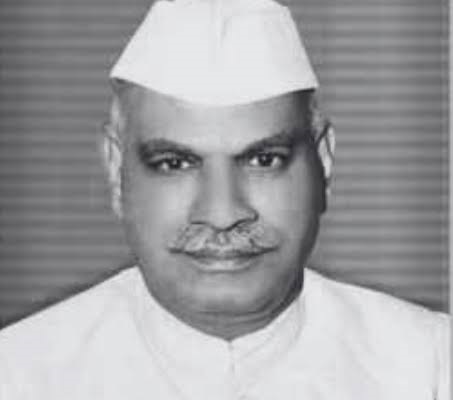
1. Introduction
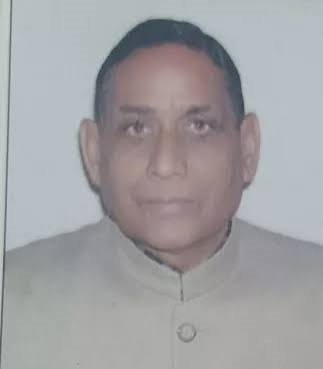
Pandit Kunji Lal Dubey was a distinguished Indian freedom fighter, lawyer, educationist, and politician from Madhya Pradesh. He made significant contributions to India’s independence movement, higher education, and public administration. He served as the first Speaker of the Madhya Pradesh Legislative Assembly, the first Vice-Chancellor of Rani Durgavati University, and later as the Finance Minister of Madhya Pradesh. For his outstanding service in public affairs and education, the Government of India honored him with the Padma Bhushan in 1964.
2. Quick Facts
| Particular | Details |
|---|---|
| Full Name | Pandit Kunji Lal Dubey |
| Native Name | पंडित कुंजीलाल दुबे (Hindi) |
| Date of Birth | 18 March 1896 |
| Place of Birth | Amgaon (Amagaon), Narsinghpur District, Central Provinces (now Madhya Pradesh), India |
| Date of Death | 2 June 1970 |
| Place of Death | Madhya Pradesh, India |
| Nationality | Indian |
| Occupation / Profession | Freedom Fighter, Lawyer, Educationist, Politician |
| Field of Achievement | Public Affairs, Education, Politics |
| Years Active | 1920–1970 |
| Known For | Freedom movement, First Speaker of Madhya Pradesh Legislative Assembly, First Vice-Chancellor of Rani Durgavati University |
3. Award Information
Award Name
Padma Bhushan
Award Category
Public Affairs
Award Year
1964
Presented By
President of India
Date of Ceremony
1964 Padma Awards Investiture Ceremony
Official Citation / Reason
Awarded for his distinguished contributions to public affairs, education, politics, and the Indian freedom movement.
Previous Recipients (Optional)
Padma Bhushan awards are not conferred in sequential order, so there are no official “previous recipients.”
Next Recipients
Not applicable.
4. Why Did Kunji Lal Dubey Receive the Padma Bhushan?
Pandit Kunji Lal Dubey received the Padma Bhushan because of his remarkable contributions to independent India and the freedom struggle. His achievements include:
- Active participation in the Indian independence movement.
- Imprisonment during the Civil Disobedience and Quit India movements.
- Leadership in higher education as the first Vice-Chancellor of Rani Durgavati University.
- Service as the first Speaker of the Madhya Pradesh Legislative Assembly.
- Contributions to state governance as Finance Minister.
- Promotion of education, culture, and public institutions.
5. Early Life
Kunji Lal Dubey was born on 18 March 1896 in Amgaon, in present-day Madhya Pradesh. He completed his primary education in Kareli, attended middle school in Narsinghpur, and later studied at Akola. During his college years, he came under the influence of nationalist leaders such as Madan Mohan Malaviya and N. C. Kelkar, which inspired him to join India’s freedom movement.
6. Education
Pandit Dubey was an outstanding student throughout his academic career.
Educational Qualifications
- Primary education in Kareli, Madhya Pradesh.
- Middle School at Narsinghpur.
- High School at Akola.
- Bachelor’s degree from Robertson College, Jabalpur (1918).
- Bachelor of Law (LL.B.) from Allahabad University (1920), graduating with first-class honors.
7. Career Journey
After completing his legal education, Kunji Lal Dubey began practicing law but soon devoted himself to the national movement.
Career Highlights
- Participated in the Indian freedom struggle.
- Member of the All India Congress Committee (AICC).
- Imprisoned for participating in the Individual Satyagraha (1941) and the Quit India Movement (1942).
- Became the first Speaker of the Madhya Pradesh Legislative Assembly in 1956.
- Served as the first Vice-Chancellor of Rani Durgavati University, Jabalpur.
- Served as Chancellor of Nagpur University.
- Appointed Finance Minister of Madhya Pradesh in 1967.
- Served as President of the Inter-University Board of India, Burma and Ceylon.
8. Major Achievements
- Freedom fighter during India’s independence movement.
- First Speaker of the Madhya Pradesh Legislative Assembly.
- First Vice-Chancellor of Rani Durgavati University.
- Chancellor of Nagpur University.
- President of the Inter-University Board of India, Burma and Ceylon.
- Founder member of the Madhya Pradesh Lalit Kala Akademi.
- President of the Madhya Pradesh Cricket Association.
- President of the Madhya Pradesh Olympic Association.
- Recipient of the Padma Bhushan (1964).
9. Contribution to the Nation
Pandit Kunji Lal Dubey made lasting contributions by:
- Participating in India’s struggle for independence.
- Strengthening democratic institutions in Madhya Pradesh.
- Promoting quality higher education.
- Supporting the development of sports and fine arts.
- Improving state governance through legislative leadership and financial administration.
- Encouraging educational reforms and university development.
10. Other Awards and Honours
Besides the Padma Bhushan, he received:
- Honorary Doctor of Laws (LL.D.) from Jabalpur University (1965).
- Honorary Doctor of Literature (D.Litt.) from Vikram University (1967).
- India Post issued a commemorative postage stamp in his honor in 1996.
- Several educational institutions and auditoriums in Madhya Pradesh have been named after him.
11. Legacy and Influence
Pandit Kunji Lal Dubey is remembered as one of Madhya Pradesh’s most respected public leaders. His legacy includes:
- Strengthening parliamentary traditions in the newly formed state of Madhya Pradesh.
- Advancing university education and academic administration.
- Inspiring future generations of educators, lawyers, and legislators.
- Supporting cultural and sporting institutions across the state.
His contributions continue to be recognized through institutions bearing his name and the commemorative postage stamp issued in his memory.
12. Interesting Facts
- He was imprisoned twice during the Indian freedom struggle.
- He became the first Speaker of the Madhya Pradesh Legislative Assembly after the state’s formation in 1956.
- He was the first Vice-Chancellor of Rani Durgavati University.
- He also served as President of the Madhya Pradesh Cricket Association and the Madhya Pradesh Olympic Association.
- India Post honored him with a commemorative stamp in 1996.
13. Quotes
There are no widely authenticated quotations attributed to Pandit Kunji Lal Dubey in reliable historical sources. For a factual blog, it is best not to include unverified quotes.
14. Timeline
| Year | Event |
|---|---|
| 1896 | Born in Amgaon, Madhya Pradesh |
| 1918 | Graduated from Robertson College, Jabalpur |
| 1920 | Earned LL.B. from Allahabad University |
| 1937 | Joined the All India Congress Committee |
| 1941 | Imprisoned during the Individual Satyagraha |
| 1942 | Arrested during the Quit India Movement |
| 1956 | Became the first Speaker of the Madhya Pradesh Legislative Assembly |
| 1964 | Awarded the Padma Bhushan |
| 1965 | Received honorary LL.D. from Jabalpur University |
| 1967 | Became Finance Minister of Madhya Pradesh; received honorary D.Litt. |
| 1970 | Passed away on 2 June |
| 1996 | India Post issued a commemorative postage stamp in his honor |
15. References
- Government of India – Padma Awards Portal: https://dashboard-padmaawards.gov.in/
- Government of India – Padma Awards 1964 Gazette Notification: https://www.padmaawards.gov.in/Document/pdf/notifications/PadmaAwards/1964.pdf
- Wikipedia – Kunji Lal Dubey.
- Chakra Foundation – Biography of Kunji Lal Dubey.
16. Related Personalities
- Madan Mohan Malaviya
- Narasimha Chintaman Kelkar
- Mahatma Gandhi
- Seth Govind Das
17. Frequently Asked Questions (FAQ)
Who was Kunji Lal Dubey?
Pandit Kunji Lal Dubey was an Indian freedom fighter, lawyer, educationist, and politician who played a key role in the independence movement and the development of higher education and public institutions in Madhya Pradesh.
Why is Kunji Lal Dubey famous?
He is known for serving as the first Speaker of the Madhya Pradesh Legislative Assembly, the first Vice-Chancellor of Rani Durgavati University, and for his contributions to India’s freedom struggle.
Which award did Kunji Lal Dubey receive?
He was awarded the Padma Bhushan in 1964 in the field of Public Affairs.
What role did he play in the freedom movement?
He actively participated in the Indian National Congress, joined the Individual Satyagraha and Quit India Movement, and was imprisoned for his involvement in the struggle for independence.
What is Kunji Lal Dubey’s legacy?
His legacy includes strengthening democratic institutions in Madhya Pradesh, promoting higher education, supporting sports and culture, and inspiring future generations of public servants and educators.
About the Author