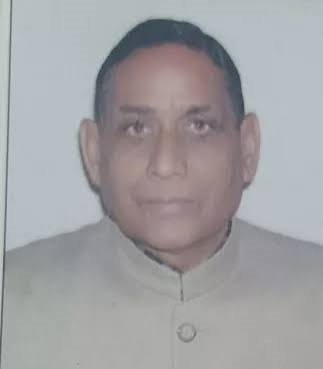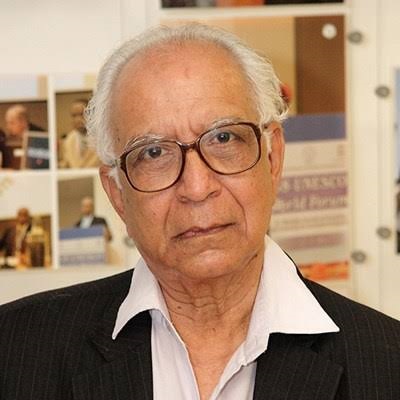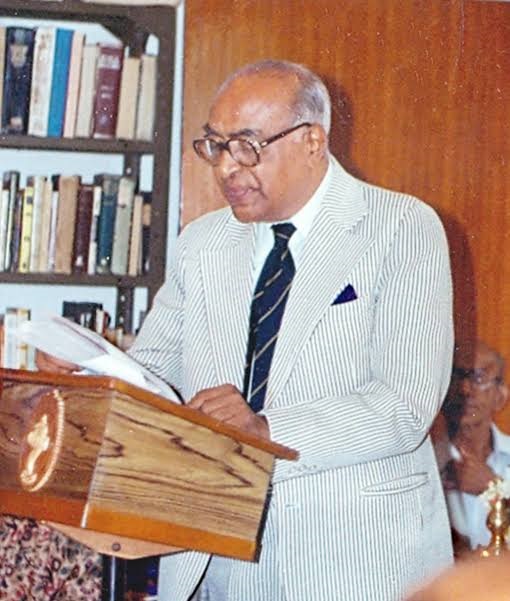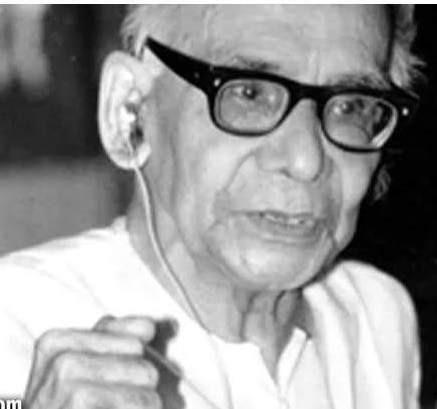
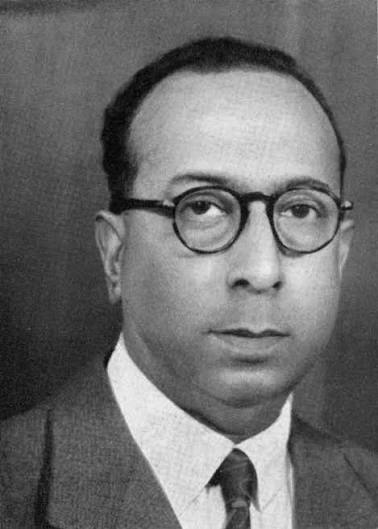
Sisir Kumar Mitra (24 October 1890 – 13 August 1963) was an eminent Indian physicist and one of the pioneers of ionospheric physics and radio science in India. His groundbreaking research on the Earth’s upper atmosphere laid the foundation for radio communication studies in the country. He established India’s first ionospheric research laboratory and authored the influential book The Upper Atmosphere. In recognition of his outstanding contributions to science, the Government of India awarded him the Padma Bhushan in 1962.
1. Introduction
Sisir Kumar Mitra was a renowned Indian physicist, educator, and researcher best known for his pioneering work in ionospheric physics, radio science, and wireless communication. As a professor at the University of Calcutta, he played a crucial role in developing scientific research in India during the early twentieth century. His studies on the ionosphere significantly advanced radio communication and atmospheric science, earning him both national and international recognition.
2. Quick Facts
| Information | Details |
|---|---|
| Full Name | Sisir Kumar Mitra |
| Native Name | শিশির কুমার মিত্র (Bengali) |
| Date of Birth | 24 October 1890 |
| Place of Birth | Kolkata (then Calcutta), Bengal Presidency, British India |
| Date of Death | 13 August 1963 |
| Nationality | Indian |
| Profession | Physicist, Professor, Researcher |
| Field of Achievement | Physics, Ionospheric Physics, Radio Science |
| Years Active | 1910s–1963 |
| Known For | Pioneer of ionospheric research in India |
3. Award Information
| Field | Details |
|---|---|
| Award Name | Padma Bhushan |
| Award Category | Science and Engineering |
| Award Year | 1962 |
| Presented By | President of India |
| Date of Ceremony | 1962 Investiture Ceremony |
| Official Citation | Distinguished contribution to Physics and Radio Science |
| Previous Recipients (Science) | Birbal Sahni, Homi J. Bhabha, Shanti Swarup Bhatnagar (among earlier eminent scientists) |
| Next Recipients (1963) | Scientists recognized in subsequent Padma awards |
4. Why Did He Receive the Padma Bhushan?
Sisir Kumar Mitra received the Padma Bhushan because of his exceptional contributions to:
- Ionospheric physics
- Radio wave propagation
- Atmospheric science
- Scientific research in India
- Establishment of ionospheric laboratories
- Advancement of wireless communication research
- Development of modern physics education in India
His work became the foundation of radio communication and space science research in India.
5. Early Life
Sisir Kumar Mitra was born on 24 October 1890 in Calcutta (now Kolkata). He grew up in an environment that encouraged education and scientific inquiry. From a young age, he displayed a strong interest in mathematics and physics.
After completing his schooling in Kolkata, he pursued higher education in physics and later became one of India’s leading scientists.
6. Education
- Early education in Kolkata
- Graduated from the University of Calcutta
- Master’s degree in Physics
- Conducted advanced research under distinguished Indian scientists
- Later became a professor at the University of Calcutta
7. Career Journey
Early Academic Career
After completing his education, Mitra joined the University of Calcutta as a lecturer in physics.
Research in Radio Science
He began studying radio waves and their interaction with the Earth’s atmosphere.
Pioneer of Ionospheric Physics
He established India’s first Ionosphere Research Laboratory, where scientists investigated how radio waves travel through the atmosphere.
Scientific Leadership
He trained generations of physicists and contributed significantly to the growth of scientific institutions in India.
International Recognition
His research gained worldwide recognition and placed India on the global map of atmospheric and radio science.
8. Major Achievements
- Pioneer of ionospheric physics in India
- Established India’s first ionospheric research laboratory
- Conducted landmark research on radio wave propagation
- Authored the internationally acclaimed book The Upper Atmosphere
- Advanced atmospheric and space science research
- Inspired future generations of Indian physicists
9. Contribution to the Nation
Sisir Kumar Mitra made lasting contributions by:
- Strengthening scientific research in India
- Developing radio communication technology
- Improving understanding of Earth’s upper atmosphere
- Training young scientists and researchers
- Promoting higher education in physics
- Enhancing India’s reputation in international science
10. Other Awards and Honours
- Padma Bhushan (1962) – Government of India
- Fellow of the Royal Society (FRS) (1958)
- Fellow of the Indian National Science Academy
- Fellow of the National Institute of Sciences of India
- President of several scientific organizations
11. Legacy and Influence
Sisir Kumar Mitra is regarded as the father of ionospheric research in India. His work continues to influence:
- Space science
- Atmospheric physics
- Satellite communication
- Radio communication
- Geophysics
- Scientific education
His research remains relevant in modern telecommunications and space exploration.
12. Interesting Facts
- He founded India’s first ionosphere laboratory.
- He was among India’s earliest radio scientists.
- His research contributed to modern satellite communication.
- His book The Upper Atmosphere became an international reference.
- He was elected a Fellow of the Royal Society (FRS), one of the world’s highest scientific honours.
- He helped establish atmospheric physics as a major scientific discipline in India.
13. Quotes
No widely documented or verified quotations by Sisir Kumar Mitra are available in reliable historical sources. For factual accuracy, it is advisable not to attribute unverified quotes to him.
14. Timeline
| Year | Event |
|---|---|
| 1890 | Born in Calcutta |
| 1910s | Completed higher education in Physics |
| 1920s | Joined University of Calcutta |
| 1930s | Started ionospheric research |
| 1947 | Published The Upper Atmosphere |
| 1958 | Elected Fellow of the Royal Society (FRS) |
| 1962 | Awarded Padma Bhushan |
| 1963 | Passed away on 13 August |
15. References
- Encyclopaedia of Indian Scientists.
- Indian National Science Academy (INSA).
- Royal Society – Fellow Profile.
- Government of India – Padma Awards.
- University of Calcutta Archives.
- The Upper Atmosphere by Sisir Kumar Mitra.
16. Related Personalities
- Jagadish Chandra Bose – Pioneer of radio science.
- C. V. Raman – Nobel Prize-winning physicist.
- Meghnad Saha – Astrophysicist known for the Saha ionization equation.
- Satyendra Nath Bose – Theoretical physicist.
- Homi J. Bhabha – Founder of India’s nuclear programme.
- Shanti Swarup Bhatnagar – Pioneer of scientific research institutions in India.
17. Frequently Asked Questions (FAQ)
1. Who was Sisir Kumar Mitra?
He was an Indian physicist and pioneer of ionospheric physics and radio science.
2. Why is Sisir Kumar Mitra famous?
He is famous for his pioneering research on the Earth’s upper atmosphere and radio wave propagation.
3. Which award did Sisir Kumar Mitra receive?
He received the Padma Bhushan in 1962 for his contributions to science and engineering.
4. What is Sisir Kumar Mitra’s most famous book?
His best-known book is The Upper Atmosphere, a landmark work in atmospheric physics.
5. What was his major contribution?
He established India’s first ionospheric research laboratory and advanced research in radio communication and atmospheric science.
6. Was Sisir Kumar Mitra a Fellow of the Royal Society?
Yes. He was elected a Fellow of the Royal Society (FRS) in 1958, one of the highest honours in science.
7. How did Sisir Kumar Mitra influence modern science?
His work laid the foundation for atmospheric physics, radio communication, satellite technology, and space science research in India.
About the Author