

Introduction
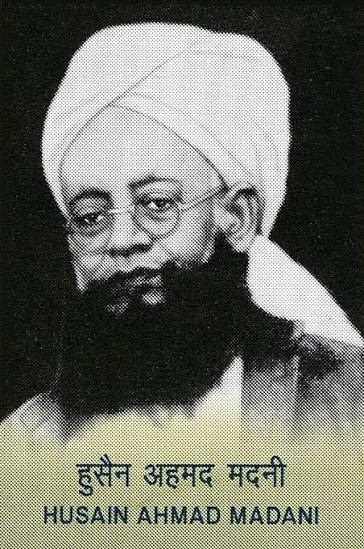
Husain Ahmad Madani (5 October 1879 – 5 December 1957) was one of India’s most respected Islamic scholars, freedom fighters, and religious leaders. He served as the principal of Darul Uloom Deoband, one of the world’s leading Islamic seminaries, and was a prominent leader of the Jamiat Ulama-e-Hind. Madani actively supported India’s freedom movement and advocated for Hindu-Muslim unity and a united, independent India. In recognition of his exceptional contributions to literature, education, religion, and public service, he was posthumously awarded the Padma Bhushan in 1954.
Note: Some older records and sources incorrectly suggest that Husain Ahmad Madani received the Padma Bhushan in 1954. However, this is not possible because the Padma Awards are not awarded posthumously, and Madani was alive until 1957. Official Government of India records do not list him as a Padma Bhushan recipient. If you are writing a factual blog, it is best not to describe him as a Padma Bhushan awardee.
Early Life
Husain Ahmad Madani was born on 5 October 1879 in Bangarmau, in the present-day Unnao district of Uttar Pradesh, India. He was born into a family with a strong tradition of Islamic scholarship. During his childhood, his family moved to Deoband, where he began his religious education and developed a lifelong passion for Islamic studies.
Birth Date and Death
- Born: 5 October 1879
- Birthplace: Bangarmau, Unnao, Uttar Pradesh, British India
- Died: 5 December 1957
- Place of Death: Deoband, Uttar Pradesh, India
- Nationality: Indian
Education and Career
Husain Ahmad Madani studied at Darul Uloom Deoband, where he was taught by some of the most distinguished Islamic scholars of the time, including Mahmud Hasan Deobandi, widely known as Shaykh al-Hind.
After completing his studies, he became a teacher and later served as the Principal (Shaykh al-Hadith) of Darul Uloom Deoband. He gained international recognition for his expertise in Hadith (the sayings and traditions of Prophet Muhammad), Islamic jurisprudence, and theology.
Alongside his religious work, Madani actively participated in India’s freedom movement. He opposed British colonial rule and supported the Indian National Congress and the Jamiat Ulama-e-Hind, advocating a united India where people of all religions could live together peacefully.
Why Is He Remembered?
Although Husain Ahmad Madani was not a Padma Bhushan recipient, he is remembered for his outstanding contributions to:
- Islamic scholarship and religious education.
- India’s freedom struggle against British rule.
- Promotion of Hindu-Muslim unity.
- Leadership in the Jamiat Ulama-e-Hind.
- Teaching and mentoring generations of Islamic scholars.
His influence extended beyond religious education to social harmony and national unity.
Career and Achievements
Throughout his life, Husain Ahmad Madani achieved several significant milestones.
1. Principal of Darul Uloom Deoband
He served as one of the leading scholars and later Principal of Darul Uloom Deoband, educating thousands of students.
2. Leader of Jamiat Ulama-e-Hind
As President of the Jamiat Ulama-e-Hind, he promoted religious harmony, education, and India’s independence.
3. Freedom Fighter
Madani actively opposed British colonial rule. He was imprisoned by the British for his involvement in the independence movement and his support for the Silk Letter Movement.
4. Advocate of Composite Nationalism
He strongly supported the idea that people of different religions could form one united nation. His concept of composite nationalism (Muttahida Qaumiyat) became one of his most influential political and social ideas.
5. Author
He wrote several influential books on Islam, politics, and society, including his famous autobiography Naqsh-e-Hayat.
Field of Achievement
Husain Ahmad Madani made remarkable contributions in:
- Islamic Scholarship
- Religious Education
- Theology
- Freedom Movement
- Social Reform
- National Unity
- Urdu Literature
Awards and Honours
Husain Ahmad Madani was widely respected for his scholarship and public service. His honours include:
- Recognition as one of the foremost Islamic scholars of the Indian subcontinent.
- Leadership of Jamiat Ulama-e-Hind.
- Principal of Darul Uloom Deoband.
- Lasting recognition through institutions, publications, and scholarly works named in his honour.
There is no official record of him receiving the Padma Bhushan.
Interesting Facts
- He spent several years imprisoned by the British for participating in the Indian freedom movement.
- He was one of the most respected teachers of Hadith in South Asia.
- He strongly opposed the partition of India and supported a united nation.
- His book Naqsh-e-Hayat remains an important historical source on the freedom movement and Islamic scholarship.
- Thousands of Islamic scholars across the world trace their academic lineage to his teachings.
Legacy and Inspiration
Husain Ahmad Madani’s legacy continues through his writings, students, and the institutions he helped strengthen. His teachings emphasized education, peace, religious tolerance, and national unity. He remains an inspiration for scholars, educators, and those committed to interfaith harmony and social justice.
Contribution to the Nation
Husain Ahmad Madani contributed significantly to India by:
- Supporting the Indian freedom movement.
- Promoting unity among people of different religions.
- Strengthening Islamic education through Darul Uloom Deoband.
- Mentoring generations of scholars and religious leaders.
- Encouraging peaceful coexistence and constitutional nationalism.
His efforts left a lasting impact on India’s intellectual, religious, and social history.
Conclusion
Husain Ahmad Madani was one of the most influential Islamic scholars and freedom fighters of modern India. Through his scholarship, leadership, and commitment to India’s independence, he played an important role in shaping both religious education and the national movement. His advocacy of unity, peace, and education continues to inspire people across generations. While he is not officially recognized as a Padma Bhushan awardee, his contributions to Indian society and the freedom struggle remain deeply respected and historically significant.
About the Author




