Introduction
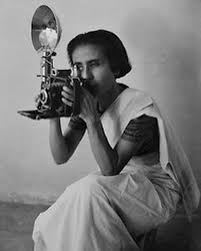
Homai Vyarawalla, popularly known by her pseudonym “Dalda 13,” was India’s first woman photojournalist and one of the country’s most celebrated photographers. Through her camera lens, she documented some of the most significant moments in India’s history, including the country’s independence, the early years of nation-building, and the lives of prominent leaders. Her pioneering work broke gender barriers in journalism and established her as a trailblazer in Indian photography. In recognition of her exceptional contribution to the field of art and photojournalism, she was awarded the Padma Vibhushan, India’s second-highest civilian honor.
Why Did She Receive the Padma Vibhushan Award?
Homai Vyarawalla was awarded the Padma Vibhushan in 2011 for her outstanding contribution to Art, particularly in the field of photography and photojournalism.
The Government of India honored her for:
- Being India’s first woman photojournalist.
- Documenting India’s freedom movement and post-independence history through photography.
- Capturing iconic images of national leaders and historic events.
- Breaking gender barriers in a male-dominated profession.
- Preserving India’s visual history for future generations.
Her photographs remain invaluable historical records of modern India.
Career and Achievements
Homai Vyarawalla had an extraordinary career spanning several decades.
Some of her major achievements include:
- Became India’s first professional woman photojournalist.
- Worked with the British Information Services and contributed photographs to leading publications.
- Covered major national events, including:
- India’s Independence in 1947.
- The swearing-in ceremonies of Indian leaders.
- Visits of international dignitaries.
- State ceremonies and important political events.
- Photographed leaders such as Jawaharlal Nehru, Mahatma Gandhi, Lal Bahadur Shastri, and Jacqueline Kennedy during her visit to India.
- Created one of the most valuable photographic archives of India’s early decades as an independent nation.
Her work has become an essential part of India’s historical and cultural heritage.
Early Life
Homai Vyarawalla was born into a Parsi family. Her father was associated with a travelling theatre company, which exposed her to art and creativity from an early age. Encouraged by her family, she developed an interest in photography and later pursued formal education in the field, a rare achievement for women in that era.
Birth Date and Death
- Born: 9 December 1913
- Birthplace: Navsari
- Died: 15 January 2012
- Place of Death: Vadodara
- Age at Death: 98 years
She lived a long life dedicated to documenting India’s history through photography.
Education and Career
Education
- Completed her early education in Mumbai.
- Studied at Sir J. J. School of Art.
- One of the first women in India to receive formal training in photography.
Career
Throughout her distinguished career, she worked as:
- Photojournalist.
- Documentary photographer.
- Press photographer.
- Historical archivist through photography.
She spent much of her professional life covering political leaders, diplomatic events, and national ceremonies in New Delhi.
Field of Achievement
Homai Vyarawalla made exceptional contributions in:
- Photography
- Photojournalism
- Documentary Photography
- Visual Journalism
- Historical Documentation
- Arts and Culture
Awards and Honours
Homai Vyarawalla received several prestigious honors, including:
- Padma Vibhushan (2011) – India’s second-highest civilian award.
- Padma Shri (1970).
- Lifetime Achievement Award from the Ministry of Information and Broadcasting.
- Recognition from museums, photography institutions, and cultural organizations for preserving India’s visual history.
These honors celebrated her pioneering role in Indian photojournalism.
Interesting Facts
- She was popularly known by the pseudonym “Dalda 13.”
- She was India’s first woman photojournalist.
- She often worked in a sari while carrying heavy camera equipment, challenging stereotypes about women in journalism.
- She photographed many defining moments of independent India.
- Her photographs are preserved in museums and archives across India.
- She retired from photography in the early 1970s and later donated much of her photographic collection to public institutions.
- Her images continue to be widely used in books, documentaries, and exhibitions on Indian history.
Legacy and Inspiration
Homai Vyarawalla’s legacy continues through:
- Her priceless photographic archive documenting India’s formative years.
- Her role as a pioneer for women in journalism and photography.
- Her influence on generations of photojournalists and visual storytellers.
- Her commitment to professionalism, integrity, and historical accuracy.
- Her contribution to preserving India’s cultural and political history.
She remains an inspiration for photographers, journalists, and women pursuing careers in the media.
Contribution to the Nation
Homai Vyarawalla made lasting contributions to India by:
- Creating a visual record of India’s independence and nation-building.
- Documenting the lives and work of India’s early political leaders.
- Breaking gender barriers in the field of journalism.
- Preserving important historical moments through photography.
- Inspiring future generations of women to pursue careers in media and the arts.
- Enriching India’s cultural and historical archives with her iconic photographs.
Her work has become an indispensable part of India’s documentary heritage.
Conclusion
Homai Vyarawalla was a pioneering photojournalist whose camera captured the story of a nation in transition. As India’s first woman photojournalist, she documented historic events and iconic personalities with exceptional skill and dedication. The Padma Vibhushan recognized her extraordinary contribution to Art and her lifelong service to preserving India’s history through photography. Her remarkable legacy continues to inspire photographers, journalists, historians, and countless women who aspire to break barriers and tell powerful stories through the lens of a camera.
About the Author