Introduction
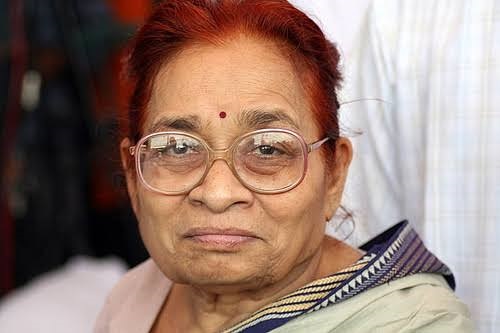
Nirmala Deshpande was a renowned Indian social worker, peace activist, writer, and politician. She dedicated her entire life to promoting Gandhian principles, communal harmony, women’s empowerment, and social equality. Inspired by Mahatma Gandhi’s philosophy of non-violence and service to humanity, she worked tirelessly for peace and the upliftment of disadvantaged communities.
Early Life
Nirmala Deshpande was born into a family that valued education and social responsibility. Her father, Purushottam Yashwant Deshpande, was a freedom fighter and social reformer who influenced her interest in public service.
From a young age, she was inspired by the ideals of Mahatma Gandhi and decided to dedicate her life to social work and nation-building.
Birth Date and Death
- Birth: 19 October 1929
- Birthplace: Nagpur, Central Provinces, British India (present-day Maharashtra, India)
- Death: 1 May 2008
- Place of Death: New Delhi, India
Nirmala Deshpande lived for 78 years and spent most of her life working for peace and social welfare.
Education and Career
Nirmala Deshpande completed her education in Maharashtra. She earned a master’s degree in Political Science from the University of Nagpur.
After completing her studies, she joined the Sarvodaya movement, which was based on Mahatma Gandhi’s ideas of equality, non-violence, and the welfare of all.
She became closely associated with Vinoba Bhave and participated in the Bhoodan Movement, which encouraged landowners to donate land for the benefit of landless farmers.
Career and Achievements
Nirmala Deshpande made significant contributions throughout her life:
- Actively participated in the Bhoodan and Sarvodaya movements.
- Worked for peace and friendship between India and Pakistan.
- Promoted communal harmony and understanding among different communities.
- Advocated for women’s rights and social justice.
- Served as a Member of Parliament in the Rajya Sabha.
- Founded organizations dedicated to peace and social development.
- Worked for the welfare of tribal communities and rural populations.
- Wrote extensively on social issues, spirituality, and Gandhian philosophy.
She was widely respected as a messenger of peace and non-violence.
Why Did Nirmala Deshpande Receive the Padma Vibhushan Award?
Nirmala Deshpande was awarded the Padma Vibhushan in 2006 for her exceptional contribution to public affairs.
She received this prestigious honour because of:
- Her lifelong dedication to Gandhian social work.
- Her efforts to promote peace, non-violence, and national unity.
- Her contribution to rural development and social justice.
- Her work for communal harmony and better relations between India and Pakistan.
- Her commitment to serving underprivileged communities.
Field of Achievements
Nirmala Deshpande contributed significantly in the following fields:
1. Social Service
She worked for the upliftment of poor, rural, and marginalized communities.
2. Peace and Non-Violence
She promoted Gandhi’s message of peace and worked for harmony among communities.
3. Women Empowerment
She supported equal opportunities and rights for women.
4. Literature and Writing
She wrote books and articles spreading ideas of social reform and human values.
5. Politics and Public Affairs
Through her role as a Rajya Sabha member, she contributed to public discussions and social policies.
Awards and Honours
Nirmala Deshpande received several prestigious awards, including:
- Padma Vibhushan (2006) – India’s second-highest civilian award.
- Padma Bhushan (1999) – awarded for her contribution to social work.
- Rajiv Gandhi National Sadbhavana Award (2000) – for promoting communal harmony.
- UNESCO Prize for Peace Education (2005).
- Several national and international recognitions for peace and social service.
Interesting Facts About Nirmala Deshpande
- She was a lifelong follower of Mahatma Gandhi’s principles.
- She walked thousands of kilometres as part of social movements inspired by Vinoba Bhave.
- She worked to improve India–Pakistan relations through peace initiatives.
- She was known as the “Gandhian conscience of India.”
- She never married and devoted her life completely to social service.
- She wrote more than a hundred books and articles.
Legacy and Inspiration
Nirmala Deshpande’s life remains an example of selfless service, compassion, and dedication to humanity. Her commitment to peace and equality continues to inspire social workers and peace activists.
Her work showed that lasting social change can be achieved through dialogue, understanding, and non-violent action.
Contribution to the Nation
Nirmala Deshpande contributed to India by:
- Promoting Gandhian values of truth, peace, and non-violence.
- Working for social equality and rural development.
- Strengthening communal harmony and national unity.
- Supporting women’s empowerment and human rights.
- Building bridges of friendship between India and neighbouring countries.
- Inspiring generations to serve society selflessly.
Conclusion
Nirmala Deshpande was a remarkable social reformer, peace activist, and follower of Gandhian ideals. Her lifelong dedication to humanity, equality, and harmony earned her the prestigious Padma Vibhushan award. Through her work in social service, peace-building, and public life, she left a lasting legacy and continues to inspire people across India.
About the Author