

Introduction
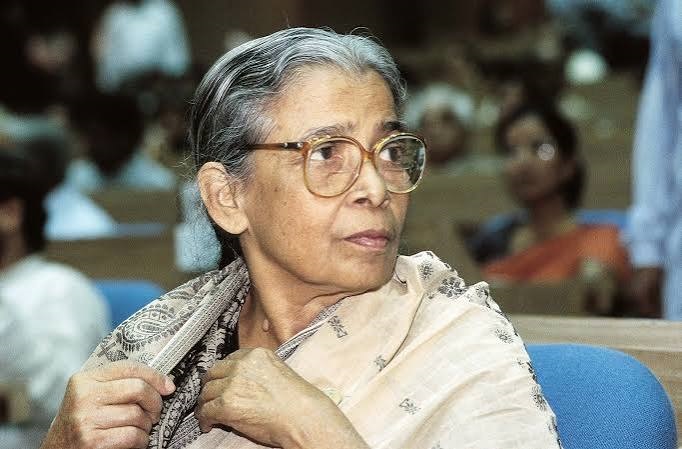
Mahasweta Devi was one of India’s most influential writers, social activists, and human rights advocates. She wrote extensively in Bengali and used literature as a powerful tool to highlight the struggles of tribal communities, women, and marginalized groups. Through her novels, stories, and activism, she became a strong voice for social justice and equality.
Early Life
Mahasweta Devi was born into a culturally rich Bengali family. Her father, Manish Ghatak, was a poet and writer, and her mother, Dharitri Devi, was a writer and social worker. She grew up surrounded by literature, art, and social awareness.
The social and economic struggles she witnessed influenced her writing and inspired her lifelong commitment to the rights of disadvantaged communities.
Birth Date and Death
- Birth: 14 January 1926
- Birthplace: Dhaka, Bengal Presidency, British India (present-day Bangladesh)
- Death: 28 July 2016
- Place of Death: Kolkata, West Bengal, India
Mahasweta Devi lived for 90 years and dedicated much of her life to literature and social activism.
Education and Career
Mahasweta Devi completed her early education in Dhaka and later studied in West Bengal.
Her educational background includes:
- Bachelor’s degree in English from Visva-Bharati University.
- Master’s degree in English from University of Calcutta.
She began her career as a teacher and journalist before becoming a full-time writer. Her literary career included novels, short stories, essays, and biographies.
Career and Achievements
Mahasweta Devi made remarkable contributions through her writing and activism:
- Wrote more than 100 novels and numerous short stories.
- Highlighted the struggles of tribal communities, labourers, and oppressed groups.
- Worked directly with tribal communities in states such as West Bengal, Bihar, and Jharkhand.
- Advocated for the rights of indigenous people and social justice.
- Created powerful literary works based on real social issues.
Some of her famous works include:
- Hajar Churashir Maa – a novel about political violence and human suffering.
- Rudali – a story highlighting poverty and social inequality.
- Aranyer Adhikar – based on tribal leader Birsa Munda.
- Jhansi Rani – based on Rani Lakshmibai.
Why Did Mahasweta Devi Receive the Padma Vibhushan Award?
Mahasweta Devi was awarded the Padma Vibhushan in 2011 for her exceptional contribution to literature and education.
She received this prestigious honour because of:
- Her outstanding contribution to Indian literature.
- Her powerful writings on social injustice and human rights.
- Her lifelong work for tribal communities and marginalized people.
- Her ability to bring attention to ignored social issues through storytelling.
- Her influence on Indian literature and social movements.
Field of Achievements
Mahasweta Devi made major contributions in the following fields:
1. Literature
She transformed Indian literature by writing about real-life struggles and social inequalities.
2. Social Activism
She worked for the rights and welfare of tribal and disadvantaged communities.
3. Human Rights
Her writings and activism focused on justice, dignity, and equality.
4. Journalism and Research
She documented social realities and gave a voice to communities often ignored by society.
Awards and Honours
Mahasweta Devi received numerous awards, including:
- Sahitya Akademi Award (1979) – for her novel Aranyer Adhikar.
- Padma Shri (1986) – awarded by the Government of India.
- Jnanpith Award (1996) – India’s highest literary honour.
- Ramon Magsaysay Award (1997) – for Community Leadership.
- Padma Vibhushan (2011) – India’s second-highest civilian award.
- Sahitya Akademi Fellowship (2009) – one of the highest literary honours.
Interesting Facts About Mahasweta Devi
- She was born into a family of writers and artists.
- She spent many years working closely with tribal communities.
- Her writing was inspired by real social issues and people’s struggles.
- Several of her works were adapted into films and plays.
- She used her literary success to support social causes.
- She believed that writers had a responsibility toward society.
Legacy and Inspiration
Mahasweta Devi’s legacy continues through her powerful writings and social work. She showed that literature can be a tool for bringing social change and giving a voice to the powerless.
Her dedication to justice, equality, and human dignity inspires writers, activists, and social workers around the world.
Contribution to the Nation
Mahasweta Devi contributed to India by:
- Enriching Indian literature with meaningful and socially relevant works.
- Highlighting the challenges faced by tribal and marginalized communities.
- Fighting for the rights of underprivileged people.
- Creating awareness about social injustice.
- Inspiring generations of writers and activists.
Conclusion
Mahasweta Devi was not only a great writer but also a dedicated social reformer who used her words to fight for justice and equality. Her literature gave a voice to those who were often unheard, and her activism brought attention to important social issues. Her remarkable contribution to Indian literature and society earned her the prestigious Padma Vibhushan award and secured her place as one of India’s greatest literary figures.
About the Author




