

1. Introduction
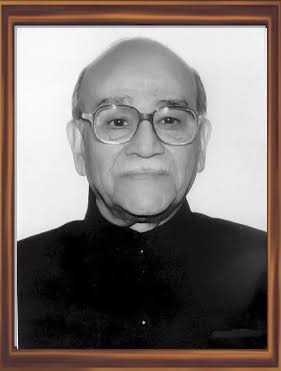
Professor Yash Pal (1926–2017) was an eminent Indian scientist, educator, institution-builder, and leading science communicator. Celebrated for his foundational work in cosmic rays and high-energy physics, he played a pivotal role in shaping India’s space program, higher education framework, and science policy. Through his popular television program Turning Point, he brought science into living rooms across the country, earning a reputation as the “people’s scientist.”
Simple Wikipedia+ 2
2. Quick facts
- Full Name: Yash Pal (often known as Yash Pal Singh) Simple Wikipedia
- Native Name: यश पाल
- Date of birth: November 26, 1926 Simple Wikipedia
- Place Of birth: Jhang, Punjab Province, British India (now in Pakistan) Wikipedia
- Nationality: Indian Kids encyclopedia facts – Kiddle
- Occupation/ Profession: Physicist, Professor, Institution Builder, Science Communicator Simple Wikipedia
- Field of Achievement: Astrophysics, Cosmic Rays, Space Technology, and Education Reform India Today
- Years Active: 1949 – 2017
3. Award Information
- Award Name: Padma Bhushan (1976) and Padma Vibhushan (2013) The Hindu
- Award Category: Civil Honors / Science and Engineering
- Award Year: 1976 and 2013 The Hindu
- Presented By: President of India
- Date of Ceremony: Annual Republic Day Investiture Ceremonies
- Citation/Official Reason: For distinguished service of a high order to science, space technology, and public education.
- Previous Recipients (optional): Prominent scientists, national thinkers, and public servants.
- Next Recipients: Subsequent annual civilian award lists.
4. Why they Receive the award?
Yash Pal received India’s highest civilian honors—culminating in the Padma Vibhushan—in recognition of his monumental contributions to cosmic ray physics, his pioneering leadership as the first Director of ISRO’s Space Applications Centre, and his transformative reforms in national education and public science communication.
5. Early Life
Born in Jhang (now Pakistan), Yash Pal spent his early childhood in Quetta. In 1935, he survived the devastating Quetta earthquake, being rescued from beneath collapsed ruins. His family later settled in Kaithal, Haryana. His education was disrupted a second time during the Partition of India in 1947 while he was studying in Lahore, forcing him and fellow displaced students to migrate to Delhi and continue their studies in improvised classrooms.
Wikipedia+ 3
6. Education
- Undergraduate Studies: Studied for a Bachelor of Science (BSc Honours) in Physics at the University of the Punjab in Lahore, completing his degree through migrated frameworks in Delhi. Wikipedia
- Master’s Degree: Master of Science (MSc) in Physics from Panjab University, Delhi (1949). Kids encyclopedia facts – Kiddle
- Doctorate: Doctor of Philosophy (PhD) in Physics from the Massachusetts Institute of Technology (MIT), USA (1958), specializing in cosmic rays and high-energy physics. Kids encyclopedia facts – Kiddle
7. Carrier Journey
- Early Research (1949–1983): Began his career at the Tata Institute of Fundamental Research (TIFR) in Mumbai, studying cosmic rays and particle physics. Kids encyclopedia facts – Kiddle
- ISRO & Space Applications (1973–1981): Served as the founding Director of the Space Applications Centre (SAC) in Ahmedabad, spearheading satellite television experiments for rural education (SITE). Testbook
- Policy & Government Roles: Chief Consultant to India’s Planning Commission (1983) and Secretary of the Department of Science and Technology (1984–1986). The Hindu
- Academic Leadership: Chairman of the University Grants Commission (UGC) from 1986 to 1991. India Today
8. Major Achievements
- Founding the Space Applications Centre: Built ISRO’s premier application wing that connected space technology directly to developmental and societal needs. The Hindu
- “Learning without Burden” (1993): Chaired the landmark MHRD committee addressing the heavy school bag and curriculum stress faced by Indian children. The Hindu
- Television Science Communication: Co-hosted Turning Point, a massively popular science television series on Doordarshan during the 1990s. The Hindu
9. Contribution to the nation
Yash Pal bridged advanced scientific research and grassroots nation-building. By deploying satellite technology for rural communication and educational broadcasting (such as the Satellite Instructional Television Experiment), he ensured that space research directly served everyday Indians. As UGC Chairman and education committee head, he restructured higher education standards and championed joyful, concept-driven learning over rote memorization.
10. Other Awards and Honours
- Padma Bhushan (1976) – Government of India The Hindu
- Marconi Fellowship (1980) – For pioneering contributions to telecommunications Kids encyclopedia facts – Kiddle
- Kalinga Prize (2009) – Awarded by UNESCO for the popularization of science Kids encyclopedia facts – Kiddle
- Padma Vibhushan (2013) – India’s second-highest civilian honor The Hindu
11. Legacy and influence
Professor Yash Pal remains an icon of scientific temper and humanism in India. His institutional vision led to the creation of autonomous inter-university centers like IUCAA, and his educational philosophy continues to guide curriculum frameworks. He passed away on July 24, 2017, leaving behind a legacy of curiosity, institutional integrity, and accessible science.
India Today+ 1
12. Interesting Facts
- As a young boy in 1935, he survived one of South Asia’s deadliest recorded earthquakes in Quetta. Wikipedia
- He shared his birthplace of Jhang with theoretical physicist and Nobel laureate Abdus Salam. Wikipedia
- He famously filed a public-interest legal case that successfully challenged unregulated private universities, leading to the closure of sub-standard institutions and protecting higher education standards. Kids encyclopedia facts – Kiddle
13. Quotes
“Science is not just a collection of facts; it is a way of looking at the world with wonder, questioning authority, and searching for underlying truths without fear.”
14. Timeline
- 1926: Born on November 26 in Jhang, British India Wikipedia
- 1949: Completed his MSc in Physics from Panjab University Wikipedia
- 1958: Earned his PhD from the Massachusetts Institute of Technology (MIT) Kids encyclopedia facts – Kiddle
- 1973: Appointed first Director of the Space Applications Centre (SAC) India Today
- 1976: Conferred the Padma Bhushan by the Government of India The Hindu
- 1986–1991: Served as Chairman of the University Grants Commission (UGC) India Today
- 1993: Released the seminal “Learning without Burden” education report The Hindu
- 2013: Honored with the Padma Vibhushan The Hindu
- 2017: Passed away on July 24 in Noida, Uttar Pradesh Kids encyclopedia facts – Kiddle
15. References
- Wikipedia: Yash Pal Wikipedia
- The Hindu / India Today – Obituary Archives & Special Reports The Hindu
- Ministry of Home Affairs, Government of India – Padma Awards Directory
16. Related Personalities
- Daulat Singh Kothari (Renowned physicist and educational mentor)
- Vikram Sarabhai (Architect of the Indian space program and colleague at TIFR/ISRO)
- Satish Dhawan (Space scientist and former ISRO Chairman)
17. Frequently Asked Questions (FAQ)
Q: Who was Professor Yash Pal?
A: He was a celebrated Indian physicist, space scientist, educator, and popular science communicator.
Simple Wikipedia
Q: What is Yash Pal best known for?
A: He is best known for his research on cosmic rays, his leadership at ISRO’s Space Applications Centre, hosting the TV show Turning Point, and authoring the “Learning without Burden” report on education reform.
Simple Wikipedia
Q: What major awards did he receive?
A: He received the Padma Bhushan in 1976, the UNESCO Kalinga Prize in 2009, and India’s second-highest civilian honor, the Padma Vibhushan, in 2013.
Kids encyclopedia facts – Kiddle
About the Author