
Introduction
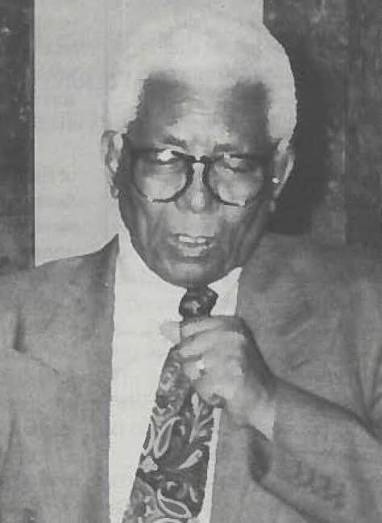
Walter Sisulu was a prominent South African freedom fighter, political leader, and anti-apartheid activist. He played a crucial role in the struggle against racial discrimination and apartheid in South Africa. As a senior leader of the African National Congress (ANC), he worked alongside leaders such as Nelson Mandela to fight for equality, democracy, and human rights. For his lifelong dedication to freedom and social justice, he was honoured with the Padma Vibhushan, one of India’s highest civilian awards.
Early Life
Walter Sisulu was born on 18 May 1912 in Ngcobo, Cape Province, South Africa.
He was born into a difficult social environment where racial discrimination and inequality were widespread under colonial rule. His experiences with injustice during his early years influenced his decision to dedicate his life to fighting for the rights of oppressed people.
He passed away on 5 May 2003 in Johannesburg, South Africa, at the age of 90.
Education and Career
Walter Sisulu had limited formal education because of financial difficulties. However, he was a self-educated person who developed a strong understanding of politics, history, and social issues.
He moved to Johannesburg as a young man and worked various jobs before entering politics. His experiences with racial inequality motivated him to join the struggle against apartheid.
In 1940, he joined the African National Congress (ANC) and became one of its most influential leaders.
Career and Achievements
1. Role in the African National Congress (ANC)
Walter Sisulu became one of the key organizers of the ANC. He helped transform the organization into a stronger movement fighting for the rights of Black South Africans.
He played an important role in establishing the ANC Youth League along with leaders including Nelson Mandela and Oliver Tambo.
2. Fight Against Apartheid
Sisulu was a leading figure in campaigns against apartheid laws that enforced racial segregation and discrimination.
He supported peaceful protests and later became involved in organizing resistance activities against the apartheid government.
3. Imprisonment and Sacrifice
In 1964, Walter Sisulu was sentenced to life imprisonment during the famous Rivonia Trial, along with Nelson Mandela and other anti-apartheid leaders.
He spent 25 years in prison, including many years on Robben Island, but continued to inspire the movement for freedom.
4. Contribution After Release
After his release from prison in 1989, Sisulu continued working for democracy and played a role in South Africa’s transition from apartheid to a democratic system.
Why Did Walter Sisulu Receive the Padma Vibhushan Award?
Walter Sisulu received the Padma Vibhushan in 1998 for his outstanding contribution to public affairs.
The award recognized:
- His lifelong struggle against apartheid.
- His dedication to equality, democracy, and human rights.
- His leadership in South Africa’s freedom movement.
- His efforts to strengthen international friendship and cooperation.
India honoured him for his commitment to justice and his role in promoting the values of freedom and equality.
Field of Achievements
Walter Sisulu made significant contributions in the following fields:
1. Human Rights and Social Justice
He fought against racial discrimination and worked for equal rights for all citizens.
2. Politics and Leadership
He was a key leader of the ANC and helped guide South Africa’s liberation movement.
3. Freedom Movement
His efforts contributed greatly to ending apartheid and establishing democracy in South Africa.
4. International Relations
He helped strengthen global support for the anti-apartheid movement.
Awards and Honours
Major awards and recognitions received by Walter Sisulu include:
- Padma Vibhushan (1998) – India’s second-highest civilian award.
- Isithwalandwe Seaparankwe – One of the highest honours awarded by the ANC.
- Several international recognitions for his contribution to peace, freedom, and human rights.
Interesting Facts About Walter Sisulu
- Walter Sisulu was a close friend and mentor of Nelson Mandela.
- He introduced Nelson Mandela to the African National Congress.
- He spent 25 years in prison for opposing apartheid.
- He was known for his humility, wisdom, and leadership skills.
- His wife, Albertina Sisulu, was also a famous anti-apartheid activist.
Legacy and Inspiration
Walter Sisulu’s life remains a symbol of courage, patience, and dedication to justice. He showed that determination and peaceful resistance can create powerful social change.
His struggle for equality continues to inspire people around the world to stand against discrimination and work for human rights.
Contribution to the Nation
Walter Sisulu’s major contributions to South Africa include:
- Fighting against apartheid and racial injustice.
- Helping build the African National Congress as a major freedom movement.
- Supporting the establishment of a democratic South Africa.
- Inspiring generations of activists and leaders.
- Promoting equality, unity, and human dignity.
Conclusion
Walter Sisulu was a remarkable freedom fighter and leader who devoted his life to achieving equality and democracy in South Africa. His courage, sacrifice, and commitment to justice made him one of the most respected figures in the anti-apartheid movement. The Padma Vibhushan award honoured his extraordinary contribution to humanity and public service. His legacy continues to inspire people across the world to fight for freedom and equality.
About the Author