
Introduction
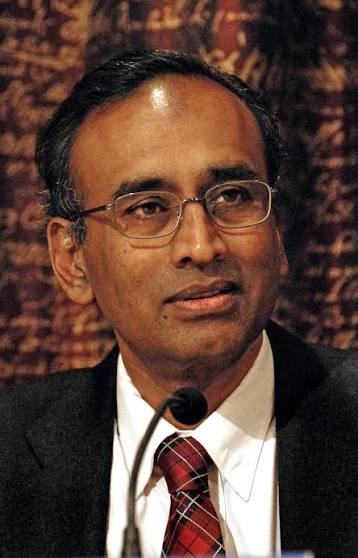
Venkatraman Ramakrishnan, popularly known as Venki Ramakrishnan, is a world-renowned structural biologist known for his groundbreaking research on the ribosome, a cellular structure responsible for making proteins. His discoveries greatly improved our understanding of how cells function and helped advance medical research.
He is one of the most respected scientists of Indian origin and has made significant contributions to biology, medicine, and scientific education. In recognition of his exceptional contribution to science, he was awarded the Padma Vibhushan, one of India’s highest civilian honours.
Why Did Venki Ramakrishnan Receive the Padma Vibhushan Award?
Venki Ramakrishnan received the Padma Vibhushan in 2020 for his outstanding contribution to the field of science and technology.
He was honoured for:
- His pioneering research on the structure and function of ribosomes.
- His contribution to understanding how genetic information is converted into proteins.
- His work that helped scientists develop better treatments and antibiotics.
- His achievements in promoting scientific research globally.
- His role as a leader in international scientific organizations.
His discoveries have had a major impact on biology, medicine, and the understanding of life at the molecular level.
Early Life
Venki Ramakrishnan was born into a family of scientists and academics. His parents, C. V. Ramakrishnan and Rajalakshmi Ramakrishnan, were both involved in science and education.
Growing up in India, he developed a strong interest in mathematics and science. His curiosity about how the natural world works encouraged him to pursue a career in scientific research.
Birth Date and Death
- Born: 1 April 1952
- Birthplace: Chidambaram, Tamil Nadu, India
- Current status: Alive
(Venki Ramakrishnan is not deceased.)
Education and Career
Venki Ramakrishnan completed his early education in India before moving abroad for higher studies.
Education:
- Studied physics at Maharaja Sayajirao University of Baroda.
- Earned a PhD in physics from Ohio University.
- Later trained in biology and molecular biology at University of California, San Diego.
Career:
- Worked as a scientist at several leading research institutions.
- Became a group leader at the MRC Laboratory of Molecular Biology.
- Served as President of the Royal Society from 2015 to 2020.
- Continues to contribute to scientific research and global science policy.
Career and Achievements
Venki Ramakrishnan’s greatest achievement was solving the detailed structure of the ribosome.
Major Scientific Contributions:
1. Discovery of Ribosome Structure
Ribosomes are tiny molecular machines inside cells that create proteins. Ramakrishnan’s research revealed their structure at the atomic level.
2. Nobel Prize Achievement
In 2009, he received the Nobel Prize in Chemistry along with Thomas A. Steitz and Ada Yonath for studies of the structure and function of the ribosome.
3. Contribution to Medicine
His research helped scientists understand how antibiotics target bacteria and contributed to the development of improved medicines.
4. Leadership in Science
As President of the Royal Society, he worked to support scientific progress and international cooperation.
Field of Achievements
Venki Ramakrishnan has made contributions in the fields of:
- Structural biology
- Molecular biology
- Biochemistry
- Genetics
- Biomedical research
- Scientific leadership and education
His research connected the fields of chemistry and biology by explaining the molecular processes essential for life.
Awards and Honours
Some major awards and recognitions received by Venki Ramakrishnan include:
- Nobel Prize in Chemistry (2009)
- Padma Vibhushan (2020)
- Knight Bachelor Honour (2022) by the United Kingdom for services to science
- Fellow of the Royal Society (FRS)
- Louis-Jeantet Prize for Medicine (2007)
- Heatley Medal (2008)
Interesting Facts About Venki Ramakrishnan
- He changed his research field from physics to biology, showing the importance of lifelong learning.
- He is among the few scientists of Indian origin to win a Nobel Prize in science.
- His Nobel Prize-winning work focused on structures millions of times smaller than a human hair.
- He served as President of one of the world’s oldest scientific organizations, the Royal Society.
- He has written books about science and scientific discovery.
- He believes that scientific research requires curiosity, teamwork, and persistence.
Legacy and Inspiration
Venki Ramakrishnan’s life is an inspiration for students and researchers around the world. His journey shows that knowledge is not limited to one subject and that combining different fields can lead to important discoveries.
His success encourages young people to pursue science, innovation, and research with dedication and creativity.
Contribution to the Nation
Venki Ramakrishnan has contributed to India by:
- Bringing global recognition to Indian scientific talent.
- Inspiring Indian students to pursue careers in science.
- Supporting scientific education and research.
- Representing India’s achievements in international science.
- Encouraging collaboration between scientists worldwide.
His achievements have strengthened India’s reputation in the global scientific community.
Conclusion
Venki Ramakrishnan is one of the most celebrated scientists of Indian origin. Through his groundbreaking research on ribosomes, he has changed our understanding of how life works at the molecular level. His Nobel Prize, Padma Vibhushan award, and international leadership reflect his extraordinary contribution to science.
His journey from India to becoming a global scientific leader proves the power of curiosity, hard work, and dedication. His work continues to inspire future generations of scientists and innovators.
About the Author