
- Introduction
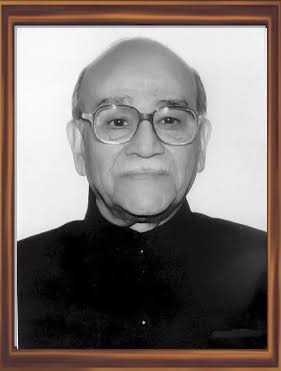
Vasudev Vishnu Mirashi (1893–1985) was a towering figure in modern Indian scholarship, renowned globally as a preeminent Indologist, epigraphist, and Sanskrit authority. Born in a modest family in rural Maharashtra, he rose through sheer academic brilliance to become one of the twentieth century’s most definitive decoders of ancient Indian history.
2. Quick Facts
- Full Name: Vasudev Vishnu Mirashi
- Native Name: वासुदेव विष्णु मिराशी Alchetron.com
- Date of Birth: 13 March 1893 Alchetron.com
- Place of Birth: Kuwale village, Deogad taluk, Ratnagiri district, Maharashtra, India Alchetron.com
- Nationality: Indian Alchetron.com
- Occupation/Profession: Professor, Historian, Epigraphist, and Author
- Field of Achievement: Indology, Sanskrit Literature, Epigraphy, and Numismatics Alchetron.com
- Years Active: 1917–1985
3. Award Information (Focus: Padma Bhushan) Alchetron.com
- Award Name: Padma Bhushan
- Award Category: Civil Honour (Third-highest civilian award in India)
- Award Year: 1975 Alchetron.com
- Presented By: The President of India Alchetron.com
- Date of Ceremony: 1975 (Standard annual investiture ceremony at Rashtrapati Bhavan)
- Citation/Official Reason: Recognized for his exceptional service and lifelong contributions to literature, education, and the study of ancient Indian history and epigraphy.
- Previous Recipients (Optional): Distinguished leaders, artists, and scholars from varied disciplines of the 1975 civilian honors cohort.
- Next Recipients: Succeeding batches of the Padma Bhushan in subsequent years.
4. Why They Received the Award
Dr. Mirashi was awarded the Padma Bhushan for decoding the obscured histories of ancient and medieval Indian dynasties through painstaking numismatic and epigraphical research. By deciphering complex historical data from the Vakataka, Kalchuri-Chedi, and Silahara eras, he solved long-standing chronological mysteries of ancient India, providing foundational source material for historians worldwide.
5. Early Life
Born into a middle-class Karhade Brahmin family in the coastal Ratnagiri district of Maharashtra, Mirashi spent his formative years dealing with modest financial circumstances. He completed his primary and secondary education at Kolhapur (attending Rajaram High School), where he consistently topped his classes, earning multiple merit scholarships that supported his early academic journey.
Alchetron.com+ 1
6. Education
Mirashi’s academic track record was stellar:
- Schooling: Rajaram High School, Kolhapur—won multiple state and institutional scholarships for standing first. Wikipedia
- Undergraduate: B.A. in Sanskrit from Deccan College, Pune (1914). Though he initially intended to study mathematics, scholarship rules mandated Sanskrit—a twist of fate that shaped his life’s work. Alchetron.com+ 1
- Postgraduate: M.A. in Sanskrit from Deccan College, Pune (1917), standing first in the language group. Alchetron.com
- Doctorate & Law: Earned his Ph.D. from the University of Bombay with a thesis on Dharmasutras and Hindu law evolution (winning the prestigious Vishwanath Mandalik Gold Medal) alongside an LL.B. degree. Wikipedia
7. Career Journey
- 1917–1919: Began his professional life as an Assistant Professor of Sanskrit at Elphinstone College, Mumbai. Wikipedia
- 1919–1942: Appointed to the Sanskrit chair at Morris College, Nagpur, where he spent decades teaching and inspiring students. Alchetron.com
- 1942–1947: Elevated to Principal of Morris College. Alchetron.com
- 1947–1950: Served as Principal of Vidarbha Mahavidyalaya in Amravati. Wikipedia
- 1957–1966: Worked as Honorary Professor of Ancient Indian History and Culture and Head of the Post-Graduate Humanities Department at Nagpur University. Alchetron.com
8. Major Achievements
- Authored over 30 major research books in English, Marathi, and Hindi, alongside more than 275 scholarly journal papers. Alchetron.com
- Spearheaded monumental volumes for the Archaeological Survey of India’s Corpus Inscriptionum Indicarum series, including:
- Inscriptions of the Kalchuri-Chedi Era (1955) Alchetron.com
- Inscriptions of the Vakatakas (1963) Alchetron.com
- Inscriptions of the Silaharas (1977) Alchetron.com
- Definitive critical studies and translations on classical Sanskrit master playwrights, Kalidasa and Bhavabhuti.
9. Contribution to the Nation
Dr. Mirashi rescued vast chapters of forgotten Indian heritage from obscurity. Before his epigraphical breakthroughs, the political map of central and deccan India during the post-Gupta period (such as the Vakataka dynasty, who were contemporaries of the Guptas) was heavily fragmented and misunderstood. His chronological mappings anchored the timeline of Ajanta caves development, ancient coinage, and regional governance, giving India a clearer, scientifically verified record of its ancient past.
10. Other Awards and Honours
- Mahamahopadhyaya (1941): Conferred by the British Indian Government. Alchetron.com
- General Presidency Roles: Elected General President of the Numismatic Society of India (1951), All India Oriental Conference (1959), and Indian History Congress (1961). Alchetron.com
- Honorary D.Litt.: Conferred by Saugar University (1958) and Nagpur University (1960). Alchetron.com
- Certificate of Honour (1966): Awarded by the President of India for proficiency in Sanskrit. Alchetron.com
- Sahitya Akademi Fellowship (1973): The highest literary honor bestowed by India’s National Academy of Letters. Alchetron.com
11. Legacy and Influence
Dr. Mirashi remains a foundational figure in Indian archaeology and Indology. His rigorous, evidence-based approach to epigraphy set the gold standard for subsequent generations of historians. Institutions and university history departments across India still rely heavily on his editions of inscriptions as primary texts for ancient Indian history.
12. Interesting Facts
- The Accidental Sanskritist: He originally wanted to major in mathematics, but a scholarship requirement forced him to take up Sanskrit—which ultimately unlocked his historic career. Wikipedia
- Prolific Polyglot: He seamlessly researched and published authoritative texts across three distinct languages: English, Marathi, and Hindi. Alchetron.com
- Longevity of Scholarship: He remained actively engaged in historical research well into his late 80s, publishing critical analyses spanning over six decades.
13. Quotes
“Inscriptions are the solid bedrock upon which the edifice of ancient Indian history must be safely constructed, free from the shifting sands of mere myth or speculation.” — Vasudev Vishnu Mirashi (Paraphrased from his methodological writings on epigraphy)
14. Timeline
- 1893: Born on March 13 in Kuwale village, Ratnagiri. Alchetron.com
- 1914: Graduated with a B.A. in Sanskrit from Deccan College, Pune. Alchetron.com
- 1917: Completed his M.A. in Sanskrit. Alchetron.com
- 1919: Appointed to the Sanskrit chair at Morris College, Nagpur. Alchetron.com
- 1941: Awarded the title of Mahamahopadhyaya by the British administration. Alchetron.com
- 1955: Published Inscriptions of the Kalchuri-Chedi Era. Alchetron.com
- 1963: Published Inscriptions of the Vakatakas. Alchetron.com
- 1973: Elected a Fellow of the Sahitya Akademi. Alchetron.com
- 1975: Awarded the Padma Bhushan by the President of India. Alchetron.com
- 1985: Passed away on April 3 at the age of 92. Wikipedia
15. References
- Corpus Inscriptionum Indicarum volumes by V.V. Mirashi (ASI). Alchetron.com
- Government of India, Ministry of Home Affairs — Padma Awards Directory. Wikipedia
- Biographical archives of the Sahitya Akademi and Nagpur University records.
16. Related Personalities
- Kalidasa (Classical Sanskrit poet and dramatist extensively researched by Mirashi)
- Dr. R. G. Bhandarkar (Pioneering Maharashtrian Indologist and orientalist)
- Pandurang Vaman Kane (Indologist, Sanskrit scholar, and Bharat Ratna recipient)
- Hemachandra Raychaudhuri (Prominent contemporary ancient Indian historian)
17. Frequently Asked Questions (FAQ)
Q: What is Vasudev Vishnu Mirashi most famous for?
A: He is best known for his ground-breaking work in epigraphy and numismatics—specifically deciphering stone and copper-plate inscriptions that illuminated the histories of the Vakataka, Kalchuri, and Silahara dynasties.
Q: When did he receive the Padma Bhushan?
A: He was awarded the Padma Bhushan in 1975 by the President of India.
Alchetron.com
Q: Did he write books in Marathi?
A: Yes, alongside his extensive academic work in English and Sanskrit, he wrote several seminal research books and essays in Marathi and Hindi.
Alchetron.com
Q: Which university did he spend most of his teaching career at?
A: He spent significant portions of his career teaching at Morris College (Nagpur) and later served as a professor and head of the humanities department at Nagpur University.
Alchetron.com
About the Author