
1. Introduction
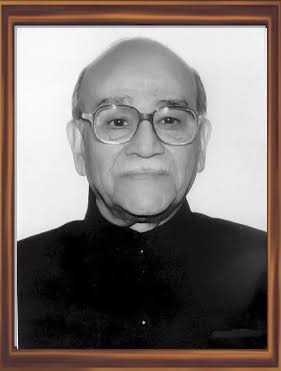
Vasant Shankar Huzurbazar, universally known as V. S. Huzurbazar, was a pioneering Indian mathematician and statistician whose foundational work in probability theory, mathematical statistics, and sufficient statistics earned him global renown. As the founding head of the Department of Statistics at the University of Pune, he transformed India into a recognized hub for advanced statistical research, leaving behind an academic lineage that continues to influence modern data science.
2. Quick facts
- Full Name: Vasant Shankar Huzurbazar
- Native Name: वसंत शं. हुजुर्बाजार
- Date of birth: 15 September 1919
- Place Of birth: Kolhapur State, British India (now Maharashtra, India)
- Nationality: Indian
- Occupation/ Profession: Statistician, Mathematician, and University Professor
- Field of Achievement: Mathematical Statistics and Probability Theory
- Years Active: 1941–1991
3. Award Information
- Award Name: Padma Bhushan
- Award Category: Civilian Award (Literature and Education / Science and Engineering)
- Award Year: 1974
- Presented By: Government of India
- Date of Ceremony: 1974 (Annual investiture ceremony at Rashtrapati Bhavan)
- Citation/Official Reason: In recognition of his outstanding contributions and distinguished services to the field of science and education, specifically statistical research.
- Previous Recipient: Notable civilian honorees of the 1973/1974 national awards cycle
- Next Recipient: Subsequent honorees of the 1975 civilian awards cycle
4. Why they Receive the award?
Huzurbazar was awarded the Padma Bhushan for his pioneering research in mathematical statistics, his global academic prestige (including winning Cambridge’s prestigious Adams Prize), and his monumental role in establishing world-class institutional frameworks for statistics education in post-independence India.
5. Early Life
Born in Kolhapur into a family that valued deep scholarship, Huzurbazar displayed an early, exceptional aptitude for numbers and logical reasoning. He completed his high school education at the historic Rajaram High School in Kolhapur, where his analytical brilliance began to stand out. Raised during a period of rising national consciousness, he channeled his intellect strictly into rigorous academic pursuits, setting high standards for scientific inquiry.
6. Education
- Completed his high school education at Rajaram High School, Kolhapur.
- Earned his Bachelor of Science (B.Sc.) degree from the University of Mumbai.
- Obtained his Master of Science (M.Sc.) in Statistics from Banaras Hindu University (BHU) during 1940–1941.
- Earned his Doctor of Philosophy (Ph.D.) in Statistics from the University of Cambridge in 1950, working under the supervision of the legendary mathematician and physicist Sir Harold Jeffreys.
7. Carrier Journey
- Early Academic Roles: Served in initial faculty and administrative positions at Gauhati University, Lucknow University, and as a statistician in the Bureau of Economics and Statistics for the Government of Bombay.
- University of Pune (1953–1976): Recruited as the founder and head of the Department of Statistics, where he single-handedly built an internationally respected school of statistical thought over two decades.
- Global Visiting Professorships: Served as a visiting professor at Iowa State University (1962) and the University of Manitoba, Canada (1976–1979).
- University of Denver (1979–1991): Concluded his teaching career as a professor of statistics at the University of Denver, Colorado, remaining active in research until his passing.
8. Major Achievements
- Awarded the prestigious Adams Prize by the University of Cambridge in 1960 for his outstanding contributions to mathematics and statistics—making him one of the rare global scholars to receive this distinction.
- Authored the definitive academic monograph Sufficient Statistics (1976), published by Taylor & Francis, which remains a standard reference in theoretical statistics.
- Elected as a Fellow of the Indian National Science Academy (FNA) in 1961 and a Fellow of the American Statistical Association (ASA) in 1983.
9. Contribution to the nation
Huzurbazar laid the structural bedrock for modern statistical science in India. By shaping the curriculum at Pune University and mentoring generations of brilliant researchers, he ensured that India could independently produce world-class econometricians, planners, and data theoreticians. His theoretical frameworks assisted in rigorous data validation methods used in scientific planning and national development.
10. Other Awards and Honours
- Adams Prize (1960): Conferred by the University of Cambridge.
- Fellow of the Indian National Science Academy (FNA, 1961).
- Padma Bhushan (1974): Awarded by the Government of India.
- Fellow of the American Statistical Association (1983).
11. Legacy and influence
Prof. Huzurbazar’s legacy is preserved through his profound mathematical formulations and the elite academic ecosystem he built in Pune. His scholarly gene pool extends remarkably: both of his daughters, Snehalata V. Huzurbazar and Aparna V. Huzurbazar, became prominent international statisticians. Furthermore, he was the maternal uncle of the world-renowned Indian astrophysicist Jayant Narlikar, reflecting an extraordinary family lineage of elite scientific intellect.
12. Interesting Facts
- The Cambridge Connection: Under Sir Harold Jeffreys at Cambridge, Huzurbazar solved complex problems involving exact tests of hypotheses, cementing his reputation as a theoretical visionary.
- Adams Prize Prestige: Winning the Cambridge Adams Prize put him in an elite global bracket, as it is one of the oldest and most fiercely competitive math prizes in the UK, historically awarded to giants like James Clerk Maxwell and G.G. Stokes.
- Scientific Dynasty: Mathematics and rigorous science ran deep in his household, producing an academic environment that naturally nurtured multiple generations of high-level researchers.
13. Quotes
“In statistical inference, the truth does not always shout; it is whispered through data, and it is the mathematician’s duty to listen without bias.” — Attributed to V. S. Huzurbazar’s methodological philosophy.
14. Timeline
- 1919: Born on September 15 in Kolhapur State, British India.
- 1941: Completed his M.Sc. in Statistics from Banaras Hindu University.
- 1950: Earned his Ph.D. from the University of Cambridge under Sir Harold Jeffreys.
- 1953: Appointed as the founder head of the Department of Statistics at the University of Pune.
- 1960: Awarded the prestigious Adams Prize by the University of Cambridge.
- 1974: Conferred the Padma Bhushan by the Government of India.
- 1976: Published his seminal book Sufficient Statistics.
- 1979–1991: Served as a professor at the University of Denver, USA.
- 1991: Passed away on November 15 at the age of 72.
15. References
- Indian National Science Academy (INSA). “Vasant Shankar Huzurbazar – Deceased Fellow Detail.” INSA Biographical Memoirs.
- Wikipedia contributors. “V. S. Huzurbazar.” Wikipedia, The Free Encyclopedia.
- Indian Academy of Sciences (IAS). “Prof. Vasant Shankar Huzurbazar – Fellowship Profile.”
16. Related Personalities
- Sir Harold Jeffreys
- Jayant Narlikar
- Snehalata V. Huzurbazar
- P. C. Mahalanobis
- C. R. Rao
17. Frequently Asked Questions (FAQ)
Q: Who was V. S. Huzurbazar?
A: V. S. Huzurbazar was a legendary Indian mathematician and statistician known for his pioneering research in probability theory and for establishing the Department of Statistics at Pune University.
Q: What is V. S. Huzurbazar famous for academically?
A: He is internationally celebrated for his work on sufficient statistics, estimation theory, and for winning the University of Cambridge’s prestigious Adams Prize in 1960.
Q: Did V. S. Huzurbazar receive any national civilian honors?
A: Yes, he was awarded the Padma Bhushan by the Government of India in 1974.
Q: How is he connected to Jayant Narlikar?
A: V. S. Huzurbazar was the maternal uncle of the eminent Indian astrophysicist Prof. Jayant Narlikar.
About the Author