

1. Introduction
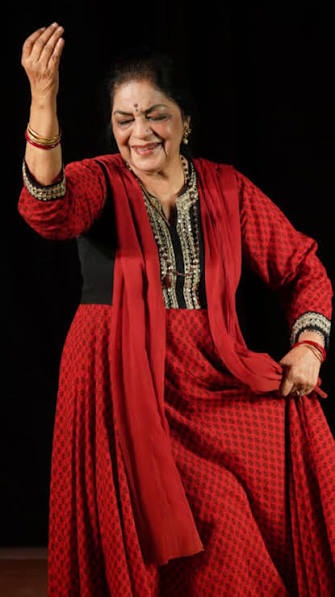
Uma Sharma is a celebrated Indian classical dancer, choreographer, and teacher who stands as one of the preeminent living exponents of the Kathak dance form. Renowned for her technical brilliance and expressive grace, she is most celebrated for her tireless efforts in reviving the traditional Natwari Nritya and the Raslila of Brindavan, reconnecting Kathak with its sacred mythological roots while pioneering thematic dance-dramas on modern stages across the globe.
2. Quick Facts
- Full Name: Uma Sharma
- Native Name: उमा शर्मा (Hindi)
- Date of Birth: November 20, 1942
- Place of Birth: Delhi, British India (family roots in Dholpur, Rajasthan)
- Nationality: Indian
- Occupation / Profession: Classical Dancer, Choreographer, and Guru
- Field of Achievement: Kathak Dance and Cultural Arts
- Years Active: 1960s–Present
3. Award Information (Focus: Padma Shri)
- Award Name: Padma Shri
- Award Category: India’s Fourth-Highest Civilian Award
- Award Year: 1973
- Presented By: V. V. Giri (President of India)
- Date of Ceremony: March/April 1973
- Citation / Official Reason: For distinguished service and pioneering contributions to the promotion and enrichment of Indian classical dance, making her the youngest classical dancer to receive this honor at the time.
- Previous Recipients (1972): Prominent artists, scientists, and public figures.
- Next Recipients (1974): Renowned cultural icons and public servants.
4. Why Did She Receive the Award?
Uma Sharma received the Padma Shri in 1973 in recognition of her exceptional talent and early mastery over the complex vocabulary of Kathak. As a young performer who brought fresh dynamism, intense rhythmic precision, and deep emotional resonance (abhinaya) to the stage, she captivated audiences nationwide and emerged as a leading cultural ambassador for India.
5. Early Life
Born in Delhi into a distinguished literary family—her father, Acharya Pandit Vasudeva Sharma, was a prominent Sanskrit scholar and writer—Uma grew up immersed in art, classical poetry, and philosophy. Her family originally hailed from Dholpur, Rajasthan. Surrounded by intellectuals, poets, and musicians, she developed an innate aesthetic sense and an early affinity for rhythm and narrative performance.
6. Education
- Schooling: Completed her early education at St. Thomas’ School, New Delhi.
- Higher Education: Graduated with a Bachelor’s degree from the prestigious Lady Shri Ram College for Women (LSR) in New Delhi, successfully balancing rigorous academic studies with intensive dance training.
7. Career Journey
Uma Sharma received rigorous classical training under legendary gurus of the Jaipur gharana, including Guru Hiralalji, Girvar Dayal, and Pandit Sunder Prasad, who emphasized intricate footwork and rhythmic patterns. She later sought the guidance of Lucknow gharana masters Shambhu Maharaj and Birju Maharaj to master the subtle art of abhinaya, achieving a rare creative fusion of both traditions. She established her own academy, Bharatiya Sangeet Sadan (founded by her father in 1946), where she has trained generations of students. She has performed extensively across India and on international stages representing the Indian Council for Cultural Relations (ICCR).
8. Major Achievements
- Youngest Padma Shri Recipient in Dance: Conferred with India’s fourth-highest civilian honor in 1973 at an exceptionally young age.
- Revival of Natwari Nritya: Credited with reviving the ancient, temple-based Natwari Nritya and the traditional Raslila of Brindavan, anchoring Kathak firmly in its devotional origins.
- Thematic Productions: Created critically acclaimed, full-length solo dance dramas, most notably Stree (Woman), which explores female identity across historical epochs.
- Padma Bhushan: Later honored with India’s third-highest civilian award, the Padma Bhushan, in 2001.
9. Contribution to the Nation
Uma Sharma has profoundly enriched India’s cultural landscape by preserving and promoting authentic classical traditions. Through her international tours, she served as a cultural ambassador, showcasing India’s rich heritage globally. Domestically, her academy has ensured that classical art forms remain accessible to aspiring artists, preserving the sanctity of traditional Gharana styles.
10. Other Awards and Honours
- Padma Shri: Conferred by the Government of India (1973).
- Padma Bhushan: Conferred by the Government of India (2001).
- Sangeet Natak Akademi Award: Recognizing her excellence and contribution to Kathak.
- Sahitya Kala Parishad Award: Honoring her artistic contributions in the capital.
- Srijan Manishi Title: Conferred by Akhil Bhartiya Vikram Parishad, Kashi (2013).
11. Legacy and Influence
Uma Sharma’s legacy rests on her relentless pursuit of artistic authenticity and her ability to bridge traditional temple traditions with contemporary theatrical presentation. By integrating rigorous Jaipur rhythmic footwork with Lucknow expressive grace, she expanded the artistic boundaries of Kathak, inspiring countless dancers to view dance as a medium of spiritual and social expression.
12. Interesting Facts
- Literary Household: Growing up in a household deeply rooted in Sanskrit literature and classical poetry gave her an extraordinary command over the lyrical texts she interprets through dance.
- Pioneering Soloist: Unlike many performers who rely heavily on large troupes, she is celebrated for her powerful solo narrative performances that carry an entire dramatic arc single-handedly.
- Lifelong Institution Custodian: She continues to run and guide the Bharatiya Sangeet Sadan in New Delhi, maintaining a nearly 80-year family commitment to music and dance education.
13. Quotes
“Dance is not merely physical movement; it is a spiritual journey where rhythm meets poetry, and the soul of the artist communes with the divine.” — Uma Sharma
14. Timeline
- 1942: Born on November 20 in Delhi.
- 1946: Her father founds the Bharatiya Sangeet Sadan.
- 1960s: Emerges as a prominent professional Kathak soloist under leading masters of the Jaipur and Lucknow gharanas.
- 1973: Conferred with the Padma Shri by the Government of India, becoming the youngest dancer to receive the honor.
- 1987: Receives the Sangeet Natak Akademi Award.
- 2001: Honored with the Padma Bhushan by the Government of India.
- 2013: Honored with the title Srijan Manishi in Kashi.
15. References
- Ministry of Home Affairs, Government of India – Padma Awardees Database.
- Wikipedia – Uma Sharma (Kathak Dancer) Profile & Archives.
- Sangeet Natak Akademi – Awardee Archives.
- Cultural and Retrospective Features from The Hindu and Narthaki.
16. Related Personalities
- Pandit Birju Maharaj: Legendary Kathak maestro of the Lucknow gharana who helped shape classical expression and choreography.
- Shambhu Maharaj: Iconic Kathak guru renowned for his mastery over abhinaya.
- Pandit Sunder Prasad: Renowned Jaipur gharana exponent who trained early generations of classical dancers.
17. Frequently Asked Questions (FAQ)
Q1: Who is Uma Sharma? A: Uma Sharma is a celebrated Indian classical dancer, choreographer, and guru widely known as a leading exponent of the Kathak dance form.
Q2: What is her primary contribution to Kathak? A: She is especially famous for reviving the traditional Natwari Nritya and the Raslila of Brindavan, reconnecting Kathak with its classical and devotional origins.
Q3: Which major civilian awards has she received? A: She was awarded the Padma Shri in 1973 (becoming the youngest dancer to receive it at the time) and the Padma Bhushan in 2001.
Q4: What academy does she lead? A: She runs the Bharatiya Sangeet Sadan in New Delhi, a classical music and dance academy originally founded by her father in 1946.
About the Author




