
Introduction
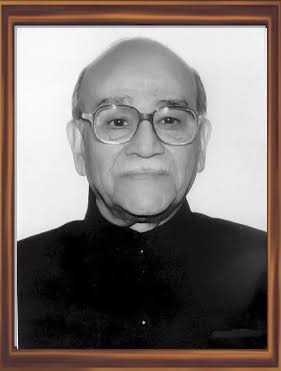
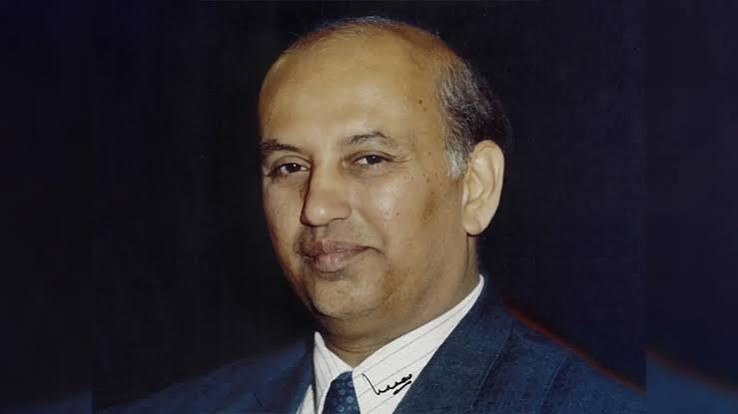
Udupi Ramachandra Rao, popularly known as U. R. Rao, was one of India’s greatest space scientists and a pioneer of the Indian space programme. He played a key role in the development of India’s satellite technology and served as the Chairman of the Indian Space Research Organisation (ISRO). His contributions helped India become self-reliant in space research and satellite applications. For his outstanding achievements in science and technology, he was honoured with the Padma Vibhushan, India’s second-highest civilian award.
Early Life
U. R. Rao was born in a small village in Karnataka. Coming from a modest background, he developed a strong interest in science and education from an early age. His curiosity about physics and space science inspired him to pursue a career in scientific research.
He became one of the leading figures who shaped India’s journey in space technology.
Birth Date and Death
- Full Name: Udupi Ramachandra Rao
- Popular Name: U. R. Rao
- Date of Birth: March 10, 1932
- Place of Birth: Adamaru, Udupi district, Karnataka, India
- Date of Death: July 24, 2017
- Age at Death: 85 years
- Place of Death: Bengaluru, Karnataka, India
Education and Career
Education
U. R. Rao had an excellent academic background:
- Completed his Bachelor of Science degree from Madras University.
- Earned a Master’s degree in Physics from Banaras Hindu University.
- Received his Ph.D. from the Gujarat University.
- Conducted postdoctoral research at the Massachusetts Institute of Technology (MIT) and worked with leading scientists in the field of space science.
Career
U. R. Rao had a remarkable career in space research:
- Worked with renowned space scientist Vikram Sarabhai.
- Played an important role in establishing India’s satellite programme.
- Served as Chairman of ISRO from 1984 to 1994.
- Led the development of several Indian satellites and space applications.
- Worked to make space technology useful for communication, weather forecasting, and national development.
Why Did He Receive the Padma Vibhushan Award?
Padma Vibhushan was awarded to U. R. Rao in 2017 for his exceptional and distinguished service in the field of Science and Engineering.
He received this prestigious honour because:
- He played a major role in establishing India’s satellite technology capabilities.
- He guided ISRO during a period of rapid growth.
- He contributed to the development of communication and remote-sensing satellites.
- He promoted the use of space technology for national development.
- His scientific leadership strengthened India’s position in global space research.
Career and Achievements
Some of U. R. Rao’s major achievements include:
- Led the development of India’s first satellite, Aryabhata, launched in 1975.
- Played a key role in building India’s satellite communication and remote-sensing programmes.
- Guided the development of satellite systems used for education, communication, weather monitoring, and resource management.
- Served as Chairman of ISRO and expanded India’s space capabilities.
- Published more than 350 scientific and technical papers.
- Authored books on space science and satellite technology.
- Served as Chairman of the Governing Council of the Physical Research Laboratory.
Field of Achievement
U. R. Rao made remarkable contributions in:
- Space Science
- Satellite Technology
- Aerospace Engineering
- Physics
- Scientific Research
- Space Applications for Development
Awards and Honours
U. R. Rao received many prestigious awards, including:
- Padma Bhushan (1976)
- Padma Vibhushan (2017)
- Aryabhata Award
- Space Gold Medal
- International recognition for contributions to satellite technology
- Induction into the Satellite Hall of Fame in the United States (2013)
Interesting Facts
- U. R. Rao was known as one of the architects of India’s satellite programme.
- He worked closely with Dr. Vikram Sarabhai during the early years of India’s space research.
- He played a major role in launching India’s first satellite, Aryabhata.
- He believed that space technology should directly benefit ordinary citizens.
- More than 25 satellites were developed under his leadership at ISRO.
- He was one of the first Indians to be inducted into the Satellite Hall of Fame.
Legacy and Inspiration
U. R. Rao’s legacy lies in his vision of using science and technology for national development. His leadership transformed India’s space programme from an experimental effort into a globally respected space organization.
His life inspires young scientists and engineers to pursue innovation, research, and technological excellence. His belief that science should serve society continues to guide India’s space missions.
Contribution to the Nation
U. R. Rao contributed significantly to India by:
- Building the foundation of India’s satellite technology programme.
- Strengthening ISRO’s capabilities in space research.
- Promoting satellite applications for communication, agriculture, education, and disaster management.
- Encouraging scientific research and innovation.
- Training and inspiring generations of space scientists.
- Helping India become self-reliant in space technology.
Conclusion
Udupi Ramachandra Rao was a visionary scientist whose contributions transformed India’s space programme. His leadership at ISRO, pioneering work in satellite technology, and commitment to using science for national development made him one of India’s most respected scientists. The Padma Vibhushan recognized his exceptional contribution to science and engineering. His legacy continues to inspire future generations of scientists, engineers, and innovators working toward India’s progress in space exploration and technology.
About the Author