

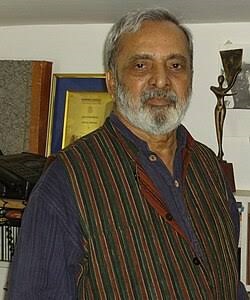
Here is an enhanced and updated profile for U. R. Ananthamurthy tailored for your blog, complete with portrait visuals and documentary video resources to enrich your post.
1. Introduction
Udupi Rajagopalacharya Ananthamurthy (1932–2014), widely known as U. R. Ananthamurthy, was one of India’s most celebrated Kannada writers, public intellectuals, and a pioneer of the Navya (Modernist) movement in Kannada literature. Best known for his pathbreaking debut novel Samskara, which dissected orthodoxy, caste, and hypocrisy in traditional Brahmin society, Ananthamurthy used his pen and public voice to challenge social dogma, champion secularism, and deeply question power structures. He was the recipient of India’s highest literary honor, the Jnanpith Award, and left behind an indelible legacy in modern Indian letters.
2. Quick Facts
- Full Name: Udupi Rajagopalacharya Ananthamurthy
- Native Name: ಉಡುಪಿ ರಾಜಗೋಪಾಲಾಚಾರ್ಯ ಅನಂತಮೂರ್ತಿ
- Date of Birth: December 21, 1932
- Place of Birth: Melige, Tirthahalli taluk, Shimoga district, Mysore State, British India
- Nationality: Indian
- Occupation / Profession: Novelist, Short Story Writer, Academic, Critic
- Field of Achievement: Kannada Literature and Social Criticism
- Years Active: 1950s–2014
3. Award Information (Focus: Jnanpith Award)
- Award Name: Jnanpith Award
- Award Category: India’s Highest Literary Honour
- Award Year: 1994 (Conferred for the year 1994)
- Presented By: Bharatiya Jnanpith
- Date of Ceremony: 1994
- Citation / Official Reason: Recognized for his outstanding contribution to Indian literature through visionary novels and short stories that critically evaluate social, cultural, and political paradigms.
- Previous Recipients (Examples): Prominent literary giants such as Kuvempu, D. R. Bendre, and Thakazhi Sivasankara Pillai.
- Next Recipients: Succeeding literary luminaries in subsequent years.
4. Why They Received the Award
Ananthamurthy received the Jnanpith Award because his works transformed the landscape of Indian fiction. Through seminal novels like Samskara, Bharatipura, and Bhava, he brought profound philosophical inquiry into the realities of caste, modernization, and political transition in post-independence India. His writing combined modern existential questioning with deeply rooted traditional idioms, making Kannada literature globally resonant.
5. Early Life
Born in a traditional Brahmin family in the Malnad region of Karnataka, Ananthamurthy grew up immersed in the cultural fabric of a small village. In his youth, he briefly studied in a traditional Sanskrit pathashala before being influenced by socialist ideals and modern Western literature during his university years. These contrasting worlds shaped his lifelong preoccupation with tradition versus modernity.
6. Education
- Bachelor of Arts (BA) & Master of Arts (MA): University of Mysore (English Literature).
- Doctor of Philosophy (PhD): University of Birmingham, United Kingdom (completed in 1966 on English literature with a thesis on politics and fiction in the 1930s).
7. Career Journey
- Academic Posts: Served as Professor of English at the University of Mysore, Vice-Chancellor of Mahatma Gandhi University in Kottayam, Kerala, and Chairman of the National Book Trust and the Sahitya Akademi.
- Visiting Fellow / Professor: Taught and lectured at various prestigious global institutions, bridging international literary discourse with Indian narratives.
- Public Intellectual: Active voice in cultural and political debates, fearlessly expressing leftist-secular viewpoints on national governance and social justice.
8. Major Achievements
- Samskara (1965): His landmark debut novel exploring caste rigidity and spiritual crisis, which became a cult classic and was adapted into an acclaimed arthouse film that launched the parallel cinema movement in Kannada.
- Literary Corpus: Authored multiple acclaimed novels (Bharatipura, Ghatana Chakra, Avasthe), poetry collections, and essay volumes.
- Padma Bhushan: Conferred India’s third-highest civilian honor in 1998 for his services to literature and education.
9. Contribution to the Nation
Ananthamurthy helped place regional Indian literature on the global stage. As an institutional leader, he shaped policies for the promotion of books, freedom of expression, and multi-lingual translation across India. He continuously defended pluralism, secularism, and democratic debate in public life.
10. Other Awards and Honours
- Rajyotsava Award: Government of Karnataka (1984)
- Padma Bhushan: Government of India (1998)
- Jnanpith Award: (1994)
- Chevalier dans l’Ordre des Palmes Académiques: Government of France (2003)
- Nritya / Literary Lifetime Honors: Multiple state and national accolades.
11. Legacy and Influence
Ananthamurthy remains a towering polemical and creative force in modern Indian thought. His works continue to be studied in universities worldwide, serving as critical texts for understanding the complex transitions of modern Indian identity, regional politics, and moral dilemmas.
12. Interesting Facts
- The Controversy Surrounding Samskara: When Samskara was first published, its raw critique of orthodox religious practices caused immense uproar among traditionalists, yet it quickly won critical acclaim and cemented his status as a rebel writer.
- Political Candidacy: He contested elections for the Indian Parliament and state assemblies as an independent or leftist candidate, embodying his belief that an intellectual must engage directly with democratic political processes.
13. Quotes
“A writer should not be a propagandist for a party; a writer’s loyalty is to the complexity of human experience.” — U. R. Ananthamurthy
14. Timeline
- 1932: Born on December 21 in Melige, Karnataka.
- 1965: Publishes his revolutionary debut novel, Samskara.
- 1966: Completes his PhD from the University of Birmingham, UK.
- 1987–1990: Serves as Vice-Chancellor of Mahatma Gandhi University, Kottayam.
- 1994: Conferred the prestigious Jnanpith Award.
- 1998: Awarded the Padma Bhushan.
- 2014: Passes away on August 22 in Bangalore at the age of 81.
15. References
- Wikipedia contributors. “U. R. Ananthamurthy.” Wikipedia, The Free Encyclopedia.
- Sahitya Akademi Archives – Profiles of Jnanpith Laureates.
- The Hindu. “U.R. Ananthamurthy passes away.” (August 2014 archival report).
16. Related Personalities
- Girish Karnad: Renowned playwright, actor, and close contemporary who starred in and helped adapt Samskara for cinema.
- Kuvempu: Legendary Kannada poet and Jnanpith awardee who heavily influenced modern literary thought in Karnataka.
- Lankesh: Iconic Kannada writer, journalist, and friend from the modernist literary movement.
17. Frequently Asked Questions (FAQ)
- Q: What is U. R. Ananthamurthy’s most famous work?
- A: His most famous work is his debut novel Samskara (1965), which explores themes of caste, death, and moral awakening.
- Q: Did he win the Jnanpith Award?
- A: Yes, he was awarded the Jnanpith Award in 1994 for his enduring contributions to Indian literature.
- Q: Which literary movement was he associated with?
- A: He was a central figure of the Navya (Modernist) movement in Kannada literature.
About the Author




