

1. Introduction
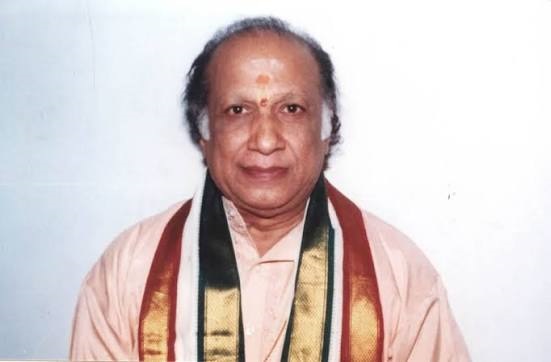
Trichur V. Ramachandran is one of the most distinguished, melodious, and respected veterans of South Indian Carnatic vocal music. As a foremost prime disciple of the legendary G. N. Balasubramaniam (GNB), he has spent over seven decades carrying forward a vibrant, intellectual, and aesthetically peerless musical tradition. Renowned for his effortless soaring brigas, pristine sruti alignment, and deep devotion to lyrical elegance, Ramachandran stands as an immortal pillar of 20th and 21st-century classical music.
2. Quick facts
- Full Name: Trichur Vaidyanatha Ramachandran
- Native Name: த்ரிச்சூர் வி. ராமச்சந்திரன் (Tamil) / തൃശൂർ വി. രാമചന്ദ്രൻ (Malayalam)
- Date of birth: August 9, 1940
- Place Of birth: Thrissur (Trichur), Cochin State, British India (now Kerala)
- Nationality: Indian
- Occupation/ Profession: Carnatic Classical Vocalist, Teacher, and Musicologist
- Field of Achievement: Carnatic Vocal Music and Preservation of GNB Compositions
- Years Active: 1954 – Present
3. Award Information
- Award Name: Sangeetha Kalanidhi
- Award Category: The Highest Accolade in Carnatic Music
- Award Year: 2012
- Presented By: The Madras Music Academy, Chennai
- Date of Ceremony: Annual conference session, December 2012 / January 2013
- Citation/Official Reason: In recognition of his lifelong mastery over traditional Carnatic vocalism, his embodiment of the classic GNB bani (style), and his stellar contributions to music education and the preservation of rare compositions.
- Previous Recipients (Examples): Semmangudi Srinivasa Iyer, M. S. Subbulakshmi, D. K. Pattammal, Ariyakudi Ramanuja Iyengar.
- Next Recipients: Subsequent legends and stalwarts of the Carnatic global fraternity.
4. Why they Receive the award?
Trichur V. Ramachandran was awarded the coveted Sangeetha Kalanidhi title in 2012—following his national Padma Bhushan in 2003—for his uncompromising dedication to high classicism. He successfully preserved and propagated the complex, high-velocity, yet emotionally rich aesthetic framework pioneered by his guru GNB, while serving as a beloved mentor to generations of classical musicians.
5. Early Life
Born in Thrissur, Kerala, in 1940, Ramachandran grew up in a cultured environment. His mother was a natural singer who filled their home with devotional ashtapadis and classical slokas, sparking his early musical inclinations. Though initially guided toward formal academic and professional tracks by his father (who served as a Chief Justice in Kerala), a life-altering encounter with G. N. Balasubramaniam’s music completely redirected his destiny toward the stage.
6. Education
- Early Grounding: Took initial music lessons under Varkala Subramania Iyer and Tripunithura Krishna Iyer.
- The Pivotal Turning Point: Left an engineering/medical study track in his youth to move to Madras, undertaking rigorous gurukulavasam under the legendary G. N. Balasubramaniam (GNB).
- Advanced Training: Underwent further specialized training under another GNB contemporary, the iconic M. L. Vasanthakumari (MLV), through an Indian Government Cultural Scholarship.
7. Carrier Journey
- Maiden Concert: Gave his debut public concert at the tender age of 14 in Kerala, showcasing precocious control over classical structures.
- Concert Circuit Icon: Rose swiftly through the ranks of the premier South Indian concert circuit, headlining major sabhas across India and international stages.
- Academic & Cultural Roles: Served on expert committees, judging panels, and advisory boards for premier cultural institutions, alongside extensive teaching assignments globally.
8. Major Achievements
- Padma Bhushan (2003): Conferred India’s third-highest civilian honor by the President of India.
- Sangeetha Kalanidhi (2012): Crowned with the ultimate distinction in Carnatic music by the Madras Music Academy.
- Preserving GNB’s Musical Legacy: Successfully tracked, compiled, and published rare compositions and kriti notations originally written by his guru GNB.
- Monumental Devotional Recordings: Recorded the entire Narayaneeyam (1,036 verses) across a diverse spectrum of classical ragas over a massive multi-year studio project.
9. Contribution to the nation
Trichur V. Ramachandran safeguarded an irreplaceable chapter of modern Carnatic music history. By keeping the dynamic, high-intellect, and aesthetic brilliance of the GNB school alive, he demonstrated that speed (vegam) and structural clarity (saukhyam) can coexist harmoniously. Through his meticulous recordings, academic lectures, and decades of student mentorship, he enriched India’s cultural repository.
10. Other Awards and Honours
- Kalaimamani Award (1992) – Government of Tamil Nadu
- Sangeetha Choodamani (2001) – Sri Krishna Gana Sabha
- Padma Bhushan (2003) – Government of India
- Central Sangeet Natak Akademi Award (2003/2004)
- Sangeetha Kalanidhi (2012) – Madras Music Academy
- Swathi Sangeetha Puraskaram (2015) – Government of Kerala
- Asthana Vidwan titles from major religious and cultural maths, including Kanchi Kamakoti Peetham and Ahobila Matham.
11. Legacy and influence
Ramachandran is celebrated as a “musician’s musician.” His delivery of complex ragas, intricate neraval, and razor-sharp swarakaras serves as a textbook template for students of classical vocal art. Alongside his wife and accomplished fellow musician Charumathi Ramachandran, he built a life completely dedicated to the service of traditional South Indian fine arts.
12. Interesting Facts
- Walking Away from Medicine: As the son of a high-ranking Chief Justice in Kerala, a secure medical/professional seat was laid out for him; however, after consulting GNB, he boldly chose to walk away from formal professional studies to embrace a life of music.
- The 1,036-Verse Project: His monumental recording of Narayana Bhattathiri’s Narayaneeyam took three and a half years of daily studio work, adapting verses into dynamic classical ragas, which was released by veteran maestro Chembai Vaidyanatha Bhagavatar.
- Hindustani Versatility: Fascinated by North Indian classical nuances from an early age, he trained under Hindustani maestro Krishnanand, mastering enough of the northern system to comfortably execute soulful viruttam-s with a distinct Hindustani touch on stage.
13. Quotes
“Music is an infinite discipline. A true seeker does not look for applause; they look for that fleeting moment where the raga reveals its truest divine form.”
14. Timeline
- 1940: Born on August 9 in Trichur (Thrissur), Kerala.
- 1954: Gives his debut public concert at age 14.
- 1962: Makes his prestigious debut performance at the Madras Music Academy.
- 1973: Marries Carnatic vocalist and scholar Charumathi Ramachandran.
- 2003: Conferred the Padma Bhushan by the Government of India and the Sangeet Natak Akademi Award.
- 2012: Crowned with the highest honor in Carnatic music, Sangeetha Kalanidhi, by the Madras Music Academy.
- Present: Continues to inspire and guide younger generations of artists as an esteemed elder statesman of Carnatic music.
15. References
- Wikipedia – Comprehensive Biographical Compilations on Trichur V. Ramachandran.
- Madras Music Academy – Conference Registers and Sangeetha Kalanidhi Profiles.
- The Hindu & The New Indian Express – Archival Artist Profiles and Award Announcements.
- Special Memoirs and Documentation on the GNB Bani (Dhvani archives).
16. Related Personalities
- G. N. Balasubramaniam (GNB) (Legendary pioneer of modern Carnatic aesthetics and primary guru to Ramachandran)
- M. L. Vasanthakumari (MLV) (Iconic Carnatic vocalist and secondary mentor)
- Charumathi Ramachandran (Acclaimed Carnatic vocalist, teacher, and wife)
- Chembai Vaidyanatha Bhagavatar (Legendary Carnatic vocalist)
17. Frequently Asked Questions (FAQ)
Q1: What is Trichur V. Ramachandran best known for?
A: Trichur V. Ramachandran is best known as a premier Carnatic classical vocalist who faithfully preserved and propagated the brilliant, high-velocity style (bani) of his master, G. N. Balasubramaniam.
Q2: What are the highest national and institutional awards he has received?
A: He has received India’s prestigious Padma Bhushan (2003) and the Madras Music Academy’s highest distinction, Sangeetha Kalanidhi (2012).
Q3: Did he contribute to musical literature or special recordings?
A: Yes, apart from publishing rare GNB compositions, he famously recorded all 1,036 verses of the Narayaneeyam in diverse classical ragas across a multi-year project.
About the Author




