

1. Introduction
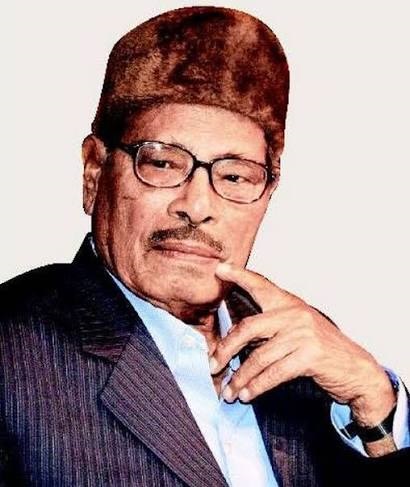
Prabodh Chandra Dey (1919–2013), universally known as Manna Dey, was one of the greatest and most versatile playback singers in the history of Indian cinema. Celebrated for his rigorous grounding in Hindustani classical music, he effortlessly bridged the worlds of high art and popular cinema, lending his unique voice to over 3,500 songs spanning Hindi, Bengali, and multiple other regional languages. From soul-stirring philosophical ghazals and high-pitched classical jugalbandis to light-hearted comic numbers, his peerless vocal control made him an irreplaceable pillar of the golden era of Indian film music.
2. Quick Facts
- Full Name: Prabodh Chandra Dey (Manna Dey)
- Native Name: প্রবোধ চন্দ্র দে (Bengali)
- Date of Birth: May 1, 1919
- Place of Birth: Calcutta (Kolkata), Bengal Presidency, British India
- Nationality: Indian
- Occupation / Profession: Playback Singer, Music Director, Classical Vocalist
- Field of Achievement: Indian Film Music and Classical Vocal Performance
- Years Active: 1942 – 2013
3. Award Information (Focus: Padma Bhushan & Dadasaheb Phalke Award)
- Award Name: Padma Bhushan (2005) & Dadasaheb Phalke Award (2007)
- Award Category: Art / Lifetime Contribution to Cinema
- Award Year: Padma Bhushan (2005) and Dadasaheb Phalke Award (2007)
- Presented By: The President of India at Rashtrapati Bhavan
- Date of Ceremony: Conferred during respective national presentation cycles
- Citation / Official Reason: For outstanding, lifelong contributions to Indian film music, successfully integrating classical traditions into popular culture, and enriching the nation’s artistic heritage.
4. Why Did He Receive the Award?
Manna Dey received India’s highest cinematic honor, the Dadasaheb Phalke Award (2007), and the prestigious Padma Bhushan (2005), in recognition of his extraordinary six-decade-long career. He was honored for his unmatched versatility, technical perfection, and his unique ability to breathe profound emotional and classical integrity into film songs that appealed to both masses and connoisseurs alike.
5. Early Life
Born in Calcutta in 1919, Manna Dey grew up in a culturally rich household. During his school days at Scottish Church Collegiate School and college years at Scottish Church College and Vidyasagar College, he showed an active interest in sports—particularly boxing and wrestling—alongside a deep, innate passion for music. Encouraged by his uncle, the veteran singer and composer Krishna Chandra Dey, young Manna began exploring classical vocal training, setting the stage for his musical journey.
6. Education
- Academic Background: Completed his schooling at Indu Babur Pathshala and Scottish Church Collegiate School, followed by undergraduate and postgraduate studies in arts/history at Scottish Church College and Vidyasagar College in Calcutta.
- Musical Training: Received intensive foundational training under his uncle Krishna Chandra Dey, followed by advanced tutelage from legendary maestros including Ustad Dabir Khan, Ustad Aman Ali Khan, and Ustad Rahman Khan (specializing in the Bhendibazaar Gharana).
7. Career Journey
- Entry into Bombay (1942): Moved to Bombay to assist his uncle Krishna Chandra Dey as an assistant music director.
- Playback Debut: Got his early break in playback singing with films like Tamanna (1943). His solo breakthrough came with the iconic track “Upar Gagan Vishal” composed by S.D. Burman for the film Mashaal (1950).
- Golden Decades: Throughout the 1950s, 60s, and 70s, he became the definitive voice for actors like Raj Kapoor, Manna Dey, Pran, and Balraj Sahni, delivering timeless hits across genres.
8. Major Achievements
- The Master of Classical Fusion: Credited as the pioneer who successfully brought complex Hindustani classical ragas into mainstream popular cinema (e.g., “Ketaki Gulab Juhi”, “Lagi Nahin Chhute Rama”).
- National Film Awards: Won the National Film Award for Best Male Playback Singer multiple times, including for Mere Huzoor (1969) and Nishi Padma / Mera Naam Joker (1971).
- The Triple Crown of Honors: Conferred with the Padma Shri (1971), Padma Bhushan (2005), and the Dadasaheb Phalke Award (2007).
9. Contribution to the Nation
Manna Dey elevated the aesthetic benchmark of Indian film music. While other contemporaries captured romantic or high-energy spaces, Dey excelled in singing intensely philosophical, soulful, and character-driven songs that reflected human struggle and resilience (such as “Kasme Vaade Pyaar Wafaa” and “Zindagi Kaisi Hai Paheli”). His work preserved and popularized classical music structures for millions of ordinary listeners across India.
10. Other Awards and Honours
- Padma Shri: 1971 (Government of India)
- National Film Awards: Multiple wins (1969, 1971)
- Filmfare Award for Best Male Playback Singer: 1972 (for “Ae Bhai Zara Dekh Ke Chalo” from Mera Naam Joker)
- Kalaimamani: 1979 (Government of Tamil Nadu)
- Lata Mangeshkar Award: 1985 (Government of Madhya Pradesh)
- Padma Bhushan: 2005 (Government of India)
- Dadasaheb Phalke Award: 2007 (Government of India)
- Filmfare Lifetime Achievement Award: 2011
- Banga-Vibhushan: 2011 (Government of West Bengal)
11. Legacy and Influence
Manna Dey remains a legendary benchmark for vocal purity and training. Even peer legends like Mohammed Rafi and Kishore Kumar deeply admired his matchless range, famously noting that while they could sing popular tracks, singing a complex Manna Dey classical composition required elite technical mastery. His evergreen tracks continue to inspire generations of classical and contemporary vocalists.
12. Interesting Facts
- The Reluctant Comedian: Despite being a master of heavy classical numbers, Manna Dey sang some of Bollywood’s most hilarious and structurally challenging comic face-off songs—most notably “Ek Chatur Naar” from Padosan (1968), where his character playfully out-singing Kishore Kumar’s character became cinematic history.
- Wrestling Roots: Before music completely consumed his life, a young Manna Dey was an avid boxing and wrestling enthusiast in his college days.
- A Century of Voice: He lived to the remarkable age of 94, recording songs and performing live on stage well into his late 80s.
13. Quotes
“An artist doesn’t truly die; through his art, melodies, and the love of his listeners, he continues to live forever.” — Manna Dey
14. Timeline
- 1919: Born on May 1 in Calcutta, British India.
- 1942: Moves to Bombay to start his career as an assistant music director.
- 1950: Gains widespread recognition with the solo hit “Upar Gagan Vishal”.
- 1971: Conferred the Padma Shri by the Government of India.
- 2005: Awarded the Padma Bhushan.
- 2007: Receives the prestigious Dadasaheb Phalke Award.
- October 24, 2013: Passes away at the age of 94 in Bangalore, Karnataka.
15. References
- Wikipedia – Manna Dey Biography & Discography
- Official Archive: Manna Dey Sangeet Academy (mannadey.in)
- Encyclopædia Britannica – Manna Dey Profile
- Government of India – National Film & Padma Awards Directories
16. Related Personalities
- Krishna Chandra Dey (Uncle, Mentor, and Composer)
- Mohammed Rafi (Legendary Playback Contemporary)
- Kishore Kumar (Legendary Playback Contemporary & Co-star)
- Salil Chowdhury (Renowned Composer and Frequent Collaborator)
17. Frequently Asked Questions (FAQ)
- Q: What is Manna Dey famous for?
- A: He is famous for being one of India’s most versatile playback singers, renowned for seamlessly fusing Hindustani classical music into popular Hindi and Bengali cinema.
- Q: What are some of his most iconic songs?
- A: Some of his most celebrated tracks include “Zindagi Kaisi Hai Paheli” (Safar), “Kasme Vaade Pyaar Wafaa” (Upkaar), “Ek Chatur Naar” (Padosan), and “Ae Bhai Zara Dekh Ke Chalo” (Mera Naam Joker).
About the Author




