

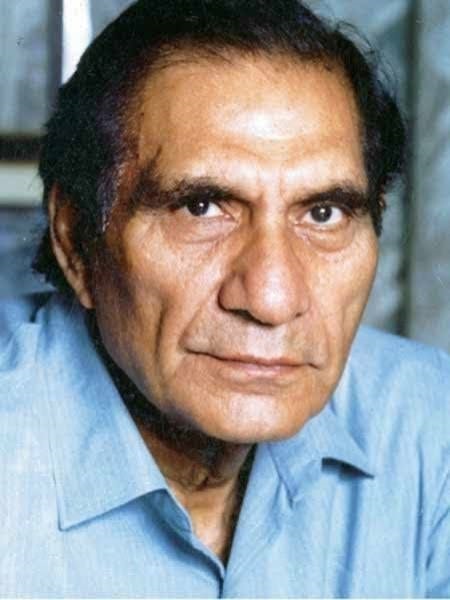
1. Introduction
Baldev Raj Chopra, universally known as B. R. Chopra, was one of the most influential and pioneering film directors and producers in the history of Indian cinema. Renowned for crafting socially relevant dramas that questioned orthodoxy, corruption, and systemic injustice, he later revolutionized Indian television by creating the timeless epic series Mahabharat. With a career spanning over five decades, Chopra cemented his status as a titan of Indian entertainment.
2. Quick Facts
- Full Name: Baldev Raj Chopra
- Native Name: बलदेव राज चोपड़ा
- Date of Birth: April 22, 1914
- Place of Birth: Ludhiana, Punjab, British India
- Nationality: Indian
- Occupation / Profession: Film Director, Film Producer, Television Producer
- Field of Achievement: Indian Cinema and Television Broadcasting
- Years Active: 1940s – 2008
3. Award Information (Spotlight: Dadasaheb Phalke Award)
- Award Name: Dadasaheb Phalke Award
- Award Category: Lifetime Contribution to Indian Cinema
- Award Year: 1998 (46th National Film Awards)
- Presented By: Directorate of Film Festivals, Ministry of Information and Broadcasting, Government of India
- Date of Ceremony: 1999
- Citation / Official Reason: In recognition of his monumental, lifelong contribution to the growth, evolution, and narrative depth of Indian cinema.
- Previous Recipient: Kavi Pradeep (1997)
- Next Recipient: Hrishikesh Mukherjee (1999)
4. Why He Received the Award
B. R. Chopra received the Dadasaheb Phalke Award—India’s highest accolade in cinema—because of his fearless commitment to meaningful, socially conscious cinema. At a time when Indian movies relied heavily on escapism, Chopra produced and directed hard-hitting films addressing labor rights, legal loopholes, moral dilemmas, and national integration. Furthermore, his pioneering work in bringing epic storytelling to the small screen with Mahabharat left an indelible cultural legacy on millions of households.
5. Early Life
Born in Ludhiana, Punjab, into a Punjabi Khatri family, Chopra grew up with a deep passion for literature and arts. He completed his Master of Arts in English Literature from the University of Punjab in Lahore. Before entering the film industry, he initially worked as a film journalist and movie critic for the magazine Cine Herald in Lahore, which gave him a deep technical and critical understanding of motion pictures before the partition of India forced him to move to Mumbai.
6. Education
- Schooling: Local institutional education in Punjab.
- Higher Education: Master of Arts (M.A.) in English Literature from the University of Punjab, Lahore.
7. Career Journey
- Early Struggles & Entry (Late 1940s): Moved to Mumbai after the Partition. After early directorial setbacks like Karwat (1949), he broke through with the massive success of Afsana (1951), starring Ashok Kumar in a double role.
- Establishing B. R. Films (1956): Founded his own independent banner, B. R. Films, which became a powerhouse of progressive and gripping cinema.
- The Golden Era of Social Dramas: Directed and produced cinematic masterworks such as Naya Daur (1957), Sadhna (1958), Kanoon (1960)—a courtroom drama with no songs—Waqt (1965), which introduced the multi-starrer trend to Bollywood, and Ittefaq (1969).
- Television Revolution (1988–1990): Collaborating closely with his son Ravi Chopra, he produced Mahabharat, a television phenomenon that practically brought public life across India to a halt every Sunday morning.
8. Major Achievements
- Dadasaheb Phalke Award (1998): Honored with India’s supreme cinematic recognition.
- Filmfare Best Director Award: Won for the socially poignant drama Waqt (1965).
- Padma Bhushan (2005): Conferred India’s third-highest civilian honor by the Government of India.
- Trendsetter of Multi-Starrers: Waqt revolutionized commercial casting norms, setting the template for generations of ensemble films in Bollywood.
9. Contribution to the Nation
- Progressive Cinema: Tackled bold social subjects—such as the rehabilitation of former sex workers (Sadhna), the justice system and circumstantial evidence (Kanoon), and unionism vs. mechanization (Naya Daur)—pushing Indian audiences toward modern legal and social thought.
- Cultural Preservation: Through Mahabharat, he educated and united generations of Indians worldwide around ancient philosophical literature and epic heritage.
10. Other Awards and Honours
- Padma Bhushan (2005) by the Government of India.
- Filmfare Lifetime Achievement Award (1998).
- IIFA Lifetime Achievement Award (2003).
- Honorary recognitions from various film bodies and cultural organizations for his stellar contributions to Indian media.
11. Legacy and Influence
B. R. Chopra is remembered as an intellectual architect of Hindi cinema. He proved that commercial entertainment could co-exist gracefully with deep moral questioning, sharp writing, and social commentary. Through his banner, he also mentored and launched numerous actors, directors, and technicians who went on to shape the industry. His brother, Yash Chopra, and son, Ravi Chopra, carried forward the illustrious family legacy.
12. Interesting Facts
- The Song-less Courtroom Drama: His 1960 movie Kanoon was a daring experiment—it was one of the first major mainstream Hindi films to feature no songs or playback music, yet it became a massive box-office hit.
- Journalist Roots: Unlike many filmmakers of his era, Chopra started as a sharp-penned film journalist, which gave him an exceptional eye for tight screenwriting and logical narrative plotting.
- The Family Dynasty: He was the patriarch of the famous Chopra film family; his younger brother was the legendary filmmaker Yash Chopra, and his son Ravi Chopra was an acclaimed director-producer in his own right.
13. Quotes
“Cinema is a mirror of society, but it also has the power to guide society toward light and justice.” – B. R. Chopra
14. Timeline
- 1914: Born on April 22 in Ludhiana, Punjab.
- 1951: Directs his breakthrough suspense drama Afsana.
- 1956: Establishes his independent production house, B. R. Films.
- 1965: Directs the blockbuster multi-starrer Waqt, winning the Filmfare Award for Best Director.
- 1988: Launches the historic television epic Mahabharat.
- 1998: Conferred the prestigious Dadasaheb Phalke Award.
- 2005: Awarded the Padma Bhushan by the Government of India.
- 2008: Passes away on November 5 in Mumbai at the age of 94.
15. References
- Directorate of Film Festivals, Ministry of Information and Broadcasting, Government of India archives.
- National Film Archive of India (NFAI) historical logs.
- Published memoirs and historical analyses of Hindi cinema (B. R. Chopra: The Man and His Movies).
- Leading media archives (The Hindu, Times of India, Indian Express).
16. Related Personalities
- Yash Chopra: Younger brother and legendary filmmaker.
- Ravi Chopra: Son and frequent creative collaborator (notably on Mahabharat).
- Ashok Kumar & B. R. Ishara: Prominent industry collaborators and actors who worked closely with B. R. Films.
17. Frequently Asked Questions (FAQ)
Q1: What is B. R. Chopra best known for?
A: He is best known for directing socially impactful films like Naya Daur, Kanoon, and Waqt, as well as producing the monumental television series Mahabharat.
Q2: When did B. R. Chopra receive the Dadasaheb Phalke Award?
A: He received India’s highest cinema honor, the Dadasaheb Phalke Award, in 1998.
Q3: Did B. R. Chopra win any civilian honors from the Indian government?
A: Yes, he was honored with the Padma Bhushan in 2005.
About the Author




