

1. Introduction
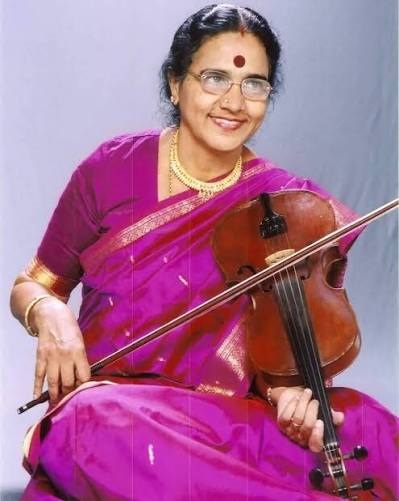
Dr. Narayana Rajam (Dr. N. Rajam) is a legendary Indian classical violinist celebrated globally as a pioneer of the Gayaki Ang (vocal style) on the violin. Often referred to as the “Singing Violin,” she masterfully adapted the intricate nuances, emotions, and gamaks of Hindustani vocal music onto the strings of a violin. Having spent nearly four decades shaping minds as a professor and dean at Banaras Hindu University (BHU), she stands as one of India’s most revered musical icons, holding the country’s highest civilian and artistic honors.
2. Quick Facts
- Full Name: Narayana Rajam (Dr. N. Rajam)
- Native Name: என். ராஜம் (Tamil)
- Date of Birth: April 8, 1938
- Place of Birth: Chennai, Tamil Nadu, India
- Nationality: Indian
- Occupation / Profession: Classical Violinist, Music Educator, Academician
- Field of Achievement: Hindustani Classical Music / Instrumental Performance & Pedagogy
- Years Active: 1940s – Present (Over 7 decades)
3. Award Information (Focus: Padma Vibhushan)
- Award Name: Padma Vibhushan
- Award Category: Art – Classical Music
- Award Year: 2026
- Presented By: The President of India at Rashtrapati Bhavan
- Date of Ceremony: Spring 2026 (Announced on Republic Day Eve, January 25, 2026)
- Citation / Official Reason: For exceptional and distinguished service and monumental contributions to the field of Indian art and classical music.
4. Why Did She Receive the Award?
Dr. N. Rajam received the Padma Vibhushan (India’s second-highest civilian honor) in recognition of her lifetime dedication to revolutionizing Hindustani instrumental music. By introducing the Gayaki Ang style, she bridged the gap between vocal and instrumental music, an achievement musicologists rank alongside Pandit Pannalal Ghosh’s transformation of the flute and Ustad Bismillah Khan’s elevation of the shehnai. Her award also celebrated her decades-long academic leadership at BHU, cementing her legacy as a cultural treasure of India.
5. Early Life
Born in Chennai in 1938, N. Rajam emerged from a deeply entrenched musical household. Her father, Vidwan A. Narayana Iyer, was an eminent exponent of Carnatic music. Music was not merely a hobby in her home; it was a way of life. Growing up alongside her older brother, the legendary Carnatic violinist T.N. Krishnan, Rajam was exposed to masterclass-level instruction from a toddler’s age, showing prodigious musical talent by age three.
6. Education
- Initial Training: Began her rigorous foundational training in Carnatic music under the strict guidance of her father.
- Vocal & Stylistic Foundations: Studied under Carnatic titan Musiri Subramania Iyer.
- The Hindustani Transition: At age 14, she moved north and enrolled at Banaras Hindu University (BHU). There, she underwent intensive training under the legendary vocalist Pandit Omkarnath Thakur (Gwalior Gharana), which fundamentally reshaped her musical outlook from South Indian Carnatic styles to North Indian Khayal vocal aesthetics. She also studied semi-classical forms under Pandit Mahadev Mishra (Banaras Gharana).
7. Career Journey
- Concert Career: Rajam took the national and international stage by storm, performing across the globe and mesmerising audiences with a violin that literally sounded like a human voice singing Khayal.
- Academic Tenure: For nearly 40 years, she served at Banaras Hindu University (BHU). She advanced from Professor of Music to Head of the Department and ultimately became the Dean of the Faculty of Performing Arts.
- Institutional Impact: At BHU, she structured systemic courses centered around the Gayaki Ang, institutionalizing violin pedagogy for generations of students to come.
8. Major Achievements
- Pioneering the Gayaki Ang: Broke away from the traditional Tantrakaari Baaj (instrumental style) to perfectly execute vocal nuances like meends (glides), gamaks, and murkis on the violin.
- The Rare Civilian Triple Crown: She is one of the very few artists in Indian history to be honored with all three major Padma civilian awards sequentially: Padma Shri (1984), Padma Bhushan (2004), and Padma Vibhushan (2026).
- The “Violin Dynasty”: Successfully passed down her pristine technique through an unbroken multi-generational family line of acclaimed violinists.
9. Contribution to the Nation
Dr. Rajam single-handedly expanded the boundaries of Hindustani classical instrumental music, earning international prestige for India’s rich cultural heritage. Beyond her art, her 40 years at BHU cultivated a generation of scholars and performers, safeguarding classical music traditions and integrating rigorous academic standards into practical training.
10. Other Awards and Honours
- Padma Shri: 1984
- Sangeet Natak Akademi Award: 1990
- Padma Bhushan: 2004
- Puttaraja Sanmaana: 2004
- Pune Pandit Award: 2010 (by The Art & Music Foundation, Pune)
- Sangeet Natak Akademi Fellowship (Akademi Ratna): 2012 (The highest honor in the performing arts in India)
- Tana Riri Award: 2018
- Padma Vibhushan: 2026
11. Legacy and Influence
Dr. Rajam’s legacy lives on through her family, fondly known as the “Violin Dynasty.” She trained her daughter Dr. Sangeeta Shankar, her granddaughters Ragini Shankar and Nandini Shankar, and her niece Kala Ramnath, ensuring that the Gayaki Ang tradition thrives brilliantly in the modern era. Her textbook precision and emotional depth on stage continue to inspire contemporary violinists worldwide.
12. Interesting Facts
- The Sibling Maestros: While Dr. N. Rajam chose to master Hindustani music, her brother T.N. Krishnan became a legendary maestro of Carnatic violin—making the sibling duo unique pillars of Indian classical music across both major traditions.
- A Prodigy at Three: She was already treating music as an organic part of her daily existence before most children learn to read.
- Four Decades in Varanasi: Despite her South Indian roots in Chennai, she spent most of her professional life deeply rooted in the holy cultural hub of Varanasi as a pillar of BHU.
13. Quotes
“The violin is not just an instrument to be played mechanically; it must breathe, feel, and sing just like the human voice.” — Dr. N. Rajam
14. Timeline
- 1938: Born on April 8 in Chennai, Tamil Nadu.
- c. 1952: Moves to Varanasi to study under Pandit Omkarnath Thakur at Banaras Hindu University (BHU).
- 1984: Awarded the Padma Shri by the Government of India.
- 1990: Receives the Sangeet Natak Akademi Award.
- 2004: Conferred with the Padma Bhushan.
- 2012: Honored with the prestigious Sangeet Natak Akademi Fellowship.
- 2026: Awarded India’s second-highest civilian honor, the Padma Vibhushan.
15. References
- Wikipedia – N. Rajam Biography & Discography
- Official Website: nrajam.com
- Press Information Bureau (PIB) & Government Archives on Padma Awards
- Sangeet Natak Akademi Fellowship Records
16. Related Personalities
- T.N. Krishnan (Brother & Carnatic Violin Legend)
- Pandit Omkarnath Thakur (Guru & Vocalist)
- Dr. Sangeeta Shankar (Daughter & Disciple)
- Ragini Shankar & Nandini Shankar (Granddaughters & Disciples)
- Kala Ramnath (Niece & Renowned Violinist)
17. Frequently Asked Questions (FAQ)
- Q: What is Dr. N. Rajam famous for?
- A: She is globally famous for pioneering the Gayaki Ang style on the violin, which allows the instrument to accurately reproduce the nuances and flow of vocal Hindustani classical music.
- Q: Is Dr. N. Rajam trained in Carnatic or Hindustani music?
- A: She started her journey with rigorous Carnatic training under her father in Chennai but later transitioned to Hindustani classical music under Pandit Omkarnath Thakur.
- Q: What major civilian awards has she received?
- A: She has received the Padma Shri (1984), Padma Bhushan (2004), and Padma Vibhushan (2026).
About the Author




