

1. Introduction
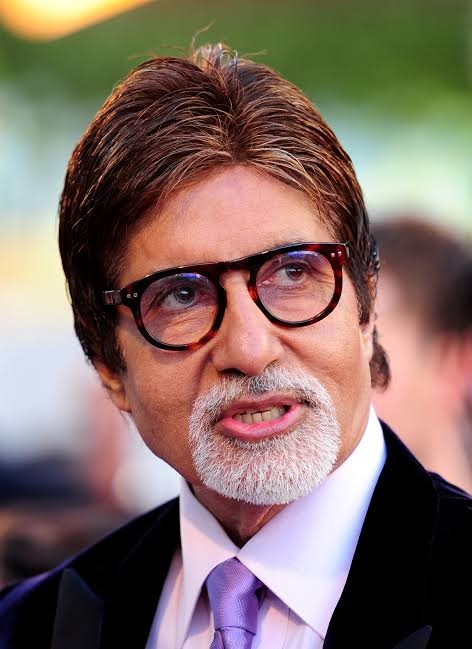
Amitabh Bachchan is not merely an actor; he is an institution in Indian cinema. Rising to prominence in the early 1970s as the “Angry Young Man” of Bollywood, he redefined the archetype of the Hindi film hero. With a career spanning over five decades, over 180 films, and a distinctive baritone voice that commands instant attention, Bachchan has captured the imagination of generations across the globe. From intense action dramas to nuanced character roles and television hosting, his enduring influence on popular culture makes him one of the most celebrated figures in global entertainment history.
2. Quick Facts
- Full Name: Amitabh Harivansh Srivastava (Bachchan)
- Native Name: अमिताभ बच्चन
- Date of Birth: October 11, 1942
- Place of Birth: Allahabad (now Prayagraj), Uttar Pradesh, India
- Nationality: Indian
- Occupation / Profession: Actor, Playback Singer, Producer, Television Host
- Field of Achievement: Film Acting, Entertainment, and Arts
- Years Active: 1969–Present
3. Award Information (Spotlight: Dadasaheb Phalke Award)
- Award Name: Dadasaheb Phalke Award
- Award Category: Lifetime Contribution to Indian Cinema
- Award Year: 2019
- Presented By: Directorate of Film Festivals, Ministry of Information and Broadcasting, Government of India
- Date of Ceremony: December 29, 2019
- Citation / Official Reason: In recognition of his monumental, lifelong contribution to the growth, evolution, and global footprint of Indian cinema spanning 50 glorious years.
- Previous Recipient: Vinod Khanna (2017)
- Next Recipient: Waheeda Rehman (2021)
4. Why He Received the Award
Amitabh Bachchan received the Dadasaheb Phalke Award—India’s highest accolade in cinema—because of his matchless, multi-generational impact on the film industry. For over half a century, he has continuously reinvented himself, transitioning from a trailblazing action icon to a powerhouse of critically acclaimed character performances. His dedication to his craft, unmatched work ethic, massive global fan following, and pioneering role in taking Indian cinema to international markets cemented his selection for this ultimate honor.
5. Early Life
Amitabh Bachchan was born into a literary family. His father was Dr. Harivansh Rai Bachchan, a legendary and celebrated Hindi poet, and his mother was Teji Bachchan, a social activist with a deep passion for theatre and music. Growing up in Allahabad, his house was a vibrant hub for artists, poets, and intellectuals. He was initially named Inquilaab, inspired by the “Inquilab Zindabad” slogan of the Indian independence movement, before being named Amitabh, meaning “the light that never fades.” He spent his formative years in Allahabad before moving to Nainital for schooling.
6. Education
- Schooling: Sherwood College, Nainital, where he actively participated in stage plays and extra-curricular activities.
- Higher Education: Kirori Mal College, University of Delhi, where he graduated with a Bachelor of Science (B.Sc.) degree in Science.
- Before entering films, he worked in Kolkata (Calcutta) as an executive for a bird-shipping firm called Bird and Co., and later as a freight broker for Gladstone Lyall.
7. Career Journey
- The Struggle and Debut (1969): Bachchan moved to Mumbai to pursue acting. He made his film debut as one of the seven protagonists in Saat Hindustani (1969), for which he won a National Film Award for Best Newcomer.
- The “Angry Young Man” Era (1970s): After initial box-office struggles, his breakthrough came with Prakash Mehra’s action thriller Zanjeer (1973). This established his persona as the brooding, anti-establishment “Angry Young Man” fighting societal corruption. Hits like Deewaar, Sholay, Trishul, and Don soon followed, turning him into India’s first undisputed “Superstar of the Millennium.”
- Setbacks and Political Stint (1980s): Following a near-fatal intestinal injury on the sets of Coolie in 1982, his career hit a rough patch with several box-office disappointments. He briefly entered politics in 1984, winning a Lok Sabha seat from Allahabad, but resigned after three years.
- The Comeback and Television (1990s–Present): After a self-imposed sabbatical, he returned with hits like Agneepath (1990) (winning his first National Award for Best Actor). In 2000, he revolutionized Indian television by hosting the mega-hit game show Kaun Banega Crorepati (KBC), introducing a new era of digital and small-screen dominance. He continues to deliver powerhouse performances in contemporary films like Black, Paa, Piku, and Kalki 2898 AD.
8. Major Achievements
- National Film Awards: Won 4 Best Actor National Awards (Agneepath, Black, Paa, Piku) and 1 for Best Newcomer (Saat Hindustani).
- Filmfare Records: Holds the record for the most nominations in major acting categories, winning over 15 competitive Filmfare Awards alongside a Lifetime Achievement honor.
- Global Recognition: Crowned “Superstar of the Millennium” by BBC and Filmfare in 2000.
- Box Office Dominance: Starred in the highest-grossing Indian film of all time (Sholay for many years) and continues to draw audiences across generations.
9. Contribution to the Nation
Beyond his cinematic work, Amitabh Bachchan has been a pillar of social and national initiatives:
- Government Campaigns: Spearheaded numerous national public service campaigns, including the Government of India’s Polio Eradication Campaign (Do Boond Zindagi Ki), tuberculosis awareness, and road safety drives.
- Philanthropy: Frequently donates millions to clear the debts of distressed farmers across India, supports disaster relief funds, and aids cancer care foundations.
- Cultural Ambassador: Globally represents Indian arts, literature (carrying forward his father’s poetic legacy), and soft power.
10. Other Awards and Honours
- Padma Shri (1984): India’s fourth-highest civilian award.
- Padma Bhushan (2001): India’s third-highest civilian award.
- Padma Vibhushan (2015): India’s second-highest civilian award.
- Knight of the Legion of Honour (2007): France’s highest civilian distinction.
- Lannister of Asian Cinema: Honored by various international film festivals in Marrakesh, Dubai, and Alexandria.
11. Legacy and Influence
Amitabh Bachchan changed the grammar of Hindi cinema. Before him, romantic leads dominated Bollywood; Bachchan brought grit, realism, emotional depth, and raw intensity to the silver screen. Directors wrote scripts specifically keeping his persona in mind. His vocal timbre, towering height, and dialogue delivery have become cultural touchstones, endlessly imitated by every generation of aspiring actors. He proved that an actor’s career longevity does not have to expire with youth.
12. Interesting Facts
- Ambidextrous: Bachchan can write equally well with both his left and right hands.
- Radio Rejection: Early in his career, he was rejected by All India Radio (AIR) due to his heavy baritone voice—the very voice that later became his biggest asset.
- Signature Style: The iconic knotted shirt look in Deewaar was born out of a tailoring mistake where the shirt arrived too long, and the costume designer simply tied a knot at the bottom.
- First Producer Role: Under his banner ABCL (Amitabh Bachchan Corporation Ltd.), he produced the 1996 film Mr.ityunjay, though the company later faced severe financial crises before his TV comeback saved it.
13. Quotes
“Badlaav jeevan ka niyam hai.” (Change is the law of life.) – Amitabh Bachchan
“Come what may, the show must go on.”
“I have never considered myself a star. I’ve always considered myself an actor doing his job.”
14. Timeline
- 1942: Born in Allahabad on October 11.
- 1969: Makes his acting debut with Saat Hindustani.
- 1973: Stardom explodes with the release of Zanjeer.
- 1982: Suffers a near-fatal injury during the filming of Coolie.
- 1984–1987: Serves as a Member of Parliament in the Lok Sabha.
- 2000: Debuts as the host of Kaun Banega Crorepati; named Superstar of the Millennium.
- 2005: Wins National Award for his stellar performance in Black.
- 2015: Conferred with the Padma Vibhushan.
- 2019: Receives the prestigious Dadasaheb Phalke Award.
- Present: Continues to lead high-profile feature films and television projects.
15. References
- Official Government Archives and Directorate of Film Festivals, India.
- To Be or Not To Be: Amitabh Bachchan (Biographical book by Khalid Mohamed).
- National Film Archive of India (NFAI) records.
- Credited interviews and archival data from leading film journals.
16. Related Personalities
- Harivansh Rai Bachchan: Renowned poet and father.
- Jaya Bachchan: Acclaimed actress and wife.
- Abhishek Bachchan: Prominent actor and son.
- Aishwarya Rai Bachchan: Internationally acclaimed actress and daughter-in-law.
- Rekha & Yash Chopra: Legendary contemporaries and cinematic collaborators.
17. Frequently Asked Questions (FAQ)
Q1: How many National Awards has Amitabh Bachchan won?
A: He has won 4 National Film Awards for Best Actor (Agneepath, Black, Paa, Piku) and 1 for Best Newcomer (Saat Hindustani), totaling 5 competitive National Awards, alongside a Dadasaheb Phalke Award.
Q2: What was Amitabh Bachchan’s first movie?
A: His first released film was Saat Hindustani in 1969.
Q3: Why is he called the “Angry Young Man”?
A: The title was given to him in the 1970s due to his screen persona of a rebellious, cynical hero fighting against institutional corruption and economic disparity, starting with the film Zanjeer.
Q4: Which is Amitabh Bachchan’s highest civilian honor?
A: The Padma Vibhushan, which was awarded to him by the Government of India in 2015.
Would you like me to expand on any particular section or tailor the tone further for your blo
About the Author




