

1. Introduction
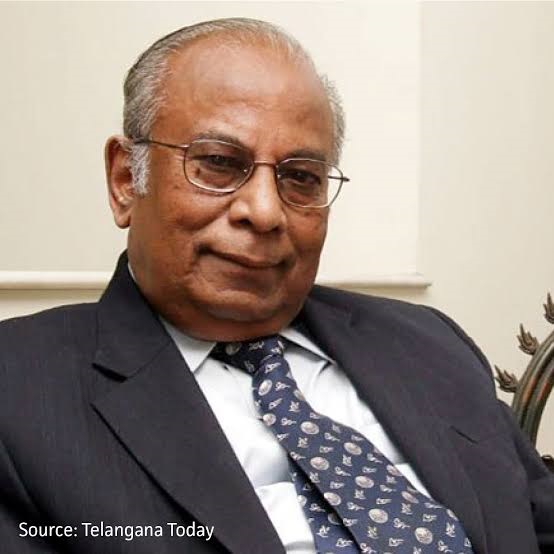
Thiruvengadam Lakshman Sankar (T. L. Sankar) was a pioneering Indian civil servant, administrator, and globally respected energy economist. Widely celebrated as the man who “powered a state”, he left an indelible mark on India’s infrastructure, spearheading critical reforms in the power, coal, and gas sectors. From serving as an energy advisor to the Planning Commission of India to shaping institutional growth in undivided Andhra Pradesh, his visionary governance laid the foundation for modern public-private energy frameworks in the country.
2. Quick Facts
- Full Name: Thiruvengadam Lakshman Sankar (T. L. Sankar)
- Native Name: திருவெண்காடன் லட்சுமணன் சங்கர் (Tamil)
- Date of Birth: 1928 (Passed away on December 26, 2018)
- Place of Birth: Tamil Nadu, India
- Nationality: Indian
- Occupation / Profession: Civil Servant (IAS), Energy Expert, Corporate Executive, Academic Administrator
- Field of Achievement: Public Administration, Energy Economics, and Infrastructure Policy
- Years Active: 1950s – 2018
3. Award Information (Focus: Padma Bhushan)
- Award Name: Padma Bhushan
- Award Category: Civil Service / Public Affairs
- Award Year: 2004
- Presented By: The President of India at Rashtrapati Bhavan
- Date of Ceremony: Spring 2004
- Citation / Official Reason: For significant and distinguished services to society and exceptional contributions to public administration and national energy planning.
4. Why Did He Receive the Award?
T. L. Sankar received the Padma Bhushan in recognition of his decades-long, unblemished track record as a reform-minded civil servant. His strategic expertise completely transformed India’s approach to energy planning, coal sector reform, and state utility management. He was honored for designing frameworks that balanced bureaucratic efficiency with progressive, market-oriented economic reforms.
5. Early Life
Born in Tamil Nadu, T. L. Sankar grew up during the transitional decades leading up to Indian independence. Possessing a sharp analytical mind with a natural inclination toward quantitative sciences and economics, he pursued higher studies that positioned him at the intersection of public policy and technical infrastructure development.
6. Education
- Foundational Studies: Completed his early education in Tamil Nadu, demonstrating exceptional aptitude in academics.
- Higher Education: Earned advanced degrees focusing on economics, public administration, and quantitative analysis, preparing him for a demanding career in national governance.
7. Career Journey
- Administrative Entry: Served as a distinguished bureaucrat, eventually entering elite administrative roles.
- National Planning: Served as the Chief of the Project Appraisal Division and Energy Advisor to the Planning Commission of India. He also headed the Asian Energy Survey for the Asian region.
- State Leadership: Served as Principal Secretary in the Departments of Industry and Finance, Chairman of the Andhra Pradesh State Electricity Board (APSEB), Transmission Corporation of AP (APTRANSCO), and AP Gas Power Corporation.
- Post-Retirement Institutions: After superannuation from the IAS, he served as Principal of the Administrative Staff College of India (ASCI) and Director-General of the National Institute of Rural Development (NIRD).
8. Major Achievements
- Pioneering Coal & Gas Reforms: Headed high-profile national panels, including the Expert Committee on Coal Reforms (2007) and the Gas Price Revision Committee (1997), which restructured how India manages vital fuel resources.
- Empowering Regional Industry: Instrumental in seeding Hyderabad’s first-generation entrepreneurial ecosystem by creating reliable power grids and institutional support systems.
- Institutional Guidance: Directed the Institute of Public Enterprise (IPE) for over a decade, moulding public sector leadership.
9. Contribution to the Nation
T. L. Sankar helped steer India through major global energy crises by decoupling power grid vulnerabilities through systematic policy shifts. By introducing public-private partnerships (PPPs) long before they became mainstream and rationalizing pricing structures for coal and gas, he saved key industrial sectors from crippling shortages, stabilizing the macroeconomic framework of the country.
10. Other Awards and Honours
- Padma Bhushan: 2004 (Government of India)
- Lifetime Achievement Award: 2005 (Awarded by the Solar Energy Society of India for services to renewable energy)
11. Legacy and Influence
Remembered affectionately as a “model IAS officer”, Sankar’s legacy lives on through the modern structure of India’s energy grids and public sector undertakings. He trained, mentored, and inspired generations of bureaucrats, technocrats, and entrepreneurs, establishing a gold standard for institutional integrity and economic pragmatism.
12. Interesting Facts
- The Road Not Taken: Following his retirement, he was offered prestigious roles including Union Secretary, but he actively chose to lead grassroots-focused institutions like NIRD to directly impact rural developmental policy.
- Multifaceted Leader: Though primarily known as an energy economist, he seamlessly transitioned into managing finance, rural development, coal administration, and corporate governance with equal flair.
- Global Footprint: His expertise extended far beyond Indian borders; his contributions to the Asian Energy Survey influenced developmental economics across developing nations in Asia.
13. Quotes
“Energy security is not merely about tapping resources; it is about building resilient systems that empower the last citizen without compromising the future.” — T. L. Sankar
14. Timeline
- 1928: Born in Tamil Nadu.
- 1993: Joins as Principal of the Administrative Staff College of India (ASCI) following his active civil service tenure.
- 1997: Serves as Chairman of the Gas Price Revision Committee.
- 2004: Conferred the Padma Bhushan by the President of India.
- 2005: Receives the Lifetime Achievement Award from the Solar Energy Society of India.
- 2007: Heads the Expert Committee on Coal Reforms for Coal India Limited (CIL).
- 2018: Passes away on December 26 in Hyderabad.
15. References
- Wikipedia – Thiruvengadam Lakshman Sankar Profile & Archives
- Government of India – Padma Awards Directory
- The Hindu & The New Indian Express – Obituary and Archival Reports on T. L. Sankar
- Solar Energy Society of India (SESI) Records
16. Related Personalities
- Dr. Manmohan Singh (Economist and former Prime Minister of India)
- K. Chandrashekar Rao (Political leader who formally recognized his multi-state administrative legacy)
- Montek Singh Ahluwalia (Economist and former Planning Commission stalwart)
17. Frequently Asked Questions (FAQ)
- Q: Who was T. L. Sankar?
- A: T. L. Sankar was an eminent Indian civil servant, energy expert, and bureaucrat who served as an energy advisor to the Planning Commission of India.
- Q: What are his major contributions?
- A: He is widely recognized for modernizing state power utilities, pioneering public-private partnerships in energy, and heading crucial national committees on coal and gas reforms.
- Q: What awards did he receive?
- A: He was awarded India’s third-highest civilian honor, the Padma Bhushan, in 2004, followed by the Solar Energy Society of India’s Lifetime Achievement Award in 2005.
About the Author




