

1. Introduction
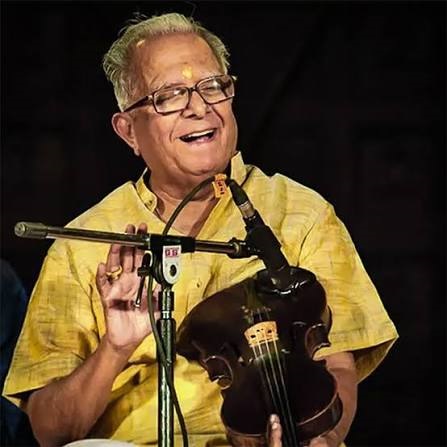
Trippunithura Narayana Krishnan (T. N. Krishnan) was an iconic Indian Carnatic music violinist. Along with Lalgudi Jayaraman and M. S. Gopalakrishnan, he formed the legendary “violin-trinity” of Carnatic music. Renowned for his vocal-style lyricism on the violin, expressive restraint, and immaculate tone, Krishnan transitioned seamlessly from being a sought-after accompanist to a world-renowned solo maestro and beloved educator. His contributions shaped generations of classical musicians globally until his passing in 2020.
2. Quick Facts
- Full Name: Trippunithura Narayanaiyer Krishnan
- Native Name: തൃപ്പൂണിത്തുറ നാരായണ കൃഷ്ണൻ
- Date of Birth: October 6, 1928
- Place of Birth: Tripunithura, Cochin, British India (present-day Kerala, India)
- Nationality: Indian
- Occupation/Profession: Violinist, Music Educator, Professor
- Field of Achievement: Carnatic Classical Music (Instrumental – Violin)
- Years Active: Over 80 years (from his debut in 1939 until his later years)
3. Award Information (Highlight: Sangeetha Kalanidhi Award)
- Award Name: Sangeetha Kalanidhi
- Award Category: Highest accolade in Carnatic Music
- Award Year: 1980
- Presented By: The Madras Music Academy
- Citation/Official Reason: Conferred in recognition of his supreme mastery over the violin, his unique vocal-style execution of classical kritis, and his lifetime dedication to propagating Carnatic music.
- Other Major State Honours:
- Padma Shri (1973) – India’s fourth-highest civilian honor.
- Padma Bhushan (1992) – India’s third-highest civilian honor.
4. Why He Received the Awards
T. N. Krishnan earned the highest civilian and artistic recognitions due to his uncanny ability to make the violin “sing” like a human voice, capturing the subtle nuances, emotional depth (bhava), and gamakas of Carnatic ragas. Rather than relying on mere technical speed, his playing emphasized profound traditional authenticity, aesthetic purity, and restraint. Furthermore, his decades-long dedication to grooming young minds as a premier academic leader cemented his status as a national cultural treasure.
5. Early Life
Born into a deeply musical family in Tripunithura, Kerala, music was a daily way of life. Both his parents—A. Narayana Iyer and Ammini Ammal—hailed from a multi-generational lineage of musicians. His father, an eminent music educator and strict disciplinarian, recognized young Krishnan’s absolute ear for melody and personally undertook his rigorous early training. In his early years, his talent also earned him patronage from the local Cochin royal family.
6. Education
Krishnan’s foundational training came entirely from his father, A. Narayana Iyer. As a child prodigy stepping into the broader classical stage, he was later mentored by Alleppy K. Parthasarathy (a disciple of Ariyakudi Ramanuja Iyengar). Crucially, he was taken under the wing of the legendary Carnatic vocalist Semmangudi Srinivasa Iyer, who shaped his musical aesthetic and guided him through his formative years in Madras.
7. Career Journey
- Early Debut: Krishnan gave his first major public violin concert in 1939 in Trivandrum at just 11 years old.
- Moving to Madras: He arrived in Madras (Chennai) in 1942, where Semmangudi placed him under the care of philanthropist R. Aiyadurai.
- The Premier Accompanist: Before establishing himself as a titan of solo concerts, Krishnan served as the trusted accompanist to almost all the first-generation stalwarts of Carnatic music, including Ariyakudi Ramanuja Iyengar, Chembai Vaidyanatha Bhagavatar, Musiri Subramania Iyer, and Alathur Brothers.
- Academic Leadership: He transitioned smoothly into academia, serving as a Professor of Music and later Principal of the State Music College in Chennai, followed by his role as Dean of the School of Music and Fine Arts at the University of Delhi.
8. Major Achievements
- Formed the legendary “Violin-Trinity” alongside Lalgudi Jayaraman and M. S. Gopalakrishnan.
- Served as the Vice-Chairman of the Sangeet Natak Akademi (1991–1993).
- Appointed as the Asthana Vidwan (Court Scholar) of the Tirumala Tirupati Devasthanams.
- Performed globally across continents, popularizing the intricate nuances of South Indian classical music on international platforms.
9. Contribution to the Nation
Beyond his mesmerizing performances, Krishnan dedicated a massive portion of his life to institutional music education. By heading premier music colleges in both Chennai and New Delhi, he bridged regional divides, bringing South Indian classical violin traditions to Northern audiences. He molded hundreds of students into professional performers, preserving the purity of the gurukula system within formal university frameworks. In 2005, he also established the T. N. Krishnan Foundation to further promote classical arts.
10. Other Awards and Honours
- Sangeet Natak Akademi Award (1974)
- Sangeetha Kalasikhamani (1999) by The Indian Fine Arts Society, Chennai
- National Artist of All India Radio (AIR)
- Grammy In Memoriam recognition by the Recording Academy in March 2021 for his global impact on music.
11. Legacy and Influence
T. N. Krishnan’s legacy lives on dynamically through his immediate family and disciples. His daughter Viji Krishnan Natarajan and son Sriram Krishnan are both celebrated concert violinists. Interestingly, his younger sister is Dr. N. Rajam, a legendary pioneer of the Hindustani violin tradition. Together, the siblings represent an unmatched contribution to Indian classical string music across both North and South traditions.
12. Interesting Facts
- Child Prodigy: He performed his debut full-length concert at the tender age of 11.
- Cross-Genre Collaborations: While deeply rooted in tradition, Krishnan also explored cross-cultural musical dialogues, performing remarkable jugalbandis (duets) with Hindustani instrumentalists like sarod maestro Ustad Amjad Ali Khan.
- Family of Maestros: It is a rare statistical marvel in music history that one household produced two world-class violin legends across different styles—T. N. Krishnan (Carnatic) and N. Rajam (Hindustani).
13. Quotes
“Music is an ocean, and no matter how long you spend exploring it, you only skim the surface. The secret is discipline, devotion, and continuous listening.” — T. N. Krishnan
14. Timeline
Birth in Tripunithura, Kerala
October 6, 1928
Born to A. Narayana Iyer and Ammini Ammal, beginning his early musical training under his father.
First Public Debut
1939
Performed his debut concert at age 11 in Trivandrum, marking the entry of a prodigious talent.
Relocation to Madras
1942
Moved to Madras under the guidance of Semmangudi Srinivasa Iyer to perform alongside top-tier vocalists.
Awarded Padma Shri
1973
Honored by the Government of India with the Padma Shri civilian award.
Sangeetha Kalanidhi Conferred
1980
Awarded the highest recognition in Carnatic music by the Madras Music Academy.
Awarded Padma Bhushan
1992
Received India’s third-highest civilian honor for his lifetime contribution to arts.
Passing in Chennai
November 2, 2020
Passed away peacefully at his home in Chennai at the age of 92, leaving behind an immortal musical legacy.
15. References
- The Hindu archives and obituary reports on T. N. Krishnan.
- Official records of the Madras Music Academy and Sangeet Natak Akademi.
- T. N. Krishnan Foundation official biographical archives (
tnkrishnan.org). - Historical documentation from Wikipedia and regional Indian classical music databases.
16. Related Personalities
- Lalgudi Jayaraman (Carnatic Violinist & Trinity member)
- M. S. Gopalakrishnan (Carnatic Violinist & Trinity member)
- Semmangudi Srinivasa Iyer (Vocalist and Guru/Mentor)
- Dr. N. Rajam (Hindustani Violinist and sister)
- Ustad Amjad Ali Khan (Sarod Maestro and collaborator)
17. Frequently Asked Questions (FAQ)
Q1: Who was T. N. Krishnan?
A: T. N. Krishnan was a legendary Indian Carnatic music violinist, widely celebrated as part of the “violin-trinity” of South Indian classical music alongside Lalgudi Jayaraman and M. S. Gopalakrishnan.
Q2: What are some of his highest civilian honors?
A: He was awarded the Padma Shri in 1973 and the Padma Bhushan in 1992 by the Government of India. He also received the prestigious Sangeetha Kalanidhi from the Madras Music Academy in 1980.
Q3: Is he related to Dr. N. Rajam?
A: Yes, Dr. N. Rajam, the famous pioneer of the Hindustani violin style, is his younger sister.
About the Author




