1. Introduction
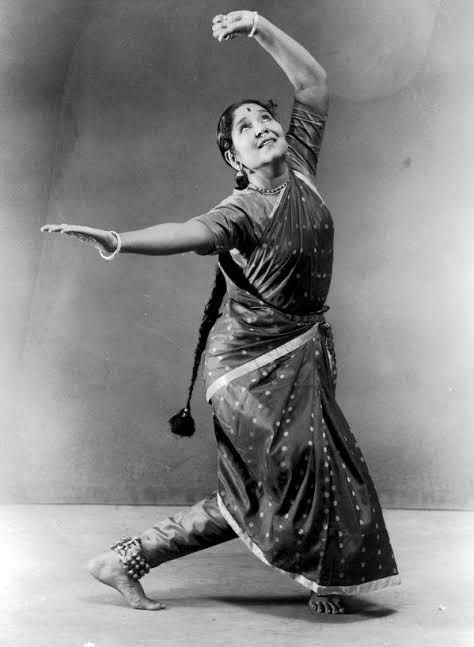
T. Balasaraswati (13 May 1918 – 9 February 1984), popularly known as Balasaraswati, was one of India’s greatest classical dancers and the foremost exponent of Bharatanatyam in the 20th century. Belonging to a traditional family of musicians and dancers from Tamil Nadu, she played a crucial role in preserving and popularizing the authentic form of Bharatanatyam on national and international stages.
Known for her exceptional expression (abhinaya), musical understanding, and artistic depth, she brought global recognition to Indian classical dance. In recognition of her outstanding contribution to Indian classical dance, she was awarded the Padma Bhushan in 1957.
2. Quick Facts
| Item | Details |
|---|---|
| Full Name | Thanjavur Balasaraswati |
| Popular Name | Balasaraswati / Bala |
| Native Name | பாலசரஸ்வதி (Tamil) |
| Date of Birth | 13 May 1918 |
| Place of Birth | Madras Presidency, British India (present-day Chennai, Tamil Nadu, India) |
| Date of Death | 9 February 1984 |
| Nationality | Indian |
| Occupation / Profession | Classical Dancer, Singer, Musician |
| Field of Achievement | Bharatanatyam, Indian Classical Dance |
| Years Active | 1920s–1980s |
| Known For | Reviving and promoting traditional Bharatanatyam worldwide |
3. Award Information
| Item | Details |
|---|---|
| Award Name | Padma Bhushan |
| Award Category | Arts (Dance) |
| Award Year | 1957 |
| Presented By | President of India |
| Date of Ceremony | 26 January 1957 (award announced; investiture held later) |
| Official Citation / Reason | Distinguished contribution to Indian classical dance and cultural heritage |
| Previous Recipients | Not applicable (annual civilian honour) |
| Next Recipients | The Padma Bhushan continued to be awarded annually to other distinguished artists |
4. Why Did Balasaraswati Receive the Award?
Balasaraswati received the Padma Bhushan for her extraordinary contribution to Bharatanatyam and Indian performing arts.
Her achievements included:
- Preserving the traditional style of Bharatanatyam.
- Bringing global recognition to Indian classical dance.
- Demonstrating exceptional mastery of expression and rhythm.
- Representing Indian culture internationally.
- Inspiring generations of dancers.
She was celebrated as one of the greatest interpreters of abhinaya (expressive storytelling through dance).
5. Early Life
Balasaraswati was born on 13 May 1918 in the Madras Presidency into the famous Tanjavur Quartet artistic tradition. She belonged to a family of musicians, dancers, and temple artists.
Her mother, Jayammal, was a respected singer, and her grandmother Vina Dhanammal was one of India’s greatest veena musicians. Growing up in this rich artistic environment shaped Balasaraswati’s extraordinary understanding of music and dance.
6. Education
Balasaraswati did not follow a conventional academic path. Her education was primarily in the traditional guru-shishya system of Indian classical arts.
She trained under renowned teachers, including:
- K. Kandappa Pillai – Bharatanatyam technique and choreography.
- Veedu Krishnaiyer – guidance and encouragement in classical dance.
- Her family members – advanced training in music and expression.
She also received extensive training in Carnatic music, which became a major strength of her dance performances.
7. Career Journey
Early Career
- Gave her first public performance (arangetram) at the age of seven.
- Quickly gained recognition for her artistic excellence.
- Performed extensively in South India.
Rise to Fame
- Became one of the leading Bharatanatyam performers of her generation.
- Preserved the traditional devadasi dance heritage while presenting it on modern stages.
- Developed a reputation for extraordinary emotional expression.
International Career
- Performed at major cultural events worldwide.
- Introduced Bharatanatyam to audiences in Europe, America, and Asia.
- Became an ambassador of Indian classical culture.
Later Years
- Continued teaching and mentoring young dancers.
- Inspired the global appreciation of Bharatanatyam.
8. Major Achievements
- One of the greatest Bharatanatyam dancers of the 20th century.
- First Indian classical dancer to receive international recognition at such a high level.
- Awarded the Padma Bhushan (1957).
- Received the Sangeet Natak Akademi Award (1955).
- Honoured with the Sangeet Natak Akademi Fellowship (1967).
- Received the Padma Vibhushan (1981).
- Performed at prestigious international cultural events.
- Preserved traditional Bharatanatyam techniques and repertoire.
9. Contribution to the Nation
Balasaraswati contributed to India by:
- Preserving India’s classical dance traditions.
- Promoting Bharatanatyam worldwide.
- Strengthening India’s cultural identity after Independence.
- Inspiring women artists and performers.
- Maintaining the connection between dance, music, and spirituality.
- Creating international appreciation for Indian performing arts.
Her performances became a symbol of India’s rich cultural heritage.
10. Other Awards and Honours
Major recognitions received by Balasaraswati include:
- Padma Bhushan (1957)
- Sangeet Natak Akademi Award (1955)
- Sangeet Natak Akademi Fellowship (1967)
- Padma Vibhushan (1981)
- Honorary recognitions from Indian and international cultural organizations.
11. Legacy and Influence
Balasaraswati’s legacy continues through:
- The worldwide popularity of Bharatanatyam.
- Preservation of traditional dance vocabulary and techniques.
- Influence on generations of classical dancers.
- Recognition of the importance of musicality in dance.
- Her role as a cultural ambassador of India.
Many contemporary Bharatanatyam artists consider her one of their greatest inspirations.
12. Interesting Facts
- She performed her first stage recital at only seven years old.
- She came from a legendary family of South Indian musicians and dancers.
- She was famous for her deeply emotional abhinaya.
- Unlike some modern adaptations, she strongly defended the traditional form of Bharatanatyam.
- She was invited to perform internationally and introduced Indian dance to global audiences.
- She was also an accomplished Carnatic singer.
13. Quotes
A famous statement associated with Balasaraswati’s artistic philosophy is:
“Bharatanatyam is an art which sanctifies the body and transforms it into a temple of expression.”
(This quote is widely attributed to her artistic views, though exact wording varies across sources.)
Another well-known view of hers was that dance should maintain its connection with music, tradition, and spiritual expression.
14. Timeline
| Year | Event |
|---|---|
| 1918 | Born in Madras Presidency |
| 1925 | Gave her first public performance at age seven |
| 1930s | Established herself as a leading Bharatanatyam artist |
| 1955 | Received Sangeet Natak Akademi Award |
| 1957 | Awarded Padma Bhushan |
| 1967 | Received Sangeet Natak Akademi Fellowship |
| 1981 | Awarded Padma Vibhushan |
| 1984 | Passed away on 9 February |
15. References
- Sangeet Natak Akademi – Records on Indian classical artists.
- Government of India Padma Awards archives.
- Publications on Bharatanatyam history and Indian classical dance.
- Biographies of Balasaraswati and the Tanjavur dance tradition.
- Cultural archives documenting Indian performing arts.
16. Related Personalities
- Rukmini Devi Arundale
- Tanjore Quartet
- M. S. Subbulakshmi
- Semmangudi Srinivasa Iyer
- Yamini Krishnamurthy
17. Frequently Asked Questions (FAQ)
Q1. Who was Balasaraswati?
Balasaraswati was one of India’s greatest Bharatanatyam dancers and a cultural ambassador who brought Indian classical dance to global audiences.
Q2. What was Balasaraswati’s full name?
Her full name was Thanjavur Balasaraswati.
Q3. When was Balasaraswati born?
She was born on 13 May 1918 in the Madras Presidency (present-day Chennai, Tamil Nadu).
Q4. Which award did Balasaraswati receive in 1957?
She received the Padma Bhushan in 1957 for her contribution to Indian classical dance.
Q5. Why is Balasaraswati famous?
She is famous for her unmatched mastery of Bharatanatyam, especially expressive dance (abhinaya) and for preserving traditional dance practices.
Q6. What other awards did Balasaraswati receive?
She received the Sangeet Natak Akademi Award, Sangeet Natak Akademi Fellowship, and Padma Vibhushan.
Q7. When did Balasaraswati die?
She passed away on 9 February 1984.
Q8. What is Balasaraswati’s legacy?
She is remembered as one of the greatest Bharatanatyam artists in history whose artistry helped establish Indian classical dance as a respected global art form.
About the Author