
1. Introduction
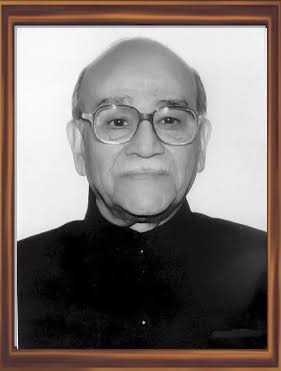
Admiral Sourendra Nath Kohli (PVSM) was one of the most distinguished military leaders in modern Indian history. Serving as the 8th Chief of the Naval Staff of the Indian Navy from 1973 to 1976, he played a monumental role in shaping maritime strategy and defense. He is best remembered for his strategic genius and operational leadership during the 1971 Indo-Pakistan War, where he commanded the Western Naval Command and orchestrated crippling offensives against the Pakistan Navy.
2. Quick Facts
- Full Name: Sourendra Nath Kohli
- Native Name: सुरेन्द्रनाथ कोहली
- Date of Birth: June 21, 1916
- Place of Birth: Amritsar, Punjab, British India
- Nationality: Indian
- Occupation/Profession: Naval Officer / Military Leader
- Field of Achievement: Military Leadership and Naval Strategy
- Years Active: 1936–1976
3. Award Information (Padma Bhushan)
- Award Name: Padma Bhushan
- Award Category: Civil Honours (Third-highest civilian award in India)
- Award Year: 1972 (following the 1971 war victory)
- Presented By: President of India
- Date of Ceremony: Published/Awarded in the early 1970s
- Citation/Official Reason: Awarded in recognition of his exceptional leadership, strategic vision, and distinguished service during the Indo-Pakistan War of 1971.
- Previous Recipients: Eminent personalities across arts, literature, science, and public service.
- Next Recipients: Conferred annually alongside other civilian honorees.
4. Why They Received the Award
Admiral Kohli received the Padma Bhushan and the Param Vishisht Seva Medal (PVSM) due to his brilliant operational command during the 1971 Indo-Pakistan War. As the Flag Officer Commanding-in-Chief (FOC-IN-C) of the Western Naval Command, he directed Operation Trident and Operation Python. Under his leadership, the Indian Navy delivered devastating missile attacks on Karachi harbor, decimated Pakistan’s naval fleet, secured India’s western coastline, and protected commercial shipping lines, altering the course of the war.
5. Early Life
Born on June 21, 1916, in Amritsar, Punjab, into a prominent Punjabi family, Sourendra Nath Kohli was the son of B.L. Kohli. Growing up during the British colonial era, he experienced a rapidly changing political landscape. Displaying academic excellence and leadership potential from a young age, he moved to Delhi for higher studies, which shaped his worldview and prepared him for a life of public service.
6. Education
- Schooling: Completed basic education in Punjab and northern India.
- Higher Education: Attended the prestigious St. Stephen’s College, Delhi, where he earned his Bachelor of Arts with Honours (BA Hons.) degree. His strong academic foundation at St. Stephen’s equipped him with the analytical skills required for complex naval planning.
7. Career Journey
- Royal Indian Navy Volunteer Reserve (1936–1947): Immediately after graduating, Kohli joined the RINVR as a cadet in May 1936. He was commissioned as a sub-lieutenant in June 1938. During World War II, he served actively in the Persian Gulf and the Far Eastern theater. He specialized in communications in the UK in 1943 and served aboard HMS Queen Elizabeth (1944–1945).
- Post-Independence Expansion (1947–1965): Following India’s independence, Kohli chose to serve the sovereign Indian Navy. He traveled to the UK in 1948 to oversee the acquisition of destroyers and became the first Commanding Officer of INS Rana upon its purchase in 1949. He later commanded the flagship cruiser INS Mysore, served as Superintendent of the Naval Dockyard in Bombay, and twice held the post of Director of Naval Plans.
- Flag Rank and High Commands (1965–1973): Promoted to Rear Admiral in August 1965, he served as Flag Officer Commanding the Indian Fleet (1967–1969). He later served as Commandant of the National Defence College (NDC) and took charge as FOC-IN-C Western Naval Command in February 1971.
- Chief of the Naval Staff (1973–1976): On March 1, 1973, Admiral Kohli assumed office as the 8th Chief of the Naval Staff, modernizing the fleet and reinforcing India’s status as a dominant regional maritime power until his retirement on February 29, 1976.
8. Major Achievements
- Masterminded and supervised the historic 1971 naval strikes on Karachi (Operations Trident and Python), which paralyzed Pakistan’s maritime capabilities.
- Successfully integrated major warship acquisitions into the post-independence Indian Navy, transitioning it into a self-reliant, multi-dimensional force.
- Authored definitive military texts, including We Dared: Maritime Operations in the 1971 Indo-Pak War and Sea Power and the Indian Ocean.
9. Contribution to the Nation
Admiral Kohli laid the strategic bedrock for India’s modern naval dominance. By ensuring total sea control in the Arabian Sea and the Bay of Bengal during the 1971 conflict, he shielded India’s economic pipelines and coastline from enemy disruption. Beyond wartime triumphs, his administrative acumen as Chief of Naval Staff helped institutionalize strategic maritime planning, cementing the Indian Navy as a formidable guardian of the subcontinent.
10. Other Awards and Honours
- Param Vishisht Seva Medal (PVSM): Awarded in January 1968 for exceptional service of the highest order to the nation.
11. Legacy and Influence
Admiral Kohli’s legacy is defined by audacity, precision, and intellectual rigor. He proved that a smaller, well-led naval force could decisively outmaneuver a regional adversary through bold tactical innovation (such as utilizing missile boats for offensive strikes). Long after hanging up his uniform, his literary contributions continue to guide geopolitical strategists analyzing security dynamics in the Indian Ocean.
12. Interesting Facts
- He was among a rare group of elite Indian officers who bridged the transition from the British-administered Royal Indian Navy to the independent Indian Navy.
- Unlike many contemporary commanders, Kohli combined high-seas combat execution with profound academic scholarship, writing extensively on oceanic geopolitics.
- Following his military retirement, he served as the Lieutenant Governor / Governor of Mizoram from 1981 to 1983.
13. Quotes
“The sea has always influenced the destiny of nations; for India, the Indian Ocean is not just a body of water, but a vital lifeline of security and economic survival.” — Admiral S.N. Kohli
14. Timeline
| Year | Milestone |
| 1916 | Born on June 21 in Amritsar, Punjab. |
| 1936 | Joined the Royal Indian Navy Volunteer Reserve as a cadet. |
| 1938 | Commissioned as a Sub-Lieutenant. |
| 1949 | Appointed Commanding Officer of INS Rana. |
| 1968 | Awarded the Param Vishisht Seva Medal (PVSM). |
| 1971 | Commanded the Western Naval Command during the Indo-Pakistan War. |
| 1972 | Conferred the Padma Bhushan for distinguished service. |
| 1973 | Assumed office as the Chief of the Naval Staff. |
| 1976 | Retired from active naval service on February 29. |
| 1981 | Served as Governor of Mizoram until 1983. |
| 1997 | Passed away on January 21 at the age of 80. |
15. References
- Wikipedia contributors. “Sourendra Nath Kohli.” Wikipedia, The Free Encyclopedia.
- Kohli, Sourendra Nath. We Dared: Maritime Operations in the 1971 Indo-Pak War. Lancer Publishers.
- Ministry of Defence, Government of India — Gazette notifications on PVSM and Padma Awards.
- Information Resource Facilitation Centre, Indian Navy archives.
16. Related Personalities
- Admiral S.M. Nanda: The Chief of the Naval Staff during the 1971 war.
- Vice Admiral Nilakanta Krishnan: Flag Officer Commanding-in-Chief of the Eastern Naval Command during the 1971 war.
- Admiral Jal Cursetji: Successor to Admiral Kohli as Chief of the Naval Staff.
17. Frequently Asked Questions (FAQ)
- What was Admiral S.N. Kohli’s most famous military achievement?His most famous achievement was providing stellar operational command to the Western Naval Command during the 1971 Indo-Pakistan War, directly executing devastating strikes on Karachi harbor.
- When did Admiral Kohli serve as Chief of the Naval Staff?He served as the Chief of the Naval Staff from March 1, 1973, until February 29, 1976.
- What books did Admiral Kohli author?He wrote We Dared: Maritime Operations in the 1971 Indo-Pak War and Sea Power and the Indian Ocean.
About the Author