

1. Introduction
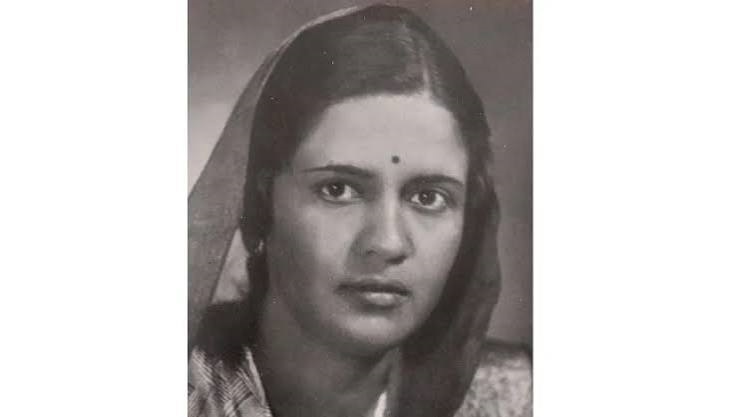
Shakuntala Paranjpye was a pioneering Indian author, parliamentarian, and a fierce advocate for family planning, women’s rights, and social reform. Long before population control became a mainstream national policy, she championed the cause with unmatched dedication, making monumental contributions to public health and social welfare in India.
2. Quick facts
- Full Name: Shakuntala Paranjpye
- Native Name: शकुंतला परांजपे
- Date of birth: 17 January 1906
- Place Of birth: London, United Kingdom
- Nationality: Indian
- Occupation/ Profession: Social Worker, Politician, Author, Activist
- Field of Achievement: Family Planning and Women’s Welfare
- Years Active: 1930s–1980s
3. Award Information
- Award Name: Padma Bhushan
- Award Category: India’s Third-Highest Civilian Award
- Award Year: 1991
- Presented By: President of India
- Date of Ceremony: Spring 1991
- Citation/Official Reason: For distinguished service and contribution in the field of social work and public welfare.
- Previous Recipients (optional): Eminent social workers, scientists, and leaders.
- Next Recipients: Subsequent stalwarts in social service and public affairs.
4. Why they Receive the award?
She received the Padma Bhushan and earlier honours for her lifelong pioneering crusade in family planning and her relentless efforts to uplift underprivileged women and children. Her bold advocacy at a time of deep social conservatism laid the groundwork for modern population policies and reproductive healthcare awareness in India.
5. Early Life
Born in London, she was the daughter of Sir Raghunath Purushottam Paranjpye, a renowned mathematician and educationist who was the Senior Wrangler at Cambridge. Growing up in a progressive family, she received an unconventional, liberal upbringing that encouraged independent thought and a deep sense of social responsibility toward the marginalized.
6. Education
- Completed her early education in India and England.
- Earned a Bachelor of Science degree from Cambridge University.
- Studied education and social work, equipping herself with the intellectual tools needed to challenge orthodox social practices in colonial India.
7. Carrier Journey
- 1938: Appointed as the first woman member of the Central Board of Film Censors.
- 1940s–1950s: Set up the first family planning clinics in Maharashtra, distributing contraceptives and spreading awareness against heavy social resistance.
- 1958–1964: Served as a member of the Bombay Legislative Council.
- 1964–1970: Nominated as a member of the Rajya Sabha, representing progressive social views in the Indian Parliament.
8. Major Achievements
- Authored the landmark book Three Years in Australia and several biographical and social works, including a biography of her father.
- Pushed for the legalization of abortion and the implementation of structured family planning measures in independent India.
- Awarded the prestigious Watumull Foundation Prize for her work in social welfare.
9. Contribution to the nation
Shakuntala Paranjpye broke traditional taboos surrounding reproductive health and population growth, convincing political leadership of the urgent need for family planning. Her grassroots activism and legislative advocacy helped shape national policies that addressed resource management, poverty alleviation, and women’s bodily autonomy.
10. Other Awards and Honours
- Padma Bhushan: 1991
- Watumull Award: For distinguished services to family planning
- Maharashtra State Literary Awards: For her Marathi publications
11. Legacy and influence
Remembered as a visionary social reformer, she paved the way for modern feminist thought and public health policy in India. Her fearlessness in addressing taboo subjects inspired generations of women leaders, health workers, and lawmakers.
12. Interesting Facts
- She was the mother of Sai Paranjpye, the celebrated national award-winning film director and screenwriter known for classics like Chashme Buddoor and Katha.
- She traveled across rural villages on bullock carts and trains during the pre-independence era to educate rural women on contraception and health.
- Despite facing fierce opposition and moral outrage from orthodox groups in her early days, she never compromised on her progressive convictions.
13. Quotes
“Family planning is not merely a method to control numbers; it is the fundamental right of a woman to determine her own life and health.” — Shakuntala Paranjpye
14. Timeline
- 1906: Born on 17 January in London
- 1938: Appointed to the film censor board
- 1940s: Established pioneering family planning clinics in Western India
- 1964: Nominated to the Rajya Sabha
- 1991: Conferred with the Padma Bhushan
- 2000: Passed away on 3 May at Pune, Maharashtra
15. References
- Rajya Sabha official biographical archives
- Publications by Maharashtra Sahitya Parishad
- Historical records on the history of family planning in India
16. Related Personalities
- Sai Paranjpye (Daughter and acclaimed film director)
- Sir Raghunath Purushottam Paranjpye (Father and mathematician)
- D.K. Karve (Social reformer and champion of women’s education in Maharashtra)
17. Frequently Asked Questions (FAQ)
- Q: Who was Shakuntala Paranjpye?A: She was a pioneering Indian social reformer, author, and parliamentarian who spearheaded the family planning movement in India.
- Q: What is her primary contribution to India?A: She established some of India’s earliest family planning clinics and successfully advocated for national population control policies and women’s reproductive rights.
- Q: Which major civilian award did she receive?A: She was awarded the Padma Bhushan in 1991 for her extensive social work.
About the Author




