

1. Introduction
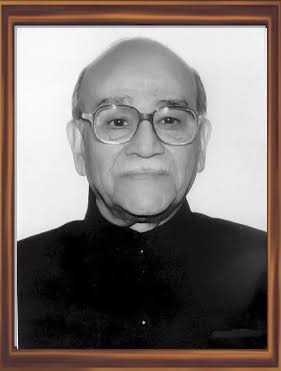
Semmangudi Radhakrishna Srinivasa Iyer, popularly known as Semmangudi Srinivasa Iyer, was a legendary Indian Carnatic musician.
His career spanned more than seven decades. He was not merely a concert singer: he was also a musicologist, teacher, composer/tuner, administrator and custodian of the Carnatic tradition.
He became particularly influential through his work with the Swathi Thirunal College of Music in Thiruvananthapuram, where he helped revive and popularise compositions of Maharaja Swathi Thirunal. He also served as Chief Producer of Carnatic Music at All India Radio, Madras.
His students and musical descendants include several major figures of South Indian classical music, including M. S. Subbulakshmi, T. M. Thiagarajan, T. N. Krishnan and K. J. Yesudas.
2. Quick Facts
| Particular | Details |
|---|---|
| Full Name | Semmangudi Radhakrishna Srinivasa Iyer |
| Popular Name | Semmangudi Srinivasa Iyer |
| Tamil Name | செம்மங்குடி ராதாகிருஷ்ண ஸ்ரீநிவாஸ ஐயர் |
| Date of Birth | 25 July 1908 |
| Place of Birth | Tirukkodikaval, Tanjore District, Madras Presidency |
| Present-day Location | Thanjavur region, Tamil Nadu |
| Date of Death | 31 October 2003 |
| Place of Death | Chennai, Tamil Nadu |
| Nationality | Indian |
| Profession | Carnatic vocalist, music teacher and musicologist |
| Field of Achievement | Carnatic classical music |
| Musical Tradition | Carnatic music |
| Years Active | Approximately 1920s–2003 |
| Major Award | Padma Vibhushan |
| Padma Vibhushan | 1990 |
| Padma Bhushan | 1969 |
| Sangeet Natak Akademi Award | 1953 |
| Sangeetha Kalanidhi | 1947 |
His birth and death dates are documented as 25 July 1908 and 31 October 2003.
3. Award Information
Semmangudi Srinivasa Iyer received several of India’s most important honours for classical musicians.
Padma Vibhushan
| Award Detail | Information |
|---|---|
| Award Name | Padma Vibhushan |
| Award Category | Art |
| Award Year | 1990 |
| Presented By | Government of India / President of India |
| Recipient | Dr. Sammangudi Radhakrishnier Srinivasier |
| State | Tamil Nadu |
| Citation | Recognition of his outstanding contribution to the arts, particularly Carnatic music |
The official Government of India Padma Awards database lists “Dr. Sammangudi Radhakrishnier Srinivasier” as a Padma Vibhushan recipient in 1990, under Art, from Tamil Nadu.
Padma Bhushan
Before receiving the Padma Vibhushan, Semmangudi was awarded the Padma Bhushan in 1969. The award was for his contribution to the arts.
Sangeet Natak Akademi Award
He received the Sangeet Natak Akademi Award in 1953 for Carnatic vocal music. Historical lists of Akademi awardees identify him as the 1953 Carnatic vocal recipient.
Sangeetha Kalanidhi
In 1947, the Music Academy, Madras awarded him the title Sangeetha Kalanidhi. He was only 39 years old and is widely remembered as the youngest recipient of this honour.
Other Honours
He also received:
- Sangeet Natak Akademi Fellowship – 1976
- Honorary doctorate from the University of Kerala – 1979
- Isai Perarignar
- Kalidas Samman
- Rajyasevanirata honour associated with the former Travancore royal tradition
Previous and Next Recipients
For awards such as the Padma Vibhushan, there is no single “previous” or “next” recipient because several people receive the award each year.
For Sangeetha Kalanidhi, the previous recipient before Semmangudi was Maharajapuram Viswanatha Iyer (1945), while no award was given in 1946; Semmangudi received it in 1947.
4. Why Did Semmangudi Srinivasa Iyer Receive These Awards?
Semmangudi’s honours recognised his extraordinary contribution to Carnatic classical music.
His importance rested on several achievements:
- Exceptional career as a Carnatic vocalist
- Deep knowledge of Carnatic musical grammar
- Preservation and revival of traditional compositions
- Revival of the music of Maharaja Swathi Thirunal
- Training of generations of musicians
- Leadership in music institutions
- Work with All India Radio
- Influence on the modern concert tradition
He became particularly famous for combining musical scholarship, bhava (emotional expression), raga interpretation and disciplined concert presentation.
5. Early Life
Semmangudi Srinivasa Iyer was born on 25 July 1908 in Tirukkodikaval, in the historic Tanjore region of the Madras Presidency. He was the third son of Radhakrishna Iyer and Dharmasamvardhini Ammal.
He grew up in an environment deeply connected with South Indian classical music.
His maternal uncle, Tirukkodikaval Krishna Iyer, was a noted violinist. This musical family environment strongly influenced the young Srinivasa.
At about eight years of age, he began systematic musical training. His early teachers included Semmangudi Narayanaswamy Iyer and Thiruvadaimarudur Sakharama Rao.
Later, he received important training from the celebrated vocalist Maharajapuram Viswanatha Iyer, who became the central guru in his development as a vocalist.
6. Education and Musical Training
Unlike a modern university-based musical education, Semmangudi’s education was primarily through the traditional guru-shishya parampara.
Important Gurus
His musical training included:
- Semmangudi Narayanaswamy Iyer
- Thiruvadaimarudur Sakharama Rao
- Umayalpuram Swaminatha Iyer
- Maharajapuram Viswanatha Iyer
His training was rigorous and focused on:
- Vocal technique
- Raga interpretation
- Kriti rendition
- Gamaka
- Niraval
- Swara singing
- Musical theory
- Sanskrit and Telugu compositions
7. Career Journey
Early Concert Career
Semmangudi gave his first major public performances during the 1920s. His concert career developed rapidly, and by the late 1930s he had become one of the leading Carnatic vocalists of his generation.
Travancore Palace
In 1939, he became an Asthana Vidwan (court musician) associated with the Travancore royal court.
This association proved particularly important because of his later work with the compositions of Maharaja Swathi Thirunal.
Swathi Thirunal College
In 1941, Semmangudi joined the Swathi Thirunal Music Academy in Thiruvananthapuram. He later became its Principal, a position he held until 1963.
His work there helped revive and popularise numerous compositions of Swathi Thirunal.
Sangeetha Kalanidhi – 1947
At just 39, he received the Sangeetha Kalanidhi title from the Music Academy, Madras.
This was a landmark in his career.
All India Radio
During the late 1950s, he served as Chief Producer of Carnatic Music at All India Radio, Madras.
This allowed his influence to extend beyond the concert hall and into the rapidly expanding medium of radio.
Later Career
In his later decades, Semmangudi continued performing and teaching. Even into his 90s, he remained active in music and gave public performances.
8. Major Achievements
1. Sangeetha Kalanidhi at 39
His 1947 Sangeetha Kalanidhi was particularly remarkable because he received it at a very young age. He remains widely recognised as the youngest person to receive the honour.
2. Padma Bhushan
He received the Padma Bhushan in 1969.
3. Padma Vibhushan
In 1990, he received the Padma Vibhushan, India’s second-highest civilian honour. The official database categorises it under Art.
4. Sangeet Natak Akademi Award
He was the 1953 Sangeet Natak Akademi Award recipient for Carnatic vocal music.
5. Revival of Swathi Thirunal’s Music
One of his greatest contributions was his role in preserving, arranging and popularising compositions associated with Swathi Thirunal. He helped prepare notation for more than 200 compositions.
6. Musical Lineage
His teaching influenced several generations of Carnatic musicians.
Among his notable disciples and musical descendants were M. S. Subbulakshmi, T. M. Thiagarajan and K. J. Yesudas, among many others.
9. Contribution to the Nation
Semmangudi’s contribution to India was primarily cultural.
Preservation of Carnatic Tradition
He helped preserve the traditional grammar and aesthetics of Carnatic music at a time when concert formats and performance styles were changing.
Popularisation of Swathi Thirunal
His work brought greater attention to the compositions of Maharaja Swathi Thirunal and helped ensure their continued place in the Carnatic repertoire.
Music Education
Through teaching, he created a powerful musical lineage that continued long after his own career.
All India Radio
His work with All India Radio helped bring Carnatic music to audiences beyond the traditional concert circuit.
Cultural Representation
His long international and national career helped establish Indian classical music as an important component of India’s cultural identity.
10. Other Awards and Honours
| Year | Award / Honour |
|---|---|
| 1947 | Sangeetha Kalanidhi |
| 1953 | Sangeet Natak Akademi Award |
| 1969 | Padma Bhushan |
| 1976 | Sangeet Natak Akademi Fellowship |
| 1979 | Honorary Doctorate, University of Kerala |
| 1990 | Padma Vibhushan |
| — | Isai Perarignar |
| — | Kalidas Samman |
| — | Rajyasevanirata |
11. Legacy and Influence
Semmangudi Srinivasa Iyer’s influence on Carnatic music is difficult to overstate.
He is often described as the “Pitamaha” or grand sire of modern Carnatic music.
His legacy rests on three major pillars:
Performer
His concerts demonstrated a distinctive approach to raga, kriti and niraval, with strong emphasis on musical substance rather than superficial virtuosity.
Teacher
His students and disciples carried aspects of his musical approach to subsequent generations.
Custodian of Tradition
He played an important role in preserving compositions, especially those of Swathi Thirunal, while transmitting the traditional Carnatic aesthetic to younger musicians.
His affectionate nickname “Semmangudi Maama” reflects the personal affection with which many disciples and listeners regarded him.
12. Interesting Facts
- His full name was Semmangudi Radhakrishna Srinivasa Iyer.
- He was born on 25 July 1908.
- He was born in the Tanjore region, one of the great centres of Carnatic music.
- His maternal uncle Tirukkodikaval Krishna Iyer was a violinist.
- He began formal musical training as a child.
- Maharajapuram Viswanatha Iyer was one of his most important gurus.
- He made his concert debut during the 1920s.
- He became an Asthana Vidwan of Travancore in 1939.
- He became associated with the Swathi Thirunal Music Academy in 1941.
- He became its Principal and remained there until 1963.
- He received Sangeetha Kalanidhi in 1947 at age 39.
- He received the Sangeet Natak Akademi Award in 1953.
- He received the Padma Bhushan in 1969.
- He became a Fellow of the Sangeet Natak Akademi in 1976.
- He received an honorary doctorate from the University of Kerala in 1979.
- He received the Padma Vibhushan in 1990.
- He was popularly called “Semmangudi Maama.”
- He was known as the “Pitamaha” of modern Carnatic music.
- He helped revive more than 200 Swathi Thirunal compositions through notation and performance.
- He died on 31 October 2003, aged 95.
13. Quotes
There are many recollections and descriptions of Semmangudi’s musical philosophy, but reliably authenticated direct quotations are comparatively difficult to establish.
For a factual blog, it is better not to use an unattributed quotation.
You can instead use this original editorial statement:
“Semmangudi Srinivasa Iyer preserved the depth of the Carnatic tradition while passing its musical knowledge to generations of future musicians.”
Note: This is an original summary for your article, not a quotation by Semmangudi Srinivasa Iyer.
14. Timeline
| Year | Event |
|---|---|
| 1908 | Born on 25 July |
| Childhood | Began learning Carnatic music |
| 1920s | Began public concert career |
| 1939 | Became Asthana Vidwan of Travancore |
| 1941 | Joined Swathi Thirunal Music Academy |
| 1947 | Received Sangeetha Kalanidhi |
| 1953 | Received Sangeet Natak Akademi Award |
| 1950s | Served as Chief Producer of Carnatic Music at All India Radio |
| 1963 | Completed his tenure as Principal of Swathi Thirunal Academy |
| 1969 | Received Padma Bhushan |
| 1976 | Became Fellow of Sangeet Natak Akademi |
| 1979 | Received honorary doctorate from University of Kerala |
| 1990 | Received Padma Vibhushan |
| 2003 | Died on 31 October in Chennai |
15. References
For your blog, the following sources are particularly useful:
Government of India – Padma Awards
The official database records his Padma Vibhushan in 1990 under Art.
Government of India – Padma Awards Database
All India Radio / Akashvani
Akashvani’s published material identifies Semmangudi as a major Carnatic vocalist and notes his distinction as the youngest recipient of the Sangeetha Kalanidhi in 1947.
Music Academy, Madras
The archives of the Music Academy provide valuable historical material concerning Semmangudi and the Carnatic music tradition.
Thanjavur Parampara
Provides biographical and historical information on Semmangudi’s life and musical lineage.
16. Related Personalities
M. S. Subbulakshmi
One of the greatest Carnatic vocalists of the 20th century and a prominent figure in Semmangudi’s musical lineage.
Maharajapuram Viswanatha Iyer
Semmangudi’s principal guru and one of the major Carnatic vocalists of the preceding generation.
G. N. Balasubramaniam
A major contemporary Carnatic vocalist who later succeeded Semmangudi in an important institutional role at the Swathi Thirunal Academy.
K. J. Yesudas
One of India’s best-known Carnatic and playback singers and a student in Semmangudi’s musical lineage.
T. N. Krishnan
Celebrated Carnatic violinist who was closely associated with Semmangudi’s generation of musicians.
Ariyakudi Ramanuja Iyengar
One of the most important contemporaries of Semmangudi and a major influence on the development of the modern Carnatic concert format.
17. Frequently Asked Questions (FAQ)
Who was Semmangudi Srinivasa Iyer?
Semmangudi Srinivasa Iyer was a legendary Indian Carnatic vocalist, teacher and musicologist, widely regarded as one of the most influential Carnatic musicians of the 20th century.
When was Semmangudi Srinivasa Iyer born?
He was born on 25 July 1908 in the Tanjore region of present-day Tamil Nadu.
When did Semmangudi Srinivasa Iyer die?
He died on 31 October 2003 in Chennai at the age of 95.
Which awards did Semmangudi Srinivasa Iyer receive?
His major honours included Sangeetha Kalanidhi (1947), Sangeet Natak Akademi Award (1953), Padma Bhushan (1969), Sangeet Natak Akademi Fellowship (1976) and Padma Vibhushan (1990).
When did he receive the Padma Bhushan?
He received the Padma Bhushan in 1969.
When did he receive the Padma Vibhushan?
He received the Padma Vibhushan in 1990, in the field of Art.
What is Semmangudi Srinivasa Iyer famous for?
He is famous for his outstanding contribution to Carnatic vocal music, his scholarship, teaching, preservation of traditional compositions and influence on later generations of musicians.
Why is he called the Pitamaha of Carnatic music?
He is called “Pitamaha” (grand sire/grandfather) because of his enormous influence on the performance, teaching and preservation of modern Carnatic music.
What was his biggest contribution?
One of his major contributions was preserving and popularising the Carnatic repertoire, particularly the compositions of Swathi Thirunal, while training generations of musicians.
Who was his guru?
His most important guru was Maharajapuram Viswanatha Iyer, although he studied under several teachers during his early musical training.
When did Semmangudi receive Sangeetha Kalanidhi?
He received Sangeetha Kalanidhi in 1947, at the age of 39. He is widely recognised as the youngest recipient of the honour.
What was Semmangudi’s role in Swathi Thirunal’s music?
He helped revive, notate, arrange and popularise many compositions of Maharaja Swathi Thirunal, including preparing notation for more than 200 compositions.
What was Semmangudi’s nickname?
He was affectionately known as “Semmangudi Maama” among disciples and admirers.
About the Author