

Introduction
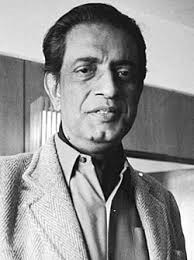
Satyajit Ray was one of India’s greatest filmmakers, screenwriters, authors, composers, and artists. He is widely regarded as one of the finest filmmakers in world cinema. Known for his realistic storytelling, artistic vision, and deep understanding of human emotions, he transformed Indian cinema and gained international recognition. His masterpiece films explored human life, society, culture, and everyday experiences with remarkable sensitivity. For his outstanding contribution to cinema, he was awarded the prestigious Padma Vibhushan in 1976.
Early Life
Satyajit Ray was born into a distinguished Bengali family known for literature, art, and creativity. His grandfather, Upendrakishore Ray Chowdhury, was a famous writer and illustrator, while his father, Sukumar Ray, was a renowned poet and humorist.
Growing up in a creative environment, Ray developed a deep interest in art, literature, music, and visual storytelling from an early age.
Birth Date and Death
- Full Name: Satyajit Ray
- Date of Birth: 2 May 1921
- Place of Birth: Kolkata (then Calcutta), West Bengal, India
- Date of Death: 23 April 1992
- Age at Death: 70 years
Education and Career
Satyajit Ray completed his schooling in Kolkata and studied economics at Presidency University. Later, he studied art at Visva-Bharati University, where he was influenced by artists such as Nandalal Bose and Benode Behari Mukherjee.
Before entering filmmaking, he worked as a commercial artist and graphic designer at an advertising agency. His interest in cinema grew after watching international films and meeting renowned filmmakers.
His career highlights include:
- Directed his first film Pather Panchali.
- Created the famous The Apu Trilogy.
- Worked as a filmmaker, screenwriter, composer, and illustrator.
- Created popular detective stories featuring Feluda.
- Designed book covers and illustrations for Bengali literature.
Career and Achievements
Satyajit Ray made extraordinary contributions to Indian and world cinema.
His major achievements include:
- Introduced Indian cinema to global audiences through realistic and human-centered storytelling.
- Directed more than 30 feature films and documentaries.
- Created internationally acclaimed films such as:
- Pather Panchali
- Aparajito
- Apur Sansar
- Charulata
- Jalsaghar
- Developed a unique style combining realism, emotion, and artistic excellence.
- Composed music for many of his films.
- Influenced generations of filmmakers in India and around the world.
Why Did He Receive the Padma Vibhushan Award?
Satyajit Ray received the Padma Vibhushan in 1976 for his exceptional contribution to Arts, particularly Indian cinema.
The Government of India honoured him because:
- He revolutionized Indian filmmaking with his artistic approach.
- He brought international recognition to Indian cinema.
- His films portrayed Indian society and human emotions with depth and realism.
- He contributed not only as a director but also as a writer, composer, and designer.
- He inspired filmmakers worldwide through his creative vision.
His work became an important part of India’s cultural identity.
Field of Achievement
Satyajit Ray excelled in several fields, including:
- Filmmaking
- Screenwriting
- Film Music Composition
- Illustration
- Graphic Design
- Literature
- Children’s Writing
He is considered one of the greatest creative artists in Indian history.
Awards and Honours
Satyajit Ray received numerous national and international honours, including:
- Padma Shri (1958)
- Padma Bhushan (1965)
- Padma Vibhushan (1976)
- Bharat Ratna (1992)
- Academy Honorary Award (1992)
- Dadasaheb Phalke Award (1985)
He remains one of the most internationally honoured Indian filmmakers.
Interesting Facts
- Satyajit Ray was the first Indian filmmaker to receive an honorary Academy Award.
- He designed the famous logo for the publishing house Signet Press.
- He created the popular Bengali detective character Feluda.
- He composed music for many of his own films.
- His film Pather Panchali won international recognition and established him as a world-class filmmaker.
- He was also a talented illustrator and calligrapher.
- The French government honoured him with the Legion of Honour.
Legacy and Inspiration
Satyajit Ray’s legacy continues to influence filmmakers, writers, and artists across the world. His films are studied in film schools internationally for their storytelling, cinematography, and emotional depth.
He continues to inspire:
- Filmmakers
- Writers
- Artists
- Musicians
- Creative thinkers
His life proves that simplicity, creativity, and human understanding can create timeless art.
Contribution to the Nation
Satyajit Ray made immense contributions to India’s cultural heritage.
His contributions include:
- Bringing Indian cinema international recognition.
- Creating films that reflected Indian society and values.
- Promoting Bengali literature and culture through cinema and writing.
- Inspiring future generations of filmmakers.
- Representing India’s artistic excellence on global platforms.
His work strengthened India’s reputation as a centre of meaningful and artistic cinema.
Conclusion
Satyajit Ray was a legendary filmmaker and one of India’s greatest cultural icons. His extraordinary storytelling, artistic vision, and dedication to cinema earned him the Padma Vibhushan in 1976 and many other national and international honours. Through his films, literature, and artistic creations, he captured the beauty, struggles, and emotions of human life. His legacy continues to inspire filmmakers and artists worldwide, making him an everlasting symbol of India’s creative excellence.
About the Author




