Introduction
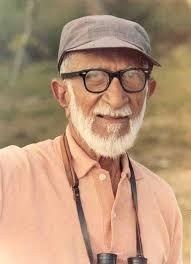
Salim Ali was one of India’s greatest naturalists, ornithologists, and environmentalists. Popularly known as the “Birdman of India,” he played a pioneering role in the study and conservation of birds in India. Through his extensive field research, bird surveys, and scientific writings, he created awareness about India’s rich biodiversity and influenced generations of wildlife researchers. In recognition of his exceptional contributions to science and environmental conservation, he was awarded the prestigious Padma Vibhushan in 1976.
Early Life
Salim Ali was born into a large Muslim family in Bombay (now Mumbai). He lost his parents at a young age and was raised by his maternal uncle and aunt. His interest in birds began when he was a child after observing and identifying a unique bird, which sparked his lifelong passion for ornithology.
This early curiosity developed into a remarkable career dedicated to studying India’s bird species and protecting nature.
Birth Date and Death
- Full Name: Salim Moizuddin Abdul Ali
- Date of Birth: 12 November 1896
- Place of Birth: Bombay (now Mumbai), Maharashtra, India
- Date of Death: 20 June 1987
- Age at Death: 90 years
Education and Career
Salim Ali developed an interest in natural history and pursued scientific training in ornithology. He studied at University of Bombay and later went to Germany, where he received training in zoology and bird studies under renowned ornithologist Erwin Stresemann.
After returning to India, he dedicated himself to bird research and conservation.
His career highlights include:
- Worked with the Bombay Natural History Society (BNHS).
- Conducted extensive bird surveys across India.
- Authored important books on Indian birds.
- Played a major role in establishing bird sanctuaries and conservation programs.
- Became a leading voice for environmental protection in India.
Career and Achievements
Salim Ali made outstanding contributions to Indian ornithology and wildlife conservation.
His major achievements include:
- Conducted systematic bird surveys throughout India and neighboring regions.
- Documented hundreds of bird species and their habitats.
- Authored the famous book The Book of Indian Birds, which introduced bird study to the general public.
- Co-authored the multi-volume Handbook of the Birds of India and Pakistan with S. Dillon Ripley.
- Helped establish and protect important bird habitats.
- Encouraged scientific research and conservation awareness in India.
His work laid the foundation for modern ornithology in India.
Why Did He Receive the Padma Vibhushan Award?
Salim Ali received the Padma Vibhushan in 1976 for his exceptional contributions to Science and Engineering, particularly in the field of ornithology and wildlife conservation.
The Government of India honored him because:
- He pioneered the scientific study of birds in India.
- He created awareness about wildlife conservation.
- He conducted extensive research on India’s bird diversity.
- He helped establish the importance of protecting natural habitats.
- He inspired future generations of environmental scientists and conservationists.
His work played a major role in developing India’s environmental awareness.
Field of Achievement
Salim Ali achieved excellence in:
- Ornithology (Study of Birds)
- Wildlife Conservation
- Ecology
- Natural History
- Environmental Research
- Scientific Writing
He is widely regarded as the father of Indian ornithology.
Awards and Honours
Salim Ali received numerous awards and recognitions, including:
- Padma Bhushan (1958)
- Padma Vibhushan (1976)
- J. Paul Getty Wildlife Conservation Prize (1975)
- Bharat Ratna nomination (not awarded)
- Honorary doctorates from several universities
His contributions earned him national and international recognition.
Interesting Facts
- Salim Ali was popularly called the “Birdman of India.”
- His interest in birds began when he was a child after identifying a yellow-throated sparrow.
- He spent decades traveling through forests, deserts, and mountains to study birds.
- His research helped identify many bird species and their habitats.
- He played an important role in protecting the Bharatpur Bird Sanctuary.
- His autobiography, The Fall of a Sparrow, describes his remarkable journey in bird research.
Legacy and Inspiration
Salim Ali’s legacy continues through India’s wildlife research institutions, conservation efforts, and generations of bird enthusiasts. His scientific approach changed the way people viewed birds and nature.
He continues to inspire:
- Wildlife researchers
- Environmentalists
- Bird watchers
- Students
- Conservationists
His life teaches the importance of curiosity, scientific research, and protecting the natural world.
Contribution to the Nation
Salim Ali made invaluable contributions to India’s scientific and environmental development.
His contributions include:
- Building the foundation of modern Indian ornithology.
- Documenting India’s diverse bird population.
- Promoting wildlife conservation and habitat protection.
- Supporting scientific research through the Bombay Natural History Society.
- Creating awareness about the importance of biodiversity.
His work helped India recognize the importance of protecting its natural heritage.
Conclusion
Salim Ali was one of India’s greatest naturalists and conservationists. Known as the “Birdman of India,” he dedicated his life to studying and protecting birds and their habitats. His groundbreaking research, scientific writings, and conservation efforts earned him the Padma Vibhushan in 1976. His contributions continue to inspire bird lovers, scientists, and environmentalists around the world. Salim Ali’s legacy remains a symbol of India’s commitment to understanding and preserving its rich biodiversity.
About the Author