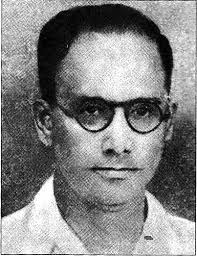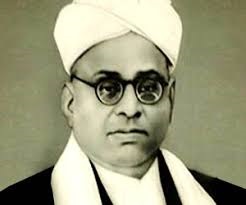
S. Srinivasa Iyengar was a distinguished lawyer, nationalist leader, and one of the most influential political figures from the Madras Presidency during India’s struggle for independence. He was popularly known as the “Lion of the South” for his powerful leadership and advocacy of self-rule.
Early Life and Education
S. Srinivasa Iyengar was born on 11 September 1874 in the Ramanathapuram district of the Madras Presidency (present-day Tamil Nadu). He came from a respected Sri Vaishnava family and received his early education in Madurai. Later, he studied at Presidency College, Madras, where he developed a strong academic foundation. His early schooling was primarily in Tamil, which helped him maintain a close connection with his cultural roots.
Education & Skills
After completing his college education, Srinivasa Iyengar pursued legal studies and became a lawyer. He began practicing at the Madras High Court in 1898 and quickly gained recognition for his expertise in constitutional law, Hindu law, and jurisprudence. His sharp intellect, persuasive advocacy, and deep legal knowledge helped him rise rapidly in the legal profession. In 1916, he became the youngest Advocate-General of the Madras Presidency.
Key Skills
- Legal scholarship and constitutional law
- Public speaking and political leadership
- Administrative and organizational abilities
- Writing and legal research
- Strategic planning in nationalist politics
Contribution to Tamil Literature
Although Srinivasa Iyengar is primarily remembered as a lawyer and political leader rather than a literary figure, he contributed significantly to intellectual and legal literature. His most notable work was an authoritative edition of Mayne’s Treatise on Hindu Law and Usage, which became an important reference for legal scholars and practitioners. His writings demonstrated clarity, scholarship, and a deep understanding of Indian legal traditions.
His support for Tamil culture and education also encouraged the growth of intellectual discourse in Tamil Nadu during the nationalist period.
Role in India’s Freedom Movement
Srinivasa Iyengar played a crucial role in the Indian freedom struggle.
Opposition to British Rule
In 1920, he resigned from his prestigious positions as Advocate-General and Law Member of the Governor’s Executive Council. He also returned the honor of Companion of the Order of the Indian Empire (C.I.E.) in protest against the Jallianwala Bagh Massacre and British repression.
Indian National Congress
He joined the Indian National Congress and actively participated in the Non-Cooperation Movement. Later, he became a leading figure in the Swaraj Party alongside Motilal Nehru and Chittaranjan Das.
Congress Leadership
He served as President of the Indian National Congress at the Indian National Congress Gauhati Session 1926 and advocated stronger measures for achieving self-government. He also supported younger nationalist leaders such as Jawaharlal Nehru and Subhas Chandra Bose.
Mentor to Future Leaders
Srinivasa Iyengar guided several future leaders, including S. Satyamurti and K. Kamaraj, helping shape the next generation of nationalist leadership.
Personal Life
Srinivasa Iyengar married the daughter of V. Bhashyam Aiyangar, one of the most respected legal figures of his time. His daughter, Ambujammal, became a prominent freedom fighter, social worker, and advocate for women’s welfare.
Despite his demanding legal and political career, he remained committed to education, social reform, and public service.
Death
S. Srinivasa Iyengar passed away on 19 May 1941 at his residence in Madras (now Chennai). His death marked the end of a remarkable career devoted to law, public service, and India’s struggle for freedom.
Legacy and Recognition
- Remembered as one of the most distinguished lawyers of the Madras Presidency.
- Played a key role in shaping nationalist politics in South India.
- Inspired future leaders such as Kamaraj and Satyamurti.
- His legal writings remain respected among scholars of Hindu law.
- Celebrated as a courageous freedom fighter who sacrificed prestigious positions for the national cause.
Why Important in Indian History
S. Srinivasa Iyengar occupies a significant place in Indian history because he combined legal excellence with political activism. At a time when many Indians sought reforms within the British system, he chose to resign from high office and join the freedom struggle. His leadership in the Congress, advocacy of self-rule, and mentorship of future national leaders helped strengthen India’s independence movement.
Conclusion
S. Srinivasa Iyengar was a brilliant lawyer, influential nationalist, and respected public leader. His courage in opposing colonial rule, commitment to democratic principles, and contribution to India’s freedom movement earned him a lasting place among the great leaders of modern India. His life remains an inspiring example of integrity, sacrifice, and service to the nation.
About the Author