

Introduction
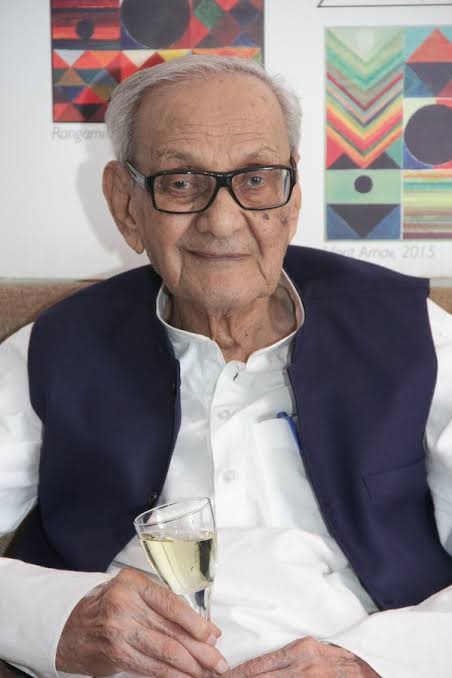
Sayed Haider Raza, popularly known as S. H. Raza, was one of India’s most celebrated modern painters. He was known for his vibrant use of colors, abstract compositions, and deep exploration of Indian philosophy and spirituality through art. His famous “Bindu” series became a symbol of cosmic energy, creativity, and the connection between nature and human existence. Through his paintings, Raza brought Indian artistic ideas to the international stage. In recognition of his extraordinary contribution to Art, he was awarded the Padma Vibhushan, India’s second-highest civilian honor.
Why Did He Receive the Padma Vibhushan Award?
S. H. Raza was awarded the Padma Vibhushan in 2013 for his outstanding contribution to Art.
The Government of India honored him for:
- His pioneering role in modern Indian painting.
- Bringing Indian art and philosophy to global audiences.
- Developing a unique artistic style combining Indian traditions with modern techniques.
- His exceptional contribution to abstract art and visual culture.
- Inspiring generations of artists through his creativity.
His work helped establish Indian modern art as an important part of the international art movement.
Career and Achievements
S. H. Raza had a remarkable artistic career spanning more than seven decades.
Major achievements include:
- Co-founded the influential Progressive Artists’ Group in 1947 along with other leading Indian artists.
- Developed a unique style combining Western modernism with Indian spiritual traditions.
- Created thousands of paintings exploring themes of nature, energy, spirituality, and Indian philosophy.
- Gained international recognition through exhibitions in India, France, and other countries.
- Introduced the famous “Bindu” as a central element in his artwork.
- Continued creating art even after returning to India from France.
His paintings are displayed in major collections and museums around the world.
Early Life
S. H. Raza was born in Madhya Pradesh and grew up surrounded by forests, landscapes, and natural beauty. These early experiences deeply influenced his artistic vision. His fascination with nature, colors, and Indian spiritual traditions became important themes throughout his career.
He showed artistic talent from a young age and pursued formal training in painting.
Birth Date and Death
- Born: 22 February 1922
- Birthplace: Babaria
- Died: 23 July 2016
- Place of Death: New Delhi
- Age at Death: 94 years
He remained dedicated to art throughout his long and successful life.
Education and Career
Education
S. H. Raza received formal training in art from prestigious institutions:
- Studied at Nagpur School of Art.
- Studied at Sir J. J. School of Art.
- Received a scholarship to study at École nationale supérieure des Beaux-Arts.
Career
Throughout his career, he worked as:
- Painter.
- Modern art innovator.
- Member of the Progressive Artists’ Group.
- Internationally recognized artist.
- Mentor and inspiration for young painters.
He spent many years in France, where he gained global recognition before returning to India.
Field of Achievement
S. H. Raza made exceptional contributions in:
- Modern Indian Painting
- Abstract Art
- Visual Arts
- Contemporary Indian Art
- Art Philosophy
- Cultural Representation
Awards and Honours
S. H. Raza received several prestigious awards, including:
- Padma Vibhushan (2013) – India’s second-highest civilian award.
- Padma Bhushan (2010).
- Padma Shri (1981).
- Lalit Kala Akademi Fellowship (1981).
- Prix de la Critique (1956).
- Commandeur de la Légion d’honneur (2015).
These honors recognized his extraordinary contribution to Indian and global art.
Interesting Facts
- S. H. Raza is famous worldwide for his “Bindu” paintings.
- The Bindu represents the source of creation, energy, and the universe in Indian philosophy.
- He spent nearly six decades living and working in France.
- His early paintings focused on landscapes before moving toward abstract art.
- He was one of the founding members of the Progressive Artists’ Group.
- His paintings are known for their bold colors and geometric forms.
- He donated much of his earnings to support art education and young artists through the Raza Foundation.
Legacy and Inspiration
S. H. Raza’s legacy continues through:
- His influential paintings and artistic philosophy.
- His role in shaping modern Indian art.
- His efforts to connect Indian traditions with global artistic movements.
- His support for young artists and cultural initiatives.
- His ability to express Indian spiritual ideas through contemporary art.
He continues to inspire artists to explore identity, culture, and creativity.
Contribution to the Nation
S. H. Raza made significant contributions to India by:
- Bringing Indian art to international recognition.
- Creating a unique artistic language inspired by Indian philosophy.
- Promoting modern art in India and abroad.
- Inspiring future generations of painters.
- Supporting young artists through cultural initiatives.
- Preserving and celebrating India’s spiritual and artistic traditions.
His work strengthened India’s position in the global art community.
Conclusion
S. H. Raza was a visionary painter whose artistic journey transformed modern Indian art. Through his powerful use of color, abstract forms, and spiritual themes, he created a unique connection between Indian philosophy and contemporary painting. The Padma Vibhushan recognized his exceptional contribution to Art and his lifelong dedication to creativity. His iconic Bindu remains a symbol of unity, energy, and artistic expression, ensuring that his legacy continues to inspire artists and art lovers around the world.
About the Author




