

Introduction
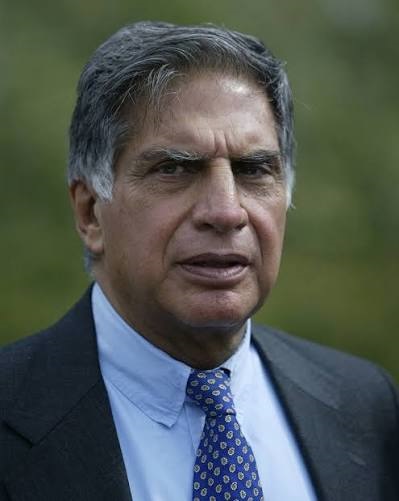
Ratan Tata was one of India’s most respected business leaders, philanthropists, and industrialists. He served as the Chairman of Tata Sons from 1991 to 2012 and again briefly from 2016 to 2017. Under his leadership, the Tata Group expanded globally and became one of India’s most trusted and recognized business groups. Known for his humility, ethical leadership, and commitment to social welfare, Ratan Tata inspired millions of people in India and around the world.
Why Did He Receive the Padma Vibhushan Award?
Ratan Tata was awarded the Padma Vibhushan, India’s second-highest civilian honour, in 2008 for his exceptional contribution to trade and industry.
The award recognized his:
- Outstanding leadership in transforming the Tata Group into a global enterprise.
- Contribution to India’s economic growth and industrial development.
- Promotion of ethical business practices and corporate responsibility.
- Role in expanding Indian companies into international markets.
- Commitment to innovation, entrepreneurship, and social development.
Career and Achievements
Ratan Tata joined the Tata Group in 1962 and gradually took on greater responsibilities. As Chairman of Tata Sons, he guided the group through a period of major expansion and modernization.
Major achievements include:
- Led the Tata Group from a collection of mostly India-based companies into a global business organization.
- Oversaw major international acquisitions, including:
- Jaguar Land Rover in 2008.
- Corus Group in 2007.
- Tetley in 2000.
- Introduced the Tata Nano, known as the world’s most affordable car at its launch.
- Increased Tata Group’s global presence across industries such as automobiles, steel, technology, hospitality, and telecommunications.
- Promoted innovation and supported Indian startups and entrepreneurs.
Early Life
Ratan Naval Tata was born into the famous Tata family in Mumbai, India. His parents separated when he was young, and he was raised by his grandmother, Navajbai Tata. Despite growing up in a privileged family, he developed values of simplicity, discipline, compassion, and responsibility.
Birth Date and Death
- Born: 28 December 1937
- Birthplace: Mumbai, Maharashtra, India
- Died: 9 October 2024
- Age at Death: 86 years
Education and Career
Education
Ratan Tata received his education from prestigious institutions:
- Completed his schooling in Mumbai.
- Earned a Bachelor of Architecture degree from Cornell University in 1962.
- Completed the Advanced Management Program at Harvard Business School in 1975.
Career
His career journey includes:
- Joined Tata Steel as a trainee in 1962.
- Worked on the shop floor and gained practical industrial experience.
- Became Chairman of Tata Sons in 1991.
- Guided the Tata Group for more than two decades.
- Continued mentoring startups and supporting social initiatives after retirement.
Field of Achievement
Ratan Tata made remarkable contributions in:
- Business and Industry
- Entrepreneurship
- Corporate Leadership
- Automobile Industry
- Steel and Manufacturing
- Technology and Innovation
- Philanthropy and Social Development
Awards and Honours
Ratan Tata received numerous prestigious awards, including:
- Padma Bhushan (2000) – Government of India.
- Padma Vibhushan (2008) – Government of India.
- Order of the Rising Sun, Gold and Silver Star (Japan).
- Honorary Knight Grand Cross of the Order of the British Empire (United Kingdom).
- Several honorary doctorates from universities worldwide.
- Numerous business leadership and lifetime achievement awards.
Interesting Facts
- Ratan Tata was known for his simple lifestyle and humble personality despite leading one of India’s largest business groups.
- He was a trained pilot and had a passion for aviation.
- He personally flew aircraft and became the first Indian to fly the F-16 fighter jet.
- He played a key role in making Tata companies globally recognized.
- He invested in and supported several Indian startups, encouraging young entrepreneurs.
- A large part of Tata Group’s ownership is controlled by charitable trusts, reflecting the group’s commitment to social welfare.
- He was widely admired for his kindness, integrity, and concern for society.
Legacy and Inspiration
Ratan Tata’s legacy extends beyond business success. He demonstrated that companies can achieve growth while maintaining ethics, social responsibility, and compassion. His leadership style focused on innovation, trust, and creating value for society.
He continues to inspire entrepreneurs, students, and business leaders to pursue success with honesty and a sense of responsibility toward the community.
Contribution to the Nation
Ratan Tata made significant contributions to India by:
- Strengthening India’s position in global business and industry.
- Creating employment opportunities through Tata companies.
- Supporting education, healthcare, rural development, and social welfare through Tata Trusts.
- Encouraging innovation and startup growth.
- Promoting ethical corporate practices.
- Supporting national initiatives in technology, research, and development.
His work helped improve India’s economic growth while benefiting millions of people through charitable initiatives.
Conclusion
Ratan Tata was not only a successful industrialist but also a symbol of integrity, humility, and social responsibility. His leadership transformed the Tata Group into a global powerhouse while keeping strong values at the center of business. Awarded the Padma Vibhushan in 2008, he will always be remembered for his extraordinary contributions to Indian industry, philanthropy, and nation-building. His life continues to inspire generations to achieve success while making a positive difference in society.
About the Author




