

1. Introduction
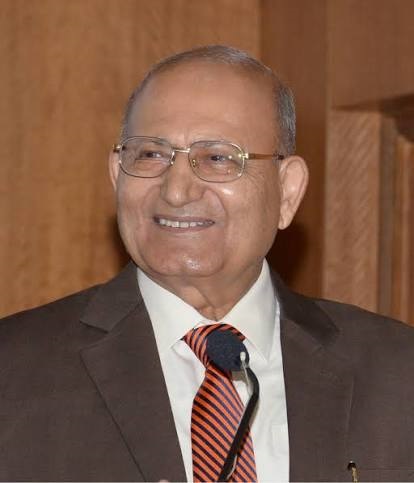
Dr. Rajendra Singh Paroda is a globally renowned agricultural scientist, plant breeder, and geneticist who played a pivotal role in shaping modern agricultural research and education in India. He served as the Director General of the Indian Council of Agricultural Research (ICAR) and Secretary to the Department of Agricultural Research and Education (DARE), Government of India, from 1992 to 2001. Under his visionary stewardship, India witnessed major breakthroughs in crop improvement, agricultural diversification, intellectual property rights in agriculture, and international institutional cooperation.
2. Quick Facts
- Full Name: Rajendra Singh Paroda
- Native Name: राजेंद्न सिंह परोडा
- Date of Birth: August 28, 1942
- Place of Birth: Ajmer, Rajasthan, British India
- Nationality: Indian
- Occupation/Profession: Agricultural Scientist, Plant Breeder, and Research Administrator
- Field of Achievement: Plant Genetics, Crop Science, and Agricultural Policy/Management
- Years Active: 1964 – Present
3. Award Information
- Award Name: Padma Bhushan (India’s third-highest civilian honor)
- Award Category: Civil Honour
- Award Year: 1998
- Presented By: Government of India (President of India)
- Date of Ceremony: Republic Day 1998
- Citation/Official Reason: For distinguished service of a high order to science and technology, recognizing his monumental contributions to agricultural research, plant genetic resource management, and food security in India.
- Other Major Honors: Norman Borlaug Award (2006), FAO World Food Day Award (1995), and Rafi Ahmed Kidwai Prize (1982–83).
4. Why He Received the Award
Dr. Paroda was conferred the Padma Bhushan for transforming India’s agricultural research landscape and steering the nation toward sustainable food self-sufficiency. During his tenure leading ICAR, he championed the conservation of plant genetic resources, revitalized national agricultural research systems, and forged strong public-private partnerships that directly benefited millions of Indian farmers.
5. Early Life
Born in Ajmer, Rajasthan, Dr. Paroda grew up with close exposure to rural farming communities. Witnessing the struggles of farmers and the limitations of traditional agrarian methods during post-independence India ignited his lifelong passion for agricultural science and plant genetics.
6. Education
- Bachelor’s Degree: B.Sc. (Agriculture) from the University of Rajasthan (1962).
- Master’s Degree: M.Sc. (Agriculture) in Plant Breeding and Genetics from the University of Udaipur (1964).
- Doctorate: Ph.D. in Genetics and Plant Breeding from the prestigious Indian Agricultural Research Institute (IARI), New Delhi (1968).
- Post-Doctoral Fellowship: Commonwealth Post-Doctorate Fellow at the University College of Wales, Aberystwyth, UK (1968–1970).
7. Career Journey
- Academic & Research Positions: Began as a dedicated researcher and professor specializing in forage crops, plant breeding, and genetics.
- Director General, ICAR (1992–2001): Headed India’s apex agricultural research organization, steering national strategies during crucial eras of economic liberalization and technological change.
- Global Leadership Roles:
- Founder Chairman of the Global Forum on Agricultural Research (GFAR) (1998–2002).
- Executive Secretary of the Asia-Pacific Association of Agricultural Research Institutions (APAARI).
- Head of the CGIAR Program for Central Asia and the Caucasus, Tashkent, Uzbekistan (2001–2007).
- Chairman, TAAS: Currently serves as the Chairman of the Trust for Advancement of Agricultural Sciences (TAAS), New Delhi.
8. Major Achievements
- Institutionalizing Plant Genetic Resources: Played a crucial role in establishing the National Bureau of Plant Genetic Resources (NBPGR) infrastructure to safeguard India’s rich biodiversity.
- Global Recognition: Conferred over 21 honorary Doctor of Science (D.Sc.) degrees from premier universities worldwide for his contributions to agricultural science.
- Policy Reform: Spearheaded institutional reforms within ICAR to foster competitive grant systems, empowering scientists and modernizing laboratories across India.
9. Contribution to the Nation
Dr. Paroda’s contributions laid the scientific groundwork for India’s secondary green revolution. By focusing on resource-use efficiency, dryland farming, seed technology, and farmer-centric innovations, he ensured that scientific advancements translated seamlessly from laboratory benches to rural fields, greatly strengthening India’s food security.
10. Other Awards and Honours
- Rafi Ahmed Kidwai Prize (1982–83)
- FICCI Award for Science and Technology (1988)
- Om Prakash Bhasin Award (1992)
- FAO World Food Day Award (1995)
- Dr. B.P. Pal Memorial Award (2001–02)
- Dr. A.P.J. Abdul Kalam Lifetime Achievement Award
11. Legacy and Influence
Dr. Paroda is regarded as an institution builder who bridged national agricultural priorities with global scientific networks. Through TAAS and APAARI, he continues to advocate for farmers’ rights, safe biotechnology applications, and climate-resilient agriculture in developing nations.
12. Interesting Facts
- Prolific Author: He has authored numerous research papers, technical bulletins, and authoritative books on plant breeding, forage production, and agricultural policy.
- Global Ambassador: He has represented India on numerous international committees, advocating persistently for equitable sharing of plant genetic resources and South-South cooperation in agriculture.
13. Quotes
“Agriculture is not just a food production sector; it is the primary engine for sustainable economic growth and rural livelihood security in developing countries.”
“Science with human face and policy support are both essential to empower the smallholder farmer.”
14. Timeline
- 1942: Born on August 28 in Ajmer, Rajasthan.
- 1968: Completes Ph.D. from IARI, New Delhi.
- 1992: Takes charge as Director General of ICAR and Secretary, DARE.
- 1998: Conferred the Padma Bhushan by the Government of India; becomes Founder Chairman of GFAR.
- 2001: Concludes tenure at ICAR; assumes leadership of the CGIAR program for Central Asia and the Caucasus.
- 2002: Becomes Chairman of the Trust for Advancement of Agricultural Sciences (TAAS).
- 2006: Receives the prestigious Norman Borlaug Award.
15. References
- National Academy of Agricultural Sciences (NAAS) – Fellow Profile: Dr. R. S. Paroda
- World Food Prize Foundation – Speaker Archives
- Government of India – Padma Awards Directories
16. Related Personalities
- Dr. M. S. Swaminathan (Architect of India’s Green Revolution)
- Dr. Norman Borlaug (Father of the Green Revolution)
- Dr. Mangala Rai (Former Director General, ICAR)
17. Frequently Asked Questions (FAQ)
Q1: Who is Dr. Rajendra Singh Paroda?
A: Dr. R. S. Paroda is a distinguished Indian agricultural scientist and plant geneticist who served as the Director General of ICAR from 1992 to 2001.
Q2: What are his major contributions to Indian agriculture?
A: He revolutionized agricultural research management, promoted plant genetic resource conservation, boosted dryland and crop breeding programs, and strengthened international agricultural cooperation across Asia.
Q3: What prestigious awards has he received?
A: He is a recipient of the Padma Bhushan (1998), the Norman Borlaug Award (2006), and the FAO World Food Day Award (1995), alongside numerous honorary D.Sc. degrees.
About the Author




