
1. Introduction
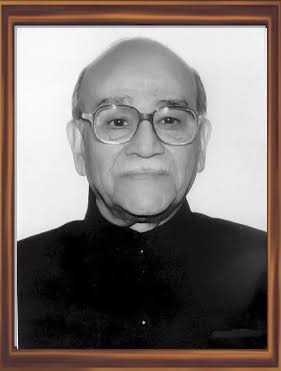
Raja Rao (8 November 1908 – 8 July 2006) was one of the most influential Indian writers in English. A novelist, short-story writer, essayist and philosopher, he played a major role in establishing Indian English literature as a distinctive literary tradition.
His writing brought together Indian philosophy, spirituality, mythology, nationalism and Indian cultural experience with the English language and Western literary forms. His best-known works include Kanthapura (1938), The Serpent and the Rope (1960), The Cat and Shakespeare (1965) and Comrade Kirillov (1976).
Rao is especially remembered for making English express an unmistakably Indian rhythm, sensibility and worldview. His novel Kanthapura portrayed the impact of Gandhi’s freedom movement on a South Indian village, while The Serpent and the Rope explored philosophical questions concerning India, Europe, reality, identity and spiritual truth.
He received the Padma Bhushan in 1969 in the field of Literature and Education. He later received the Neustadt International Prize for Literature in 1988, and the Government of India conferred the Padma Vibhushan posthumously in 2007.
2. Quick Facts
| Particular | Information |
|---|---|
| Full Name | Raja Rao |
| Date of Birth | 8 November 1908 |
| Place of Birth | Hassan, Mysore State, British India; now Hassan, Karnataka |
| Date of Death | 8 July 2006 |
| Place of Death | Austin, Texas, USA |
| Nationality | Indian; later closely associated with the United States |
| Profession | Novelist, short-story writer, essayist, philosopher and professor |
| Languages | English, Kannada, French, Sanskrit |
| Field of Achievement | Literature and Education |
| Literary Field | Indian writing in English |
| Years Active | 1930s–1990s |
| Major Works | Kanthapura, The Serpent and the Rope, The Cat and Shakespeare, Comrade Kirillov |
| Major Award | Padma Bhushan |
| Padma Bhushan Year | 1969 |
| Padma Bhushan Category | Literature and Education |
| Later Honour | Padma Vibhushan, 2007, posthumously |
His birth and death dates are consistently recorded as 8 November 1908 and 8 July 2006 by multiple biographical sources.
3. Award Information
Award Name
Padma Bhushan
Award Category
Literature and Education
The Government of India’s official Padma Awards database lists Shri Raja Rao — Padma Bhushan (1969) — Literature and Education — United States of America.
Award Year
1969
Presented By
The Padma Bhushan is a national civilian honour formally conferred by the President of India.
Date of Ceremony
The official Padma Awards database confirms 1969 as the award year. However, I have not found a sufficiently reliable source establishing Raja Rao’s individual investiture date.
For your blog, the safest wording is:
Awarded: Padma Bhushan, 1969
Citation / Official Reason
The official Government database categorizes the award under Literature and Education. It does not provide a detailed individual citation in the accessible online entry.
The award recognized Rao’s major contribution to Indian literature, particularly his pioneering work in Indian English fiction.
Previous Recipients
The Padma Bhushan is awarded across many disciplines and does not operate as a competitive succession-based award.
Next Recipients
Later recipients were selected independently for distinguished contributions in different fields.
4. Why Did Raja Rao Receive the Award?
Raja Rao received the Padma Bhushan in 1969 for Literature and Education in recognition of his contribution to Indian literature.
His importance lies particularly in his role in developing Indian English fiction. Rather than simply reproducing British literary styles, Rao attempted to make English carry the rhythms, philosophical ideas, storytelling traditions and cultural experiences of India.
His writing explored:
- Indian philosophy.
- Hindu spiritual traditions.
- Indian nationalism.
- Gandhi’s influence.
- East-West cultural relations.
- Individual identity.
- Reality and illusion.
- Spiritual self-realization.
- Indian social and cultural life.
His literary contribution was recognized both nationally and internationally. The University of Texas notes that Rao’s writing “indigenized” the novel by drawing on Indian literary traditions, while the Sahitya Akademi identifies his major literary achievements and honours.
5. Early Life
Raja Rao was born on 8 November 1908 in Hassan, then part of the princely state of Mysore and now in Karnataka. He came from a Kannada-speaking family and was the eldest of nine children. His father, H. V. Krishnaswamy, taught Kannada and mathematics at Nizam College in Hyderabad.
His mother, Gauramma, died when Raja Rao was only four years old. This early loss had a profound effect on him and the themes of orphanhood, absence and spiritual searching recur throughout his literary work.
His grandfather was another major influence. Rao grew up with a strong exposure to Vedantic philosophy, Sanskrit learning and Indian spiritual traditions. This philosophical background later became one of the defining characteristics of his writing.
6. Education
Raja Rao received an unusually diverse education.
He attended Madarsa-e-Aliya in Hyderabad, a Muslim educational institution. He later studied at Nizam’s College and pursued higher education connected with the University of Madras.
In 1929, he received an Asiatic Scholarship from the Government of Hyderabad, which enabled him to go to France for further study.
He studied:
- French language and literature at the University of Montpellier.
- Literature and related subjects at the Sorbonne in Paris.
- Indian influence on Irish literature under French scholar Louis Cazamian.
His education therefore brought together three intellectual worlds:
Indian philosophy + European literature + the English language.
This combination became central to his literary identity.
7. Career Journey
Early Writing
Raja Rao began writing in Kannada and English during the early 1930s. His early Kannada writings appeared in the journal Jaya Karnataka.
While living in France, he also became associated with French literary circles and served on the editorial board of Mercure de France during the 1930s.
Kanthapura
His first major novel, Kanthapura, was published in 1938.
The novel portrays the effect of Gandhian nationalism and the Indian freedom movement on a South Indian village. Gandhi does not physically appear as a character, but his ideas influence the villagers and their struggle against British rule.
One of the novel’s most distinctive features is its narrative style. Rao adapted the rhythms of Indian oral storytelling and Kannada speech patterns to English prose. This helped demonstrate that English could be used to express Indian cultural experience without simply imitating British literary conventions.
Return to India
Rao returned to India in the late 1930s and became increasingly involved with India’s nationalist and intellectual movements.
He participated in the Quit India Movement of 1942 and was associated with Indian nationalist intellectual circles.
The Serpent and the Rope
His second major novel, The Serpent and the Rope, appeared in 1960.
The semi-autobiographical novel examines the relationship between Indian and European culture through the experiences of an Indian intellectual and his French wife. It also explores Vedanta, identity, marriage, reality, illusion and spiritual truth.
The novel became one of his most acclaimed works and earned him the Sahitya Akademi Award.
Academic Career in the United States
In 1965, Rao became a professor of philosophy at the University of Texas at Austin. He taught Indian philosophy and continued his literary work.
He eventually became Professor Emeritus.
8. Major Achievements
1. Pioneer of Indian English literature
Raja Rao was one of the leading writers responsible for establishing Indian English fiction as a significant literary tradition.
2. Kanthapura
Published in 1938, Kanthapura became a classic of Indian writing in English and portrayed the impact of Gandhi’s movement on rural India.
3. The Serpent and the Rope
Published in 1960, the novel is regarded as one of his greatest achievements and explores the meeting of Indian and European intellectual traditions.
4. Indianizing the English novel
Rao developed a distinctive prose style influenced by Indian oral traditions, mythology, philosophy and regional linguistic rhythms.
5. Sahitya Akademi Award
He received the Sahitya Akademi Award for The Serpent and the Rope in 1964. The Sahitya Akademi biography confirms this recognition.
6. Padma Bhushan
He received the Padma Bhushan in 1969 for Literature and Education.
7. Neustadt International Prize
In 1988, Rao received the Neustadt International Prize for Literature, one of the major international literary honours.
8. Padma Vibhushan
The Government of India conferred the Padma Vibhushan on Raja Rao posthumously in 2007.
9. Contribution to the Nation
Raja Rao’s contribution to India was primarily literary and intellectual.
Giving Indian experience an English voice
He demonstrated that English could be used to express Indian traditions, philosophies and cultural experiences.
Preserving Indian philosophical thought
His fiction introduced readers around the world to concepts associated with Vedanta, spirituality and Indian metaphysics.
Depicting the freedom struggle
Kanthapura is an important literary representation of the impact of Gandhian nationalism on ordinary Indians.
Building Indian English literature
Alongside writers such as Mulk Raj Anand and R. K. Narayan, Rao helped establish the foundations of modern Indian literature in English.
Connecting India and the West
His works frequently examined the intellectual and cultural relationship between India and Europe, making his literature relevant to international readers.
Promoting Indian philosophy internationally
Through his writing and academic career, particularly his teaching of Indian philosophy at the University of Texas, he helped introduce Indian philosophical thought to international academic audiences.
10. Other Awards and Honours
Raja Rao received several important literary honours.
Sahitya Akademi Award — 1964
He received the Sahitya Akademi Award for The Serpent and the Rope.
Padma Bhushan — 1969
He received the Padma Bhushan in Literature and Education.
Woodrow Wilson International Center Fellowship — 1972
The Sahitya Akademi biography records that Rao was named a Fellow of the Woodrow Wilson International Center in Washington, D.C., in 1972.
Honorary Fellow, Modern Language Association of America — 1984
He was elected an Honorary Fellow of the Modern Language Association of America in 1984.
Neustadt International Prize for Literature — 1988
Rao received the Neustadt International Prize for Literature in 1988.
Padma Vibhushan — 2007
The Government of India awarded him the Padma Vibhushan posthumously in 2007.
11. Legacy and Influence
Raja Rao’s greatest legacy is his role in shaping Indian literature in English.
He showed that an Indian writer did not have to abandon Indian culture in order to write in English. Instead, he transformed English prose by bringing into it:
- Indian storytelling traditions.
- Kannada linguistic rhythms.
- Sanskrit philosophical concepts.
- Hindu mythology.
- Gandhian nationalism.
- Indian social experience.
- Vedantic ideas.
His work also expanded the possibilities of the English-language novel.
The University of Texas Harry Ransom Center, which acquired his literary archive, describes Rao as a writer who indigenized the novel through the assimilation of Indian literary traditions.
His novels remain important in university courses on Indian English literature, postcolonial literature, comparative literature and Indian philosophy.
12. Interesting Facts
- Raja Rao was born on 8 November 1908 in Hassan, Karnataka.
- His father taught Kannada and mathematics at Nizam College.
- His mother died when he was only four years old.
- His grandfather was an important influence on his interest in Vedanta and Indian philosophy.
- He studied at educational institutions with both Muslim and Hindu intellectual influences.
- He studied in France, including at the University of Montpellier and the Sorbonne.
- He wrote in English and Kannada and was also highly knowledgeable in French and Sanskrit.
- His first major novel was Kanthapura.
- Kanthapura was published in 1938.
- The Serpent and the Rope was published in 1960.
- He taught Indian philosophy at the University of Texas at Austin.
- He received the Padma Bhushan in 1969.
- He received the Neustadt International Prize for Literature in 1988.
- He was awarded the Padma Vibhushan posthumously in 2007.
- His literary archive is preserved at the Harry Ransom Center at the University of Texas at Austin.
13. Quotes
Raja Rao is frequently quoted in discussions of Indian English writing, but quotations should be checked against the original books before publication.
One of his most famous statements appears in the author’s foreword to Kanthapura, where he discusses the difficulty of making English express Indian experience.
A commonly cited passage begins:
“We cannot write like the English.”
He then explains that Indian writers must find a way for English to express Indian experience and rhythms.
For your blog, it is best to quote the original foreword from a legally obtained edition and give the edition/page number rather than reproducing a long passage from an online source.
You can safely summarize his literary philosophy as:
Raja Rao sought to make English a vehicle for Indian thought, experience and cultural expression.
That is a paraphrase, not a direct quotation.
14. Timeline
| Year | Event |
|---|---|
| 8 November 1908 | Born in Hassan, Mysore State, now Karnataka |
| 1912 | Lost his mother at about four years of age |
| 1920s | Studied in Hyderabad and pursued higher education |
| 1927 | Completed matriculation and continued higher education |
| 1929 | Received the Asiatic Scholarship of the Government of Hyderabad |
| 1929 onward | Went to France for higher studies |
| Early 1930s | Began publishing Kannada and English writing |
| 1930s | Became associated with French literary circles and Mercure de France |
| 1938 | Kanthapura published |
| 1939 | Returned to India after years in France |
| 1942 | Participated in the Quit India Movement |
| 1947 | The Cow of the Barricades and Other Stories published |
| 1960 | The Serpent and the Rope published |
| 1964 | Received Sahitya Akademi Award |
| 1965 | Became associated with teaching philosophy at the University of Texas |
| 1965 | The Cat and Shakespeare published |
| 1969 | Received Padma Bhushan for Literature and Education |
| 1976 | Comrade Kirillov published in English |
| 1978 | The Policeman and the Rose published |
| 1984 | Elected Honorary Fellow of the Modern Language Association of America |
| 1988 | Received Neustadt International Prize for Literature |
| 2006 | Died in Austin, Texas, on 8 July |
| 2007 | Awarded Padma Vibhushan posthumously |
The major dates are supported by the Sahitya Akademi biography, University of Texas materials and other biographical sources.
15. References
Government of India — Padma Awards
The official Government of India database confirms:
Shri Raja Rao — Padma Bhushan — 1969 — Literature and Education — United States of America.
Sahitya Akademi
The Sahitya Akademi’s biography provides information about Rao’s literary career, The Serpent and the Rope, Sahitya Akademi Award, Padma Bhushan, academic career and Neustadt Prize.
University of Texas — Harry Ransom Center
The Harry Ransom Center provides information about Raja Rao’s archive, education, literary career and significance in Indian English literature.
INFLIBNET
The Indian government’s academic e-learning resource discusses Kanthapura, its Gandhian themes and Rao’s role in Indian writing in English.
16. Related Personalities
Readers interested in Raja Rao may also want to explore:
- R. K. Narayan — one of the pioneers of Indian English fiction and creator of the fictional town Malgudi.
- Mulk Raj Anand — pioneering Indian English novelist known for socially engaged fiction.
- Nirad C. Chaudhuri — Indian writer and intellectual who wrote extensively in English.
- Ahmed Ali — Indian-Pakistani writer and literary figure who was associated with Rao during his student years.
- Jawaharlal Nehru — national leader whose ideas and political era influenced Indian English writers.
- Mahatma Gandhi — a major influence on Kanthapura and Rao’s early nationalist writing.
- K. R. Srinivasa Iyengar — important scholar of Indian writing in English.
- C. D. Narasimhaiah — influential Indian literary critic and scholar.
- V. S. Naipaul — another internationally acclaimed writer of Indian origin writing in English.
17. Frequently Asked Questions (FAQ)
Who was Raja Rao?
Raja Rao was an Indian novelist, short-story writer, essayist and philosopher, widely regarded as one of the major pioneers of Indian writing in English.
When was Raja Rao born?
He was born on 8 November 1908 in Hassan, in the former princely state of Mysore, now Karnataka.
When did Raja Rao die?
He died on 8 July 2006 in Austin, Texas, USA.
What is Raja Rao famous for?
He is best known for his novels Kanthapura and The Serpent and the Rope and for his contribution to Indian English literature.
What is Kanthapura about?
Kanthapura portrays the impact of Gandhi’s freedom movement and nonviolent resistance on a South Indian village.
When was Kanthapura published?
It was published in 1938.
What is The Serpent and the Rope about?
It is a philosophical and semi-autobiographical novel exploring Indian and European cultures, marriage, identity, reality, illusion and spiritual truth.
When was The Serpent and the Rope published?
It was published in 1960.
Which award did Raja Rao receive in 1969?
He received the Padma Bhushan in 1969.
Under which category did Raja Rao receive the Padma Bhushan?
The Government of India lists the category as Literature and Education.
Did Raja Rao receive the Sahitya Akademi Award?
Yes. He received the Sahitya Akademi Award in 1964 for The Serpent and the Rope.
Did Raja Rao receive the Padma Vibhushan?
Yes. He was awarded the Padma Vibhushan posthumously in 2007.
What was Raja Rao’s profession?
He was a writer, philosopher and professor. He taught Indian philosophy at the University of Texas at Austin.
Where did Raja Rao study?
He studied in Hyderabad and later in France, including at the University of Montpellier and the Sorbonne.
Why is Raja Rao important to Indian literature?
He demonstrated that English could be transformed into a vehicle for Indian philosophy, culture, storytelling and social experience, helping establish Indian English literature as an important literary tradition.
About the Author