

1. Introduction
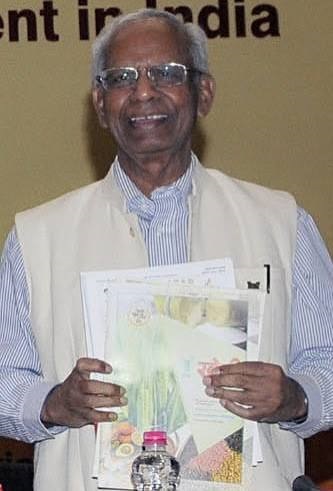
Professor Ram Badan Singh (widely known as R. B. Singh) is a towering figure in modern Indian agricultural science, crop genetics, and food security policy. As a pioneering scientist who has worked extensively at both national and global levels—including leadership roles within the Food and Agriculture Organization (FAO) and the National Academy of Agricultural Sciences (NAAS)—he has played a monumental role in shaping agricultural research, education, and rural development strategies in India and across the developing world.
2. Quick facts
- Full Name: Ram Badan Singh
- Native Name: राम बदन सिंह (Hindi)
- Date of birth: July 20, 1940
- Place Of birth: Budhanpur, Ghazipur District, Uttar Pradesh, India
- Nationality: Indian
- Occupation/ Profession: Agricultural Scientist, Academic, Policy Advisor
- Field of Achievement: Plant Genetics, Crop Improvement, Agricultural Science, and Food Security
- Years Active: 1964–Present
3. Award Information
- Award Name: Padma Bhushan
- Award Category: National Civilian Honour (Third-Highest Civilian Award in India)
- Award Year: 2003
- Presented By: Government of India (Conferred by the President of India)
- Date of Ceremony: Republic Day Investiture Ceremony, 2003
- Citation/Official Reason: Recognized for his exceptional contributions to science, agricultural research, and institutional development.
- Previous Recipients (optional): Eminent scientists, technologists, and public intellectuals.
- Next Recipients: Conferred among distinguished national civilian awardees.
4. Why they Receive the award?
Prof. R. B. Singh received the Padma Bhushan for his lifetime of pioneering research in plant breeding and genetics, his pivotal contributions to India’s agricultural self-sufficiency, and his leadership in global food security initiatives. His work significantly optimized crop yields, enhanced agricultural resilience, and strengthened institutional frameworks for farmers.
5. Early Life
Born in the rural village of Budhanpur in the Ghazipur district of Uttar Pradesh, Prof. Singh grew up close to the soil, developing an innate understanding of the struggles and aspirations of Indian farmers. Witnessing rural agrarian realities firsthand planted the seeds for his lifelong dedication to agricultural science and crop improvement.
6. Education
- Schooling & College: Completed early studies at Udai Pratap College, Varanasi (1954–56) and earned his B.Sc. (1958) and M.Sc. (1960) from the Government Agriculture College (CS Azad University of Agriculture and Technology, Kanpur).
- Doctorate: Pursued higher education abroad, earning his Ph.D. in Plant Genetics from North Carolina State University, Raleigh, USA (1961–64).
7. Carrier Journey
- Early Academia: Began his professional journey as an Economic Botanist (Cotton) and Associate Professor of Plant Breeding at Punjab Agricultural University, Ludhiana (1964–69).
- Institutional Leadership: Served as Professor and Head of the Department of Genetics and Plant Breeding, and Dean of the Faculty of Agriculture at Meerut University.
- Global Impact: Contributed extensively to international food policy, including serving as the Assistant Director-General and Regional Representative for Asia and the Pacific at the Food and Agriculture Organization (FAO) of the United Nations.
- Administrative Roles: Chancellor of the Central Agricultural University, President of the National Academy of Agricultural Sciences (NAAS), and member of various national agricultural commissions.
8. Major Achievements
- Authored and co-authored numerous seminal research papers and books on plant breeding, biotechnology, and agricultural sustainability.
- Played a key role in formulating policies that boosted agricultural productivity and farmers’ welfare in developing nations.
- Conferred India’s prestigious Padma Bhushan in 2003 for science and technology.
- Received numerous international and national honors, including the International Board for Plant Genetic Resources medal and the Lal Bahadur Shastri Memorial Award.
9. Contribution to the nation
Prof. Singh’s contributions helped cement India’s transition from food scarcity to food security. Through advanced genetic research, crop enhancement programs, and robust policy advice, he bridged scientific laboratories with farming fields. He has continuously championed farmer-centric research, sustainable resource management, and climate-resilient agriculture to secure the nation’s nutritional future.
10. Other Awards and Honours
- US Awasthi IFFCO Lifetime Achievement FAI Award (2023)
- Vigyan Gaurav Samman (2001) – Government of Uttar Pradesh
- Lal Bahadur Shastri Memorial International Scientist Award
- Dr. B.P. Pal Memorial Award
- Multiple Honorary Doctorates (D.Sc. h.c.) from leading agricultural universities across India
11. Legacy and influence
Prof. R. B. Singh is revered as a visionary architect of modern Indian agricultural science. His ability to seamlessly transition from deep-level laboratory genetics to high-level global policy-making has left an enduring impact. He remains a guiding beacon for young agricultural scientists, emphasizing science-driven, eco-friendly, and inclusive agricultural growth.
12. Interesting Facts
- Rooted in Tradition and Science: Coming from a small village in Uttar Pradesh, his journey to becoming a top global UN-FAO diplomat showcases the power of grassroots dedication meeting world-class education.
- Prolific Academic Mentor: He has mentored generations of agronomists, geneticists, and agricultural administrators who now lead institutions worldwide.
- Lifelong Commitment: Even after decades of formal service, he remains actively engaged in agricultural policy think-tanks and academic mentoring.
13. Quotes
“Agricultural research is meaningful only when it directly touches the lives of small farmers, ensuring food security and ecological sustainability for future generations.” — Prof. R. B. Singh
14. Timeline
- 1940: Born on July 20 in Budhanpur, Ghazipur, Uttar Pradesh.
- 1964: Completed his Ph.D. from North Carolina State University, USA and started his academic career at PAU, Ludhiana.
- 1980s–1990s: Spearheaded major crop improvement initiatives and transitioned into global agricultural diplomacy.
- 2003: Conferred the Padma Bhushan by the Government of India.
- 2012: Appointed Chancellor of the Central Agricultural University.
- 2023: Honored with the IFFCO Lifetime Achievement FAI Award.
15. References
- Wikipedia: Ram Badan Singh Profile
- National Academy of Agricultural Sciences (NAAS) Fellow Profile
- Rural Voice India: Prof. Ram Badan Singh Recognition Archives
16. Related Personalities
- Dr. M. S. Swaminathan (Pioneer of India’s Green Revolution and contemporary agricultural icon)
- Dr. B. P. Pal (Renowned Indian agricultural scientist and plant breeder)
- Dr. Mangala Rai (Former Director-General of ICAR)
17. Frequency Asked Questions (FAQ)
- Q: Who is Prof. Ram Badan Singh?
- A: He is a renowned Indian agricultural scientist, plant geneticist, and former UN-FAO official who has made pioneering contributions to crop science and food security.
- Q: What is he best known for professionally?
- A: He is celebrated for his extensive research in plant breeding and genetics, institutional academic leadership, and shaping national and global agricultural policies.
- Q: What major civilian honor has he received?
- A: He was awarded the Padma Bhushan by the Government of India in 2003.
About the Author




