

1. Introduction
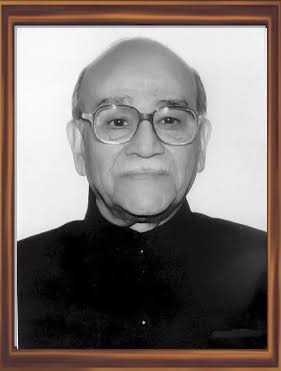
Prabhu Lal Bhatnagar, commonly known as P. L. Bhatnagar, was an Indian mathematician whose work connected pure mathematics with practical scientific problems.
His research covered several areas, including:
- Applied mathematics
- Differential equations
- Astrophysics
- Stellar structure
- Fluid dynamics
- Plasma physics
- Kinetic theory
- Non-Newtonian fluids
His best-known scientific achievement was the BGK model, published in Physical Review in 1954 with Eugene P. Gross and Max Krook. The paper proposed a practical way of treating collision processes in gases and became an important development in kinetic theory.
Bhatnagar was also deeply committed to mathematics education. At IISc he encouraged research students and helped initiate Mathematics Olympiad activities in India, an initiative that later became part of the broader national Olympiad tradition.
2. Quick Facts
| Particular | Information |
|---|---|
| Full Name | Prabhu Lal Bhatnagar |
| Native Name | प्रभु लाल भटनागर |
| Popular Name | P. L. Bhatnagar |
| Date of Birth | 8 August 1912 |
| Place of Birth | Kota, Rajasthan, India |
| Date of Death | 5 October 1976 |
| Place of Death | Allahabad, Uttar Pradesh, India |
| Nationality | Indian |
| Profession | Mathematician, astrophysicist, professor and educationist |
| Field of Achievement | Science and Engineering |
| Specialisations | Applied mathematics, astrophysics, fluid mechanics, plasma physics and kinetic theory |
| Years Active | Approximately 1937–1976 |
| Major Institutions | University of Allahabad, St. Stephen’s College, University of Delhi, Harvard University, IISc, Rajasthan University, Himachal Pradesh University, Mehta Research Institute |
| Famous Contribution | Bhatnagar–Gross–Krook (BGK) model |
| Major National Honour | Padma Bhushan |
| Padma Bhushan Year | 1968 |
| Padma Bhushan Field | Science and Engineering |
His birth and death dates are documented in the mathematical biography published by Bhāvanā, while the Government of India’s Padma database records his 1968 award.
3. Award Information
Padma Bhushan – 1968
Award Name
Padma Bhushan
Award Category
Science and Engineering
Award Year
1968
Presented By
President of India
A contemporary photograph reproduced by Bhāvanā shows P. L. Bhatnagar receiving the Padma Bhushan from President Dr. Zakir Husain in 1968.
Date of Ceremony
The Padma award was announced on 26 January 1968. The official Government of India Padma database confirms the award year and category. A precise presentation-ceremony date is not established in the reliable sources consulted, so it is safer for a blog to state:
“Award announced: 26 January 1968; presented by President Dr. Zakir Husain in 1968.”
Official Award Record
The official Padma Awards database lists:
Dr. Prabhu Lal Bhatnagar — Padma Bhushan (1968) — Science and Engineering — Karnataka.
The original 1968 Gazette of India identifies him as:
“Dr. Prabhu Lal Bhatnagar, Head of the Department of Mathematics, Institute of Science, Bangalore.”
Citation / Official Reason
The historical Padma notification does not provide a detailed citation in the modern sense. His recognition was for his contributions to science and engineering, particularly his distinguished work in mathematics and its applications.
Previous Recipients
There was no single previous recipient because the Padma Bhushan is awarded to multiple people.
In 1967, the Science and Engineering category included Padma Shri recipients such as M. S. Swaminathan, while the Padma Bhushan was not awarded in that category that year.
Next Recipients
In 1969, the Science and Engineering Padma Bhushan recipients included:
- Dr. Adinath Lahiri
- Dr. Vatakke Kurupath Narayana Menon
- Prof. Mohanlal Lalloobhai Dantwala
4. Why Did Prabhu Lal Bhatnagar Receive the Award?
Prabhu Lal Bhatnagar received the Padma Bhushan for his outstanding contribution to Science and Engineering.
His scientific importance came from several major areas.
Applied Mathematics
He used advanced mathematical techniques to address practical problems in physics and engineering.
Astrophysics
He investigated stellar structures, stellar pulsations and the behaviour of white dwarfs.
Kinetic Theory
His work on the Boltzmann equation led to the famous BGK model.
Fluid Mechanics
He conducted important research into viscous and non-Newtonian fluids.
Plasma Physics
His research also covered ionised gases and magnetohydrodynamic problems.
Mathematics Education
He actively promoted mathematics education and helped establish Mathematics Olympiad activities in India.
5. Early Life
Prabhu Lal Bhatnagar was born on 8 August 1912 in Kota, Rajasthan, as the second of five sons.
His family had historical connections with the princely state of Kota. His grandfather played an important role in introducing him to mathematics by giving him mental arithmetic problems during childhood. Bhatnagar showed exceptional mathematical ability from an early age.
He studied first in Kota and later at the Government School at Rampura and Herbert College, Kota.
He secured first rank in the Intermediate examination. Despite financial difficulties following his father’s death, he continued his education with the help of scholarships that he had been receiving since his matriculation.
6. Education
B.Sc. – Maharajah’s College, Jaipur
Bhatnagar studied at Maharajah’s College, Jaipur, then affiliated with Agra University.
In 1934, he completed his B.Sc. and achieved the highest marks in Mathematics and Chemistry in the Agra University examination.
He received several gold medals, including:
- Krishna Kumari Devi Gold Medal – Mathematics
- Umang Lakshmi Kanti Lal Pandya Gold Medal – Chemistry
- Maharajah Fateh Singh Gold Medal – First position in B.Sc.
M.Sc.
He continued at Maharajah’s College and completed his M.Sc. in 1936.
For his outstanding performance in the Master’s examination, he received the Lord Northbrook Gold Medal.
D.Phil. – University of Allahabad
Rather than pursuing the prestigious Indian Civil Service career that many talented young people of his generation considered, Bhatnagar followed his teacher K. L. Varma’s advice and chose research.
At Allahabad University he initially worked with B. N. Prasad and later with Amiya Charan Banerji.
He obtained his D.Phil. in Mathematics in 1939 for research connected with the origin of the solar system.
7. Career Journey
University of Allahabad
Bhatnagar began serious research at Allahabad University.
His early research involved:
- Summability of Fourier series
- Differential equations
- Laplace transforms
- Mathematical methods
Some of his differential-equation results were later incorporated into Erich Kamke’s influential mathematical reference work.
St. Stephen’s College and Delhi University
In 1939, Bhatnagar joined St. Stephen’s College, Delhi.
He spent approximately 16 years there, first as a lecturer and later as Head of the Department of Mathematics, while also serving as a Reader in Mathematics at the University of Delhi.
During this period his interests increasingly turned toward astrophysics.
He worked independently and with D. S. Kothari on stellar structure and pulsation.
Astrophysics Research
His research on Cepheid variables and white dwarfs brought him international recognition.
His studies explored stellar pulsations and the physical mechanisms behind the behaviour of stars.
He was particularly interested in whether pulsations could occur in dense stars such as white dwarfs. Later observations of white-dwarf pulsations provided important support for aspects of the general theoretical direction of this work.
Harvard University
In 1951, Bhatnagar went to Harvard University as a Fulbright scholar.
There he lectured on the mathematical theory of non-uniform gases and worked on problems associated with the Boltzmann equation.
This period was particularly significant because it led to one of his most famous scientific contributions.
8. Major Achievements
1. The Bhatnagar–Gross–Krook Model
Bhatnagar’s best-known scientific achievement was the Bhatnagar–Gross–Krook (BGK) model, developed with Eugene P. Gross and Max Krook.
Their landmark paper:
“A Model for Collision Processes in Gases. I. Small Amplitude Processes in Charged and Neutral One-Component Systems”
was published in Physical Review, volume 94, in 1954.
The model simplified the complicated collision term in the Boltzmann equation while retaining important physical conservation properties.
It became useful in:
- Kinetic theory
- Plasma physics
- Rarefied-gas dynamics
- Fluid mechanics
- Computational fluid dynamics
- Lattice Boltzmann methods
Modern research continues to use BGK-based approaches.
2. Research in Astrophysics
Bhatnagar made important contributions to the mathematical study of:
- Stellar interiors
- Cepheid variables
- White dwarfs
- Stellar pulsation
- Plasma and ionised gases
His research connected mathematical analysis with astronomical observations.
3. Fluid Mechanics
At IISc, he expanded his research into non-Newtonian fluid mechanics.
He investigated mathematical models describing complex fluids whose behaviour differs from that of ordinary Newtonian fluids.
The Indian Academy of Sciences repository records numerous papers by Bhatnagar on non-Newtonian fluids, boundary layers and related problems.
4. Establishing Applied Mathematics at IISc
In 1956, Bhatnagar became the first professor of the newly created Department of Applied Mathematics at the Indian Institute of Science.
Rather than allowing the department to remain a one-person teaching unit, he actively recruited research students and developed a broader research culture.
5. Mathematics Olympiad Movement
Bhatnagar was an early promoter of Mathematics Olympiad activities in India.
At Bengaluru, he helped establish a local mathematics association and introduced Olympiad-style mathematics competitions inspired by those held in Eastern Europe.
This was an important early step toward the mathematics Olympiad tradition that later developed nationally.
6. Author and Researcher
He published a substantial body of scientific work.
A biographical account by the Indian Mathematical Society records 139 research papers, around 100 popular and semi-popular articles, and more than a dozen books, with numerous doctoral students working under his guidance.
9. Contribution to the Nation
Prabhu Lal Bhatnagar contributed to India in several important ways.
Development of Applied Mathematics
He helped establish applied mathematics as a strong research discipline in India.
Training Young Scientists
He supervised and inspired many students who later became mathematicians and scientists.
Mathematics Education
His efforts to popularise mathematical problem-solving and Olympiad-style competitions influenced mathematics education in India.
Scientific Research
His work in astrophysics, fluid mechanics, plasma physics and kinetic theory strengthened India’s scientific research culture.
Institution Building
He played important roles at IISc, universities and research institutions.
International Recognition
His research connected Indian mathematics with international scientific developments.
10. Other Awards and Honours
Apart from the Padma Bhushan, Bhatnagar received numerous academic distinctions.
Gold Medals
During his university education he received:
- Krishna Kumari Devi Gold Medal
- Umang Lakshmi Kanti Lal Pandya Gold Medal
- Maharajah Fateh Singh Gold Medal
- Lord Northbrook Gold Medal
D.Sc.
He received the D.Sc. degree from Allahabad University in 1947 for his work in astrophysics.
Fellowships
He became:
- Fellow of the National Institute of Sciences of India (now INSA) – 1950
- Fellow of the Indian Academy of Sciences – 1955
- Fellow of the National Academy of Sciences, India – 1967
International Recognition
In 1967, the Royal Society invited him as a Distinguished Visiting Scientist, where he delivered lectures at Imperial College London.
He was also involved with international scientific organisations, including the International Astronomical Union and international bodies concerned with plasma physics and mathematical education.
Padma Bhushan
He received the Padma Bhushan in 1968 for Science and Engineering.
11. Legacy and Influence
Bhatnagar’s legacy extends well beyond his lifetime.
The BGK Model
The Bhatnagar–Gross–Krook model remains one of his most internationally recognised contributions.
Its influence extends from theoretical kinetic theory to modern numerical simulation, including lattice Boltzmann methods.
Mathematics Education
His early promotion of Mathematics Olympiads anticipated the importance of problem-solving competitions in Indian education.
Indian Institute of Science
He helped establish applied mathematics research at IISc and trained a generation of Indian researchers. The institute’s official list of Padma awardees continues to recognise him as one of its distinguished Padma Bhushan recipients.
Mehta Research Institute
In 1975, he became the first Director of the Mehta Research Institute of Mathematics and Mathematical Physics in Allahabad. The institution later became the Harish-Chandra Research Institute.
His career therefore combined mathematical research, scientific discovery, teaching and institution building.
12. Interesting Facts
- Prabhu Lal Bhatnagar was born in Kota, Rajasthan, in 1912.
- He was the second of five sons.
- His grandfather encouraged his interest in mathematics by giving him mental arithmetic problems.
- He achieved first rank in his Intermediate examination.
- He won several gold medals during his university education.
- He initially considered the Indian Civil Service but chose academic research instead.
- He earned his D.Phil. in Mathematics in 1939.
- His doctoral research dealt with the origin of the solar system.
- He spent about 16 years at St. Stephen’s College, Delhi.
- He worked with renowned physicist M. N. Saha in developing his interest in astrophysics.
- He worked with D. S. Kothari on stellar problems.
- He spent time at Harvard University as a Fulbright scholar.
- His famous BGK paper was published in 1954.
- The initials in BGK stand for Bhatnagar, Gross and Krook.
- He became the first professor of Applied Mathematics at IISc in 1956.
- He was an early promoter of Mathematics Olympiads in India.
- He became Vice-Chancellor of the University of Rajasthan in 1969.
- He later headed the Mathematics Department at Himachal Pradesh University.
- He served as a member of the Union Public Service Commission.
- In 1975, he became the first Director of the newly established Mehta Research Institute in Allahabad.
- He died on 5 October 1976, aged 64.
13. Quotes
Unlike some famous public figures, Bhatnagar is not associated with a large collection of authenticated quotations.
For a blog, it is better to use documented descriptions by his students and colleagues rather than unattributed quotations.
Mathematician Phoolan Prasad, one of Bhatnagar’s students, described him as a man for whom “mathematics was his very life.”
Another useful description from the same biographical account portrays Bhatnagar as someone who tried to make his audiences appreciate the beauty and order of mathematics.
Blog-friendly quotation
“Mathematics was his very life.”
— Phoolan Prasad, describing P. L. Bhatnagar
Note: This is a quotation about Bhatnagar, not a quotation spoken by Bhatnagar himself. This distinction is important for accurate publication.
14. Timeline
| Year | Event |
|---|---|
| 8 August 1912 | Born in Kota, Rajasthan |
| 1934 | Completed B.Sc. at Maharajah’s College, Jaipur |
| 1936 | Completed M.Sc.; received Lord Northbrook Gold Medal |
| 1937–1939 | Conducted research at Allahabad University |
| 1939 | Received D.Phil. in Mathematics |
| 1939 | Joined St. Stephen’s College, Delhi |
| 1940s | Conducted major research in astrophysics and stellar pulsation |
| 1947 | Received D.Sc. from Allahabad University |
| 1950 | Elected Fellow of the National Institute of Sciences of India |
| 1951 | Went to Harvard University as a Fulbright scholar |
| 1954 | Published the landmark BGK paper with Eugene Gross and Max Krook |
| 1955 | Elected Fellow of the Indian Academy of Sciences |
| 1956 | Became first Professor of Applied Mathematics at IISc |
| 1967 | Became Fellow of the National Academy of Sciences, India |
| 1967 | Invited by the Royal Society as a Distinguished Visiting Scientist |
| 26 January 1968 | Awarded Padma Bhushan |
| 1968 | Invited to International Congress on Rheology in Kyoto |
| 1969 | Became Vice-Chancellor of Rajasthan University |
| 1971 | Joined Himachal Pradesh University |
| 1973 | Joined Union Public Service Commission |
| 1975 | Became first Director of Mehta Research Institute, Allahabad |
| 5 October 1976 | Died in Allahabad |
The timeline draws primarily on the biographical account published by Bhāvanā, the Government of India’s Padma database and the IISc record.
15. References
Government of India – Padma Awards
The official Padma Awards database records Dr. Prabhu Lal Bhatnagar – Padma Bhushan, 1968 – Science and Engineering – Karnataka.
Government of India Padma Awards Database
Gazette of India
The original 1968 Padma notification identifies Bhatnagar as Head of the Department of Mathematics, Institute of Science, Bangalore.
Indian Institute of Science
IISc’s official Padma awardee list includes Prabhu Lal Bhatnagar – Padma Bhushan, 1968.
Indian Institute of Science – Padma Awardees
Bhāvanā – The Mathematics Magazine
Phoolan Prasad’s biographical article provides extensive information about Bhatnagar’s childhood, education, research, IISc career, BGK model, Mathematics Olympiads and later career.
Glimpses of P.L. Bhatnagar – Bhāvanā
Physical Review
The original 1954 paper by P. L. Bhatnagar, E. P. Gross and M. Krook is the primary scientific reference for the BGK model.
Original 1954 BGK paper record
Indian Academy of Sciences Repository
The IAS repository contains a substantial bibliography of Bhatnagar’s research papers in mathematics, astrophysics and fluid mechanics.
Indian Academy of Sciences Research Repository
16. Related Personalities
Eugene P. Gross
American physicist who collaborated with Bhatnagar and Max Krook on the 1954 BGK model.
Max Krook
Physicist and co-author of the landmark BGK paper.
Amiya Charan Banerji
Mathematician at Allahabad University and Bhatnagar’s doctoral supervisor.
B. N. Prasad
Mathematician under whom Bhatnagar initially conducted research in summability theory.
M. N. Saha
Renowned Indian physicist whose work influenced Bhatnagar’s transition toward astrophysics.
D. S. Kothari
Indian physicist with whom Bhatnagar collaborated on stellar pulsation and astrophysics.
Phoolan Prasad
Mathematician and former student of Bhatnagar who later wrote extensively about his teacher’s life and mathematical legacy.
C. V. Raman
One of India’s pioneering scientists and an important figure in the development of Indian scientific institutions.
Satish Dhawan
Indian aerospace scientist and former IISc director whose career was also closely associated with the development of advanced scientific research in India.
17. Frequently Asked Questions (FAQ)
Who was Prabhu Lal Bhatnagar?
Prabhu Lal Bhatnagar was an Indian mathematician known for his contributions to applied mathematics, astrophysics, fluid mechanics, plasma physics and kinetic theory.
When was Prabhu Lal Bhatnagar born?
He was born on 8 August 1912 in Kota, Rajasthan.
When did Prabhu Lal Bhatnagar die?
He died on 5 October 1976 in Allahabad at the age of 64.
What was Prabhu Lal Bhatnagar famous for?
He is especially famous for the Bhatnagar–Gross–Krook (BGK) model, a major development in kinetic theory.
What is the BGK model?
The BGK model is an approximation to the collision term in the Boltzmann equation. It simplifies the mathematical treatment of gas collisions while preserving important physical properties. It is still used in areas such as kinetic theory and lattice Boltzmann methods.
Who developed the BGK model?
It was developed in 1954 by Prabhu Lal Bhatnagar, Eugene P. Gross and Max Krook.
Which award did P. L. Bhatnagar receive?
He received the Padma Bhushan in 1968.
In which category did he receive the Padma Bhushan?
He received it in Science and Engineering.
Who presented the Padma Bhushan to Bhatnagar?
A contemporary photograph shows President Dr. Zakir Husain presenting the Padma Bhushan to Bhatnagar in 1968.
What was Prabhu Lal Bhatnagar’s educational qualification?
He earned a B.Sc., M.Sc. and D.Phil. in Mathematics, followed by a D.Sc. from Allahabad University.
Where did Bhatnagar study?
He studied at Maharajah’s College, Jaipur, and later conducted his doctoral research at Allahabad University.
Where did he work?
He worked at several important institutions, including Allahabad University, St. Stephen’s College, Delhi University, Harvard University, IISc, Rajasthan University, Himachal Pradesh University and the Mehta Research Institute.
What was his role at IISc?
In 1956, he became the first Professor of the newly created Department of Applied Mathematics at IISc.
Did Bhatnagar contribute to Mathematics Olympiads?
Yes. He was an early promoter of Mathematics Olympiad activities in India and introduced Olympiad-style competitions in Bengaluru.
What was Bhatnagar’s contribution to astrophysics?
He conducted mathematical research into stellar structure, Cepheid variables, stellar pulsation and white dwarfs.
Did Bhatnagar work in fluid mechanics?
Yes. He made important contributions to non-Newtonian fluid mechanics, boundary-layer theory and viscous flows.
Was P. L. Bhatnagar a Fellow of scientific academies?
Yes. He was elected Fellow of the National Institute of Sciences of India, the Indian Academy of Sciences and the National Academy of Sciences, India.
What is Bhatnagar’s greatest legacy?
His greatest scientific legacy is the BGK model, while his educational legacy includes the development of applied mathematics research and early Mathematics Olympiad activities in India.
About the Author