
1. Introduction
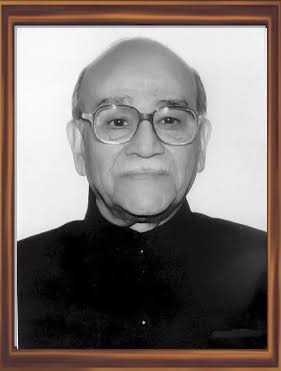
Pandurang Vasudeo Sukhatme (1911–1997) was a towering intellectual whose work transformed how governments measure agricultural output, hunger, and public health. By introducing rigorous probability sampling to crop estimation and reshaping global definitions of food security and protein intake, Sukhatme left an indelible mark on both Indian public administration and international organizations like the Food and Agriculture Organization (FAO).
2. Quick facts
- Full Name: Pandurang Vasudeo Sukhatme
- Native Name: पांडुरंग वासुदेव सुखत्थानर (Marathi)
- Date of birth: July 27, 1911
- Place Of birth: Budh village, Satara district, Maharashtra, India
- Nationality: Indian
- Occupation/ Profession: Statistician, Academic, Researcher
- Field of Achievement: Agricultural Statistics and Biometry
- Years Active: 1930s–1990s
3. Award Information
- Award Name: Padma Bhushan
- Award Category: Science and Engineering / Public Service
- Award Year: 1971
- Presented By: President of India
- Date of Ceremony: January 26, 1971 (Republic Day)
- Citation/Official Reason: For distinguished service in the fields of science, statistics, and agricultural research.
- Previous Recipients (optional): Eminent scientists and public servants of the early 1970 civilian honors list.
- Next Recipients: Prominent academics and researchers recognized in succeeding years.
4. Why they Receive the award?
Sukhatme received the Padma Bhushan in recognition of his monumental contributions to statistical science, his pioneering framework for agricultural crop-cutting surveys in India, and his groundbreaking global leadership at the FAO assessing world hunger and food needs.
5. Early Life
Born into a Marathi-speaking family in the small village of Budh in Satara district, Maharashtra, Sukhatme grew up during a period when modern scientific education in India was sparse. He completed his schooling at Bhave High School in Pune before stepping into higher education, driven by an exceptional aptitude for mathematics.
6. Education
- B.Sc. (1932): Graduated from Fergusson College, Pune, with Mathematics as his principal subject and Physics as a subsidiary.
- Ph.D. (1936): Earned his doctorate from University College London under the joint guidance of legendary statisticians Jerzy Neyman and Egon Pearson.
- D.Sc. (1939): Awarded a Doctor of Science degree by the University of London for his advanced work on bi-partitional functions, supervised by Sir Ronald Fisher.
7. Carrier Journey
- Statistical Adviser, ICAR (1940–1951): Served as the first Statistician and later Statistical Adviser to the Imperial (now Indian) Council of Agricultural Research, laying down foundational sample survey techniques across India.
- Director of Statistics Division, FAO (1951–1971): Headed the statistics division of the Food and Agriculture Organization in Rome, constructing global models to evaluate world food supplies and nutritional deficits.
- Visiting Professorships: Held prestigious international academic posts, including Visiting Professor at Iowa State University and Regents Professor at the University of California, Berkeley.
- Post-Retirement Research in Pune: Returned to India to establish the Department of Biometry at the Maharashtra Association for the Cultivation of Science, directing intense research on human energy balance and nutrition.
8. Major Achievements
- Developed the scientific methodology of random sampling for crop-cutting surveys, revolutionizing how agricultural yields are estimated pan-nationally.
- Authored definitive textbooks, including Sampling Theory of Surveys with Applications and Statistical Methods for Agricultural Workers (co-authored with V.G. Panse).
- Proved through extensive data analysis that the primary nutritional crisis in developing regions was general calorie-based undernutrition rather than specific protein deficiency.
9. Contribution to the Nation
Sukhatme modernized Indian agriculture by replacing arbitrary guesswork with scientific precision in estimating food production. His systems gave the Indian government reliable data frameworks for food security planning, drought management, and economic policy-making during critical decades of post-independence self-reliance.
10. Other Awards and Honours
- The Guy Medal (Silver) (1963): Awarded by the Royal Statistical Society, London, for his seminal paper on The World’s Hunger and Future Needs in Food Supplies.
- Fellow, American Statistical Association (1950).
- B.C. Guha Memorial Lectureship (1973) by the Indian Science Congress Association.
- Bal Gangadhar Tilak Lectureship (1982) by the Indian National Science Academy.
11. Legacy and Influence
Sukhatme is remembered as a titan who bridged abstract statistical theory with practical humanitarian welfare. His revolutionary stance on human nutrition—demonstrating that the human body adapts its energy efficiency homeostatically—forced international nutritionists to completely rethink global dietary standards and poverty lines.
12. Interesting Facts
- Two of his brothers, A.V. Sukhatme and B.V. Sukhatme, also grew up to become statisticians of notable repute.
- His doctoral studies put him in direct contact with the founding fathers of modern modern statistics (Fisher, Neyman, and Pearson), making him part of an elite global lineage of mathematical minds.
13. Quotes
“The problem of hunger is not merely one of producing more food, but of understanding the deep biological and economic mechanics of how human bodies utilize energy under varying conditions of environmental stress.”
14. Timeline
- 1911: Born on July 27 in Budh village, Maharashtra.
- 1932: Graduates in Mathematics from Fergusson College, Pune.
- 1936: Completes Ph.D. from University College London.
- 1940: Joins the Imperial Council of Agricultural Research (ICAR) as a Statistician.
- 1951: Appointed Director of the Statistics Division at the FAO, Rome.
- 1963: Receives the Guy Medal from the Royal Statistical Society.
- 1971: Honored with the Padma Bhushan by the Government of India.
- 1997: Passes away peacefully in Pune on January 28 at the age of 85.
15. References
- Wikipedia contributors. “Pandurang Vasudeo Sukhatme.” Wikipedia, The Free Encyclopedia.
- Indian Academy of Sciences — Fellowship Profile for Prof. Pandurang Vasudeo Sukhatme.
- Research papers and biographical records published by the Indian Society of Agricultural Statistics.
16. Related Personalities
- Prasanta Chandra Mahalanobis: Famed Indian statistician and founder of the Indian Statistical Institute.
- Ronald Fisher, Jerzy Neyman, and Egon Pearson: His doctoral mentors and foundational figures of modern mathematical statistics.
- V.G. Panse: Close collaborator in Indian agricultural statistics research.
17. Frequently Asked Questions (FAQ)
- What is P.V. Sukhatme most famous for?He is best known for pioneering the use of random sampling methods for crop yield estimation and for his groundbreaking studies on global hunger and nutrition at the FAO.
- What was Sukhatme’s view on the protein gap?He challenged the widespread global assumption that populations in developing countries suffered primarily from protein deficiency, demonstrating instead that the core issue was overall calorie undernutrition.
- Did he work internationally?Yes, he served for two decades as the Director of the Statistics Division at the United Nations Food and Agriculture Organization (FAO) in Rome.
About the Author