Early Life and Education
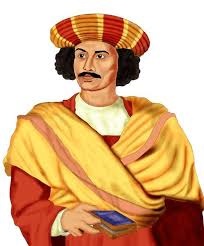
P. Rangaiah Naidu was born in 1828 in the Madras Presidency (present-day parts of Tamil Nadu and Andhra Pradesh). He belonged to a Telugu-speaking family and grew up during a period when British colonial influence was expanding across South India.
From an early age, he displayed intellectual ability and pursued higher education. He studied law, a field that enabled him to understand the legal and administrative systems of British India. After completing his legal education, he established himself as a successful lawyer in Madras. His professional competence earned him recognition in public life and eventually led to his association with the Madras High Court.
Education & Skills
P. Rangaiah Naidu received formal education in law, which became the foundation of his public career. His expertise extended beyond legal practice and included:
- Legal knowledge and advocacy
- Public speaking and leadership
- Political organization
- Administrative skills
- Constitutional understanding and reform-oriented thinking
His ability to articulate the concerns of Indians under colonial rule made him one of the prominent political voices of late nineteenth-century Madras.
Contribution to Tamil Literature
Unlike literary figures who contributed directly through poetry, novels, or essays, P. Rangaiah Naidu’s contribution to Tamil intellectual life was largely indirect.
He supported the growth of educational and public institutions that encouraged intellectual discussions and social awareness. As a public leader, he helped create an environment in which newspapers, literary societies, and educational establishments flourished.
He also served as a trustee of Pachaiyappa’s College in Chennai from 1883 to 1902, supporting one of the region’s important educational institutions.
Therefore, while he was not a Tamil writer, his efforts in promoting education and civic engagement contributed to the broader development of Tamil society.
Role in India’s Freedom Movement
P. Rangaiah Naidu played a significant role during the early phase of India’s nationalist movement.
Leadership in Madras Mahajana Sabha
When the Madras Mahajana Sabha was founded in 1884, he became its first President. The organization emerged as one of the earliest political associations in South India and later became a precursor to the national movement. Under his leadership, the Sabha demanded:
- Greater representation of Indians in government,
- Constitutional reforms,
- Expansion of legislative councils,
- Protection of the rights of Indian citizens.
Participation in the Indian National Congress
Rangaiah Naidu participated in the first session of the Indian National Congress held in Bombay in December 1885, representing Madras. His involvement demonstrated the growing political consciousness among South Indian leaders during the early nationalist period.
Legislative Contributions
He served as a member of the Madras Legislative Council from 1892 to 1899, where he advocated for administrative reforms and increased Indian participation in governance. His constitutional approach helped lay the groundwork for the later phases of the freedom struggle.
Personal Life
Historical records provide limited details about P. Rangaiah Naidu’s family life. Much of the available information focuses on his professional achievements and public service.
He was widely respected in Madras society for his integrity, legal expertise, and commitment to public welfare. Throughout his life, he remained dedicated to educational causes, political reform, and the advancement of Indian interests under colonial rule.
Death
P. Rangaiah Naidu passed away in 1902 in Egmore, Madras (present-day Chennai).
In recognition of his contributions, roads in the Egmore area were named in connection with his family, preserving the memory of his service to society and the nationalist cause.
Conclusion
P. Rangaiah Naidu occupies an important place in the history of India’s early nationalist movement. As a distinguished lawyer, political leader, and the first President of the Madras Mahajana Sabha, he championed constitutional reforms and greater rights for Indians during a crucial period of political awakening.
Although he was not directly associated with Tamil literary production, his support for education and public institutions contributed to the intellectual progress of society. His participation in the founding years of the Indian National Congress and his efforts in the Madras Legislative Council reflect his enduring commitment to justice, representation, and national advancement.
His life serves as an example of how early political leaders from South India helped shape the foundations of India’s struggle for independence.
About the Author