Introduction
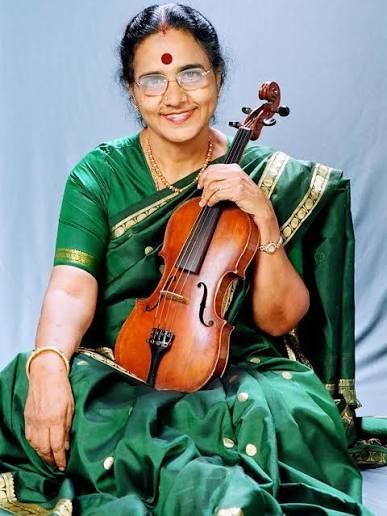
N. Rajam, popularly known as Narayana Rajam or N. Rajam, is one of India’s most respected violinists and a pioneer of Hindustani classical violin music. She is known for her unique style called the “gayaki ang” (vocal style of playing), in which the violin closely imitates the expressions, emotions, and nuances of the human voice. Through her extraordinary performances, teaching, and research, she has played a major role in establishing the violin as a leading instrument in Hindustani classical music. In recognition of her immense contribution to Indian classical music, she was awarded the Padma Vibhushan, India’s second-highest civilian honor.
Why Did Narayana Rajam Receive the Padma Vibhushan Award?
N. Rajam was awarded the Padma Vibhushan in 2025 for her exceptional contribution to the field of Art, especially Indian Classical Music.
She was honored for:
- Revolutionizing Hindustani classical violin performance.
- Developing and popularizing the gayaki ang style of violin playing.
- Promoting Indian classical music through national and international performances.
- Training generations of musicians and preserving musical traditions.
- Bringing global recognition to the Indian violin tradition.
- Making significant contributions to the cultural heritage of India.
Career and Achievements
N. Rajam has had a remarkable career spanning more than seven decades. She began as a Carnatic violinist and later became one of the greatest performers of Hindustani classical violin.
Major Achievements
- Developed a distinctive violin style based on the techniques of Hindustani vocal music.
- Performed at prestigious music festivals and cultural events across the world.
- Presented Hindustani ragas through the expressive possibilities of the violin.
- Trained numerous students who continue to promote Indian classical music.
- Served as a teacher and mentor at leading music institutions.
- Helped establish the violin as a respected instrument in North Indian classical music.
Early Life
Narayana Rajam was born into a highly musical family in Chennai. Her father, A. Narayana Iyer, was a respected violinist and music teacher who introduced her to violin at a very young age. She received rigorous training in Carnatic music before later mastering Hindustani classical music.
Her early exposure to both musical traditions helped her create a unique approach to violin performance.
Birth Date and Death
- Full Name: Narayana Rajam
- Popular Name: N. Rajam
- Date of Birth: April 16, 1938
- Place of Birth: Chennai (then Madras), Tamil Nadu, India
- Age: 88 years (as of 2026)
- Death: N. Rajam is alive.
Education and Career
Education
N. Rajam received her early musical training from her father, A. Narayana Iyer. She later studied Hindustani classical music under the legendary violin maestro Omkar Nath Thakur. Her training helped her master the emotional depth and improvisational style of Hindustani music.
Career
She began her career as a Carnatic violin performer and gradually shifted her focus toward Hindustani classical music. Through years of dedication, she developed the gayaki ang style, which allowed the violin to reproduce vocal expressions such as meend, gamak, and emotional phrasing.
She also served as a professor and Head of the Department of Music at Banaras Hindu University, where she contributed greatly to music education.
Field of Achievement
N. Rajam has made significant contributions in:
- Hindustani Classical Music
- Violin Performance
- Music Education
- Classical Music Research
- Cultural Preservation
- Indian Performing Arts
Awards and Honours
N. Rajam has received numerous prestigious awards, including:
- Padma Shri (1981)
- Padma Bhushan (2004)
- Padma Vibhushan (2025)
- Sangeet Natak Akademi Award
- Several lifetime achievement awards from cultural organizations.
- Recognition from music institutions in India and abroad.
Interesting Facts
- N. Rajam is popularly known as the “Queen of Hindustani Violin.”
- She is one of the few musicians who successfully adapted the violin to Hindustani classical music.
- Her playing style is inspired by the human voice rather than only instrumental techniques.
- She was trained in both Carnatic and Hindustani musical traditions.
- She has performed worldwide and introduced Indian classical violin to international audiences.
- Many renowned violinists and musicians have been influenced by her unique style.
Legacy and Inspiration
N. Rajam’s greatest contribution is her transformation of the violin into a powerful instrument for Hindustani classical expression. Her dedication proved that a Western-origin instrument could become deeply connected with India’s classical traditions.
Her artistic journey inspires musicians to explore creativity while respecting tradition. Through her teaching and performances, she has ensured that the beauty of Indian classical music continues to reach future generations.
Contribution to the Nation
N. Rajam has contributed significantly to India by:
- Promoting Hindustani classical music across the world.
- Preserving and expanding India’s musical traditions.
- Training young musicians and encouraging music education.
- Bringing international recognition to Indian violin performance.
- Strengthening India’s cultural identity through classical music.
- Inspiring generations of artists through her dedication and excellence.
Her lifelong service has enriched India’s cultural heritage and strengthened the global appreciation of Indian classical music.
Conclusion
N. Rajam is a legendary violinist whose extraordinary talent and dedication have transformed the role of the violin in Hindustani classical music. Through her innovative gayaki ang style, teaching, and performances, she has created a unique place in the history of Indian music. The Padma Vibhushan is a fitting tribute to her lifelong contribution to Indian art and culture. Her legacy continues to inspire musicians and music lovers around the world.
About the Author