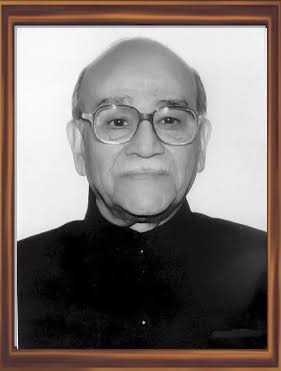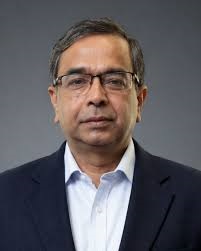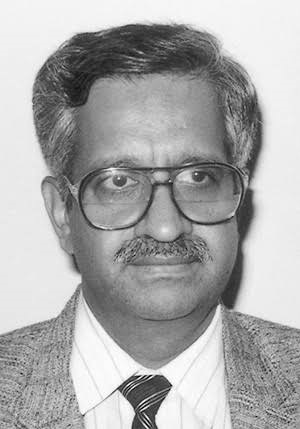


Mulk Raj Anand (12 December 1905 – 28 September 2004) was one of the pioneering Indian writers in English. He is particularly remembered for novels and short stories that portrayed the lives of India’s poor, oppressed and socially marginalised communities. Along with R. K. Narayan and Raja Rao, he helped establish Indian English fiction on the international literary scene.
For your blog, one important correction is worth noting: Mulk Raj Anand received the Padma Bhushan in 1967, not 1968, in Literature and Education. The Government of India’s Padma database confirms this.
1. Introduction
Mulk Raj Anand was a celebrated Indian novelist, short-story writer, essayist, editor and social commentator who wrote primarily in English.
His literature focused on social inequality, caste discrimination, poverty, exploitation and the struggles of ordinary people. His first major novel, Untouchable (1935), brought the experiences of an oppressed sanitation worker into English-language fiction and established Anand as an important literary voice.
His other important novels include Coolie, Two Leaves and a Bud, The Village, Across the Black Waters, The Sword and the Sickle and The Private Life of an Indian Prince.
2. Quick Facts
| Particular | Information |
|---|---|
| Full Name | Mulk Raj Anand |
| Native Name | मुल्क राज आनंद / Mulk Raj Anand |
| Date of Birth | 12 December 1905 |
| Place of Birth | Peshawar, British India — now in Khyber Pakhtunkhwa, Pakistan |
| Nationality | Indian |
| Profession | Novelist, short-story writer, essayist, editor, art critic and lecturer |
| Field of Achievement | Literature and Education |
| Language | English |
| Literary Movement | Indian English literature; Progressive Writers’ Movement |
| Years Active | Primarily from the 1920s to the late 20th century |
| Famous Works | Untouchable, Coolie, Two Leaves and a Bud, The Village, Morning Face |
| Padma Bhushan | 1967 |
| Sahitya Akademi Award | 1971, for Morning Face |
| Date of Death | 28 September 2004 |
| Place of Death | Pune, Maharashtra |
His birth, education and career details are documented in academic and biographical sources, including the Routledge Encyclopedia of Modernism and Penguin Random House.
3. Award Information
Padma Bhushan
| Award Detail | Information |
|---|---|
| Award Name | Padma Bhushan |
| Award Category | Literature and Education |
| Award Year | 1967 |
| Recipient | Mulk Raj Anand |
| Presented By | Government of India / President of India |
| Awarded State | Maharashtra |
| Official Field | Literature and Education |
The Government of India’s official Padma Awards database lists Shri Mulk Raj Anand – Padma Bhushan (1967) – Literature and Education – Maharashtra.
The Padma Bhushan is one of India’s civilian honours and recognises distinguished service of a high order.
Date of Ceremony
The award year is officially 1967. For your blog, it is safer to state “Padma Bhushan, 1967” rather than giving an unverified individual investiture date.
Citation / Official Reason
The Government’s Padma database categorises Anand’s award under Literature and Education. His literary contribution centred on Indian society, social inequality and the experiences of marginalised people.
Other Major Literary Award: Sahitya Akademi Award
Mulk Raj Anand received the Sahitya Akademi Award in 1971 for his novel Morning Face, in the English category. The official Sahitya Akademi list records:
1971 – Morning Face – Mulk Raj Anand.
4. Why Did Mulk Raj Anand Receive the Padma Bhushan?
Mulk Raj Anand was recognised for his major contribution to Indian English literature.
His writing was distinctive because he gave literary representation to people who were often ignored in mainstream literature, including:
- Poor workers
- Agricultural labourers
- Dalits and socially oppressed communities
- Industrial workers
- Servants
- Villagers
- People affected by colonial exploitation
His novels combined literature with social criticism and humanism. Routledge describes his work as expanding literary representation to marginalised and subaltern experiences.
5. Early Life
Mulk Raj Anand was born on 12 December 1905 in Peshawar, then part of British India and now located in Pakistan.
He was born into a Punjabi family. His father, Lal Chand, was a coppersmith who later served in the British Indian Army. Anand’s childhood was influenced by his experiences of social divisions, poverty and caste discrimination.
These experiences later became important themes in his fiction.
One childhood experience in particular influenced his writing. The Sahitya Akademi’s biographical material explains how his experience with a boy from a socially oppressed community contributed to the conception of Bakha, the central character of Untouchable.
6. Education
Anand received his early education in India.
Khalsa College, Amritsar
He studied at Khalsa College, Amritsar, and completed his bachelor’s degree with honours in 1924.
University College London
In the 1920s, Anand moved to England and studied at University College London.
He pursued philosophy and completed a Ph.D. in 1929.
Cambridge University
He was also associated with Cambridge University, where he continued his intellectual and academic development.
His education exposed him to European philosophy, literature and political thought, which influenced his later writing.
7. Career Journey
Early Literary Career
Anand began writing essays and books on subjects such as art, culture and Indian society before becoming famous as a novelist.
He developed relationships with several important European writers and intellectuals while living in Britain.
Untouchable – 1935
His breakthrough came with Untouchable, published in 1935.
The novel tells the story of Bakha, a young sanitation worker who experiences humiliation and discrimination because of his caste.
The novel became one of the most important early works of Indian English fiction dealing directly with caste oppression.
Coolie – 1936
His second major novel, Coolie, appeared in 1936.
It follows Munoo, a poor Indian boy whose life exposes the harsh realities of poverty, exploitation and colonial society.
Two Leaves and a Bud – 1937
Published in 1937, this novel explored the exploitation of Indian plantation workers under colonial conditions.
Progressive Writers’ Movement
Anand was an important participant in the Progressive Writers’ Movement and helped establish the movement in India in the late 1930s.
The movement encouraged writers to address social injustice, poverty, colonialism and inequality.
Spanish Civil War
Anand also became involved with the Spanish Civil War, fighting on the Republican side during 1937–38.
This experience strengthened his political and anti-fascist convictions.
BBC
During the Second World War, Anand worked with the BBC, including as a broadcaster and scriptwriter. His association with the organisation lasted during the 1939–45 period.
He was also acquainted with prominent writers and intellectuals in Britain, including George Orwell.
Editor of MARG
After returning to India, Anand became closely associated with the arts.
In 1946, he became editor of MARG, an important Indian art journal. He continued to play a major role in India’s cultural and artistic life.
8. Major Achievements
1. Pioneer of Indian English Fiction
Anand was one of the earliest Indian novelists writing in English to achieve an international readership.
2. Untouchable
His 1935 novel Untouchable became a landmark work about caste discrimination and social inequality.
3. Coolie
Through Coolie, he explored poverty, child labour and exploitation.
4. International Recognition
His books were translated into several languages and attracted readers outside India.
5. Padma Bhushan
He received the Padma Bhushan in 1967 for Literature and Education.
6. Sahitya Akademi Award
He received the Sahitya Akademi Award in 1971 for Morning Face.
7. Art and Cultural Work
As editor of MARG, he made an important contribution to India’s modern art discourse.
8. Academic Career
He taught at several Indian universities and served as Tagore Professor of Literature and Fine Art at the University of Punjab from 1963 to 1966.
9. Contribution to the Nation
Mulk Raj Anand’s contribution was primarily literary, social and cultural.
Giving Voice to the Marginalised
His novels brought the lives of disadvantaged Indians to a wide international readership.
Challenging Caste Discrimination
Untouchable directly confronted caste prejudice and the humiliation experienced by people considered “untouchable” under the traditional social order.
Addressing Poverty
Works such as Coolie explored the struggles of poor Indians and the exploitation of workers.
Promoting Social Justice
His fiction consistently questioned social systems that produced poverty, inequality and discrimination.
Supporting Indian Art
Through MARG, he helped create an important platform for Indian art and cultural criticism.
Internationalising Indian Literature
Alongside R. K. Narayan and Raja Rao, Anand helped establish Indian writing in English as an important part of world literature.
10. Other Awards and Honours
Padma Bhushan – 1967
Awarded for Literature and Education.
Sahitya Akademi Award – 1971
Awarded for his novel Morning Face.
International Peace Prize – 1950s
Anand received the International Peace Prize for his contribution to international understanding and peace. Biographical sources date this recognition to 1952/1953, so your blog can simply describe it as an early-1950s international honour unless you want to reproduce a specific source’s date.
Honorary Doctorates
He received honorary doctorates from several Indian universities, including institutions in Delhi, Benares, Andhra, Patiala and Shantiniketan.
11. Legacy and Influence
Mulk Raj Anand’s greatest legacy is his use of literature as a means of social criticism and human empathy.
His characters were often people living at the margins of society. Instead of presenting poverty and caste merely as political issues, Anand gave these experiences a human face.
His writing influenced generations of Indian English writers and helped establish the tradition of socially engaged Indian fiction in English.
Today, Untouchable and Coolie remain important texts for understanding Indian English literature, colonial society and social inequality.
His legacy also extends beyond fiction through his work in art criticism and the cultural journal MARG.
12. Interesting Facts
- Mulk Raj Anand was born in Peshawar in 1905.
- Peshawar was then part of British India and is now in Pakistan.
- He studied at Khalsa College, Amritsar.
- He earned a doctorate in philosophy in London in 1929.
- He was associated with Cambridge University.
- He lived in Britain for many years.
- He developed friendships with members of the Bloomsbury Group.
- E. M. Forster supported the publication of Untouchable.
- Untouchable was published in 1935.
- His novel Coolie appeared in 1936.
- He was involved with the Progressive Writers’ Movement.
- He fought on the Republican side during the Spanish Civil War.
- He worked for the BBC during the Second World War.
- He knew several prominent European writers and intellectuals.
- He was editor of MARG, an Indian art journal.
- He received the Padma Bhushan in 1967, not 1968.
- His novel Morning Face won the Sahitya Akademi Award in 1971.
- He wrote both fiction and nonfiction.
- His writing was strongly influenced by concerns about social justice.
- He died in Pune on 28 September 2004.
13. Quotes
For a biography blog, it is best to use authenticated quotations rather than unattributed internet quotes.
One particularly useful statement from Anand’s Sahitya Akademi biographical material expresses his philosophy of literature:
“Literature releases men and women from pre-ordained fate.”
He also connected literature with the humanisation of society and argued that writing should confront injustice rather than ignore it.
Another important idea expressed in his Sahitya Akademi material is:
“Poetry today has to become courage.”
These quotations are particularly relevant to understanding Anand’s belief that literature should engage with human suffering and social injustice.
14. Timeline
| Year | Event |
|---|---|
| 1905 | Born on 12 December in Peshawar |
| 1924 | Graduated with honours from Khalsa College, Amritsar |
| 1925 | Moved to England |
| 1920s | Studied philosophy and developed connections with European intellectuals |
| 1929 | Earned Ph.D. in philosophy |
| 1935 | Published Untouchable |
| 1936 | Published Coolie |
| 1937 | Published Two Leaves and a Bud; fought with Republicans in the Spanish Civil War |
| 1938 | Associated with the Progressive Writers’ Movement in India |
| 1939–45 | Worked with the BBC |
| 1940 | Published The Village |
| 1942 | Published The Sword and the Sickle |
| 1946 | Became associated with MARG |
| 1950 | Published Seven Summers |
| 1953 | The Private Life of an Indian Prince published; international recognition continued |
| 1963–66 | Tagore Professor of Literature and Fine Art, University of Punjab |
| 1967 | Received Padma Bhushan |
| 1968 | Published Morning Face |
| 1971 | Received Sahitya Akademi Award for Morning Face |
| 2004 | Died in Pune on 28 September |
The publication and award chronology is supported by Penguin, Sahitya Akademi and biographical sources.
15. References
For your blog, these are good sources to cite:
- Government of India – Padma Awards Database — official record of Anand’s Padma Bhushan.
- Sahitya Akademi – Akademi Awards — official record of Morning Face receiving the 1971 award.
- Sahitya Akademi – Mulk Raj Anand profile — useful primary/biographical material about his life and literary philosophy.
- Routledge Encyclopedia of Modernism — scholarly biography and assessment of Anand’s literary importance.
- Penguin Random House – Mulk Raj Anand — publication and biographical information.
- IGNOU/eGyanKosh — academic study of Anand’s life and work.
16. Related Personalities
R. K. Narayan
A major Indian English novelist and one of Anand’s contemporaries. Together with Anand and Raja Rao, he helped establish Indian English fiction internationally.
Raja Rao
Another pioneering Indian English novelist, best known for works such as Kanthapura and The Serpent and the Rope.
Mahatma Gandhi
Gandhian ideas of social reform, human dignity and the uplift of disadvantaged people are relevant to understanding the social concerns in Anand’s writing.
E. M. Forster
The English novelist played an important role in supporting the publication of Anand’s early work, particularly Untouchable.
George Orwell
Anand and Orwell were associated with the BBC during the Second World War and shared interests in political and social questions.
Jawaharlal Nehru
Anand’s literary career developed during India’s anti-colonial and nation-building period, making Nehru an important contemporary figure in the broader intellectual environment.
Raja Rao and R. K. Narayan
These two writers are especially useful as related personalities if your blog is creating a series on pioneering Indian English authors.
17. Frequently Asked Questions (FAQ)
Who was Mulk Raj Anand?
Mulk Raj Anand was a renowned Indian English novelist, short-story writer, essayist and cultural critic, famous for writing about poverty, caste discrimination and social injustice.
When was Mulk Raj Anand born?
He was born on 12 December 1905.
Where was Mulk Raj Anand born?
He was born in Peshawar, then part of British India and now in Pakistan.
What is Mulk Raj Anand famous for?
He is particularly famous for Untouchable, Coolie, Two Leaves and a Bud and The Village.
What is Mulk Raj Anand’s most famous novel?
Untouchable (1935) is generally regarded as one of his most important and influential novels.
What is Untouchable about?
The novel follows Bakha, a young sanitation worker who faces caste discrimination and social humiliation.
Which award did Mulk Raj Anand receive in 1967?
He received the Padma Bhushan in 1967 in the field of Literature and Education.
Did Mulk Raj Anand receive the Padma Bhushan in 1968?
No. The official Government of India Padma database records his Padma Bhushan as 1967.
When did Mulk Raj Anand receive the Sahitya Akademi Award?
He received the Sahitya Akademi Award in 1971 for his novel Morning Face.
What was Morning Face?
Morning Face is a novel by Mulk Raj Anand, first published in 1968. It won the Sahitya Akademi Award in 1971.
Where did Mulk Raj Anand study?
He studied at Khalsa College, Amritsar, and later at University College London and Cambridge.
Did Mulk Raj Anand study philosophy?
Yes. He completed a Ph.D. in philosophy in 1929 in London.
Was Mulk Raj Anand involved in the Progressive Writers’ Movement?
Yes. He was an important figure in the Progressive Writers’ Movement, which encouraged literature addressing social and political issues.
Did Mulk Raj Anand work for the BBC?
Yes. He worked as a broadcaster and scriptwriter for the BBC during the Second World War.
What was Mulk Raj Anand’s contribution to Indian literature?
He helped establish Indian English literature internationally and brought the lives of India’s poor and marginalised communities into mainstream literary representation.
When did Mulk Raj Anand die?
He died on 28 September 2004 in Pune, Maharashtra, aged 98.
About the Author