
1. Introduction
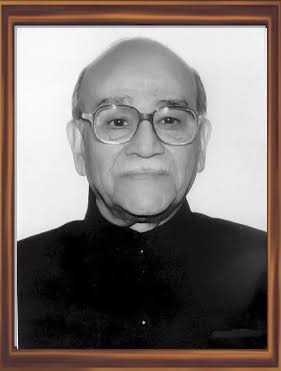
Malcolm Sathiyanathan Adiseshiah (1910–1994) was a preeminent Indian development economist, educator, and institution builder. Best known for his monumental 22-year tenure as the Deputy Director-General of UNESCO, he dedicated his life to reforming educational frameworks, linking academic instruction with rural economic reality, and establishing top-tier research institutes in India.
2. Quick facts
- Full Name: Malcolm Sathiyanathan Adiseshiah
- Native Name: மால்கம் ஆதிசேஷையா
- Date of birth: April 18, 1910
- Place Of birth: Vellore, Tamil Nadu, India
- Nationality: Indian
- Occupation/ Profession: Development Economist, Educator, Administrator
- Field of Achievement: Economics, Public Education, and Social Science Research
- Years Active: 1930s – 1994
3. Award Information
- Award Name: Padma Bhushan
- Award Category: Civil Service / Public Affairs / Education
- Award Year: 1976
- Presented By: President of India
- Date of Ceremony: Annual Republic Day Investiture Ceremony, 1976
- Citation/Official Reason: Recognized for his exceptional service and leadership in literature, education, and development economics.
- Previous Recipients (optional): Notable national thinkers, statesmen, and scientists.
- Next Recipients: Succeeding annual civilian awardees.
4. Why they Receive the award?
Adiseshiah received the Padma Bhushan for his lifetime of exceptional contributions to national and international education policies, his pathbreaking leadership at UNESCO, and his efforts to shape modern economic planning and social science research in India.
5. Early Life
Born on April 18, 1910, in Vellore, Tamil Nadu, Malcolm Adiseshiah came from an academically distinguished family. His father, Paul Varanasi Adiseshiah, was a professor of philosophy and the first Indian principal of Voorhees College; his mother, Grace Nesamma, was a talented musician and a municipal councilor. Educated initially at home by his mother until age ten, he displayed exceptional academic brilliance early on, skipping grades and completing his high school education by the age of thirteen.
6. Education
- Secondary Education: Voorhees High School, Vellore (completed at age 13).
- Intermediate Course: Voorhees College, Vellore.
- Undergraduate: Bachelor of Arts (Honours) in Economics from Loyola College, Madras (where future President R. Venkataraman was a classmate).
- Master’s Degree: King’s College, Cambridge (Specialization in Banking).
- Doctorate: London School of Economics (LSE), specializing in Currency and Economics under prominent global economists.
7. Carrier Journey
- Early Teaching (1930–1937): Taught economics at St. Paul’s Cathedral Mission College in Calcutta and Madras Christian College (MCC).
- International Governance (1948–1970): Joined UNESCO, eventually serving as its Deputy Director-General from 1962 to 1970, directing global educational, scientific, and cultural programs.
- Vice-Chancellor (1975–1978): Served as the Vice-Chancellor of the University of Madras, overhauling academic departments to include molecular biology, econometrics, and adult education.
- Parliamentary Tenure (1978–1984): Nominated as a member of the Rajya Sabha (Upper House of the Indian Parliament).
8. Major Achievements
- Founding MIDS: Co-founded the Madras Institute of Development Studies (MIDS) in 1971 with his wife Elizabeth, building it into a premier national center for social science research.
- Vocational Education Framework: Headed the National Review Committee (1978) that structured vocational education at the higher secondary level (+2 stage) across India.
- Global Recognition: Honored by over 40 countries and recipient of 15 honorary doctorates from universities worldwide.
9. Contribution to the nation
Adiseshiah revolutionized economic pedagogy in India by moving classrooms out of textbooks and into rural fields, pushing students to directly analyze agrarian realities. As Vice-Chairman of the Tamil Nadu Planning Commission (1971–1976), he mapped out comprehensive perspective development plans. Furthermore, his long-standing work with the National Literacy Mission heavily influenced adult education and grassroots literacy campaigns nationwide.
10. Other Awards and Honours
- Padma Bhushan (1976): Conferred by the Government of India.
- Malcolm Adiseshiah International Literacy Prize (1998): Created by UNESCO in his honor to recognize global contributions to literacy.
- Multiple International Decorations: Honored by roughly 40 governments globally for his services to international cooperation.
11. Legacy and influence
Malcolm Adiseshiah is remembered as a titan of human capital theory and institutional planning. His belief that investment in education is the prime engine of socio-economic growth predated modern mainstream consensus. MIDS stands today as a testament to his intellectual rigor, continuing to mentor generations of critical social scientists.
12. Interesting Facts
- He completed his high school matriculation at the remarkable age of 13 due to double promotions.
- While studying in London and Cambridge, he interacted directly with legendary economic icons like John Maynard Keynes.
- He bequeathed his personal estate, assets, and residence to the growth and perpetual well-being of the Madras Institute of Development Studies.
13. Quotes
“Education does not merely contribute to economic growth; it is the absolute foundation upon which all human development and equity rest.”
14. Timeline
- 1910: Born on April 18 in Vellore, Tamil Nadu
- 1930–40: Pursued advanced studies at Cambridge and the London School of Economics
- 1948: Joined UNESCO, beginning two decades of high-level global administration
- 1971: Co-founded the Madras Institute of Development Studies (MIDS)
- 1976: Awarded the Padma Bhushan by the Government of India
- 1978: Nominated to the Rajya Sabha (Parliament of India)
- 1994: Passed away on November 21 in Chennai, India
15. References
- Wikipedia: Malcolm Adiseshiah
- Madras Institute of Development Studies (MIDS) Official Archives
- Azim Premji University – Indian Economists Profile Series
16. Related Personalities
- John Maynard Keynes (Influential economist and mentor during his time at Cambridge)
- Ramaswamy Venkataraman (Classmate at Loyola College and former President of India)
- K.N. Raj (Prominent student and notable Indian economic thinker)
17. Frequently Asked Questions (FAQ)
Q: Who was Malcolm Adiseshiah?
A: He was a renowned Indian development economist, educator, and long-serving Deputy Director-General of UNESCO.
Q: What is MIDS?
A: MIDS stands for the Madras Institute of Development Studies, a premier research institute co-founded by Malcolm and Elizabeth Adiseshiah in Chennai in 1971.
Q: What major awards did he receive?
A: He was awarded the Padma Bhushan in 1976, and UNESCO later established the Malcolm Adiseshiah International Literacy Prize in his honor in 1998.
About the Author