

1. Introduction
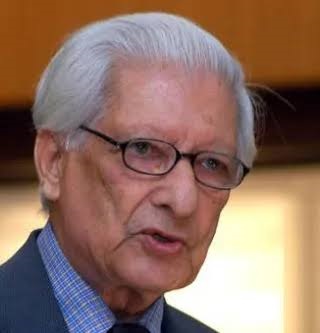
Maharaja Krishna Rasgotra was one of India’s most distinguished, sharp-witted, and long-serving diplomats. Spanning a monumental career that witnessed the evolution of independent India’s foreign affairs from the Nehruvian era onward, he served as the 12th Foreign Secretary of India. Famed for his intellectual rigor, strategic foresight, and elegant articulation, Rasgotra shaped crucial bilateral and multilateral engagements, leaving an enduring imprint on India’s global footprint.
2. Quick facts
- Full Name: Maharaja Krishna Rasgotra (M. K. Rasgotra)
- Native Name: महाराज कृष्ण रसगोत्रा
- Date of birth: September 11, 1924
- Place Of birth: Shakargarh (historically part of the Jammu region)
- Nationality: Indian
- Occupation/ Profession: Diplomat, Foreign Service Officer, Author, and Academic
- Field of Achievement: International Relations, Foreign Policy, and Public Administration
- Years Active: 1949 – 2021 (Active service and post-retirement strategic mentorship)
3. Award Information
- Award Name: Padma Bhushan
- Award Category: India’s Third-Highest Civilian Award
- Award Year: 2004
- Presented By: Government of India (Conferred by the President of India)
- Date of Ceremony: Republic Day honors cycle, 2004
- Citation/Official Reason: For exceptional and distinguished service in the field of public affairs and international diplomacy.
- Previous Recipients (Examples): Prominent statesmen, civil servants, and global thinkers.
- Next Recipients: Conferred annually as part of national civilian honors.
4. Why they Receive the award?
M. K. Rasgotra received the Padma Bhushan for his lifetime of exemplary service to the nation in the realm of foreign policy. Over several decades, he steered India’s diplomatic relations through volatile geopolitical eras—ranging from the Cold War dynamics and regional South Asian tensions to strengthening ties with Western democracies, Arab nations, and multilateral bodies like UNESCO.
5. Early Life
Born on September 11, 1924, into a Dogra-Brahmin family, Rasgotra experienced the tumultuous years of pre-independence India. Growing up amidst shifting regional landscapes instilled in him a deep historical curiosity and a nuanced understanding of governance. His formative years combined traditional education with a sharp penchant for literature, laying the groundwork for his exceptional communication skills and analytical outlook.
6. Education
- Foundational Studies: Completed school education in northern India.
- Higher Education: Pursued higher academic studies at Punjab University, earning a Master of Arts (M.A.) degree in English Literature.
- Academic Background: His strong grounding in literature and history heavily influenced his lucid writing style, articulate public speaking, and deep grasp of international statecraft.
7. Carrier Journey
- Entering the IFS: Appointed to the elite Indian Foreign Service (IFS) on September 27, 1949, belonging to the earliest batches of independent India’s professional diplomatic corps.
- Global Postings: Served in key diplomatic missions across the globe, including postings in Nepal, the Netherlands, France, Morocco, and Tunisia.
- High Commissioner to the UK: Served as India’s High Commissioner to the United Kingdom, managing crucial diaspora and bilateral ties.
- Ambassador to UNESCO: Represented India’s cultural and educational interests at UNESCO.
- Foreign Secretary of India: Reached the pinnacle of his bureaucratic career, serving as the 12th Foreign Secretary of India from May 1, 1982, to January 31, 1985, working closely with Prime Minister Indira Gandhi.
8. Major Achievements
- Steering Foreign Policy: Successfully guided India’s external ministry actions through major international transitions during the early 1980s.
- Institutional Contributor: Associated with prominent think-tanks like the Observer Research Foundation (ORF) and the National Maritime Foundation post-retirement, continuing to mentor younger generations of strategic analysts.
- Published Author: Authored critically acclaimed literature on diplomacy, most notably his memoir A Life in Diplomacy (2016), which serves as an essential textbook for students of international relations.
9. Contribution to the nation
M. K. Rasgotra helped consolidate India’s posture as an independent, non-aligned, yet pragmatic global player. His meticulous negotiations and ambassadorial acumen helped safeguard India’s security interests during high-stress geopolitical conflicts. Furthermore, his post-retirement writings and think-tank leadership consistently educated the Indian public and policymakers on maintaining strategic autonomy, national defense preparedness, and peaceful regional cooperation.
10. Other Awards and Honours
- Padma Bhushan (2004) – Government of India
- Felicitation honors from various academic and strategic institutions.
- Lifetime achievement recognitions within Indian foreign service alumni networks.
11. Legacy and influence
Rasgotra represents the golden era of Indian diplomacy—characterized by unmatched elocution, intellectual depth, institutional loyalty, and absolute discretion. His legacy is carried forward through his comprehensive written accounts of India’s diplomatic history, which provide rare, insider perspectives on decisions that shaped South Asia’s modern boundaries and foreign alignments.
12. Interesting Facts
- Centenarian Diplomat: He lived to cross the rare milestone of a century, celebrating his 100th birthday in September 2024, making him one of the oldest surviving stalwarts of the original Indian Foreign Service cadre.
- Witness to History: Having joined the IFS in 1949, just two years after independence, his career spanned virtually the entire formative geopolitical history of modern India.
- Clear-Eyed Memoirist: His autobiography, A Life in Diplomacy, is celebrated for its candid, unfiltered look into high-stakes decision-making behind closed doors in New Delhi.
13. Quotes
“A nation’s foreign policy is only as strong as its domestic economic vitality and its internal unity.”
“Diplomacy is not about winning arguments; it is about protecting vital national interests while finding spaces for mutual coexistence.”
14. Timeline
- 1924: Born on September 11 in Shakargarh.
- 1949: Officially joins the Indian Foreign Service (IFS) on September 27.
- 1970s: Serves in major diplomatic assignments across Europe, North Africa, and neighboring South Asian countries.
- 1982–1985: Serves as the Foreign Secretary of India.
- 2004: Conferred the prestigious Padma Bhushan by the Government of India.
- 2016: Publishes his landmark memoir, A Life in Diplomacy.
- 2021: Passes away, leaving behind an unmatched legacy in Indian statecraft.
15. References
- Ministry of Home Affairs, Government of India – Padma Awards Directory.
- Rasgotra, M. K. A Life in Diplomacy. Viking / Penguin Books, 2016/2019.
- Biographical archives and historical briefings from the Observer Research Foundation (ORF) and National Maritime Foundation.
16. Related Personalities
- Indira Gandhi (Former Prime Minister of India, with whom Rasgotra worked closely)
- Jawaharlal Nehru (Architect of independent India’s foreign policy framework)
- J.N. Dixit (Renowned contemporary Indian diplomat and strategist)
- K. Natwar Singh (Veteran Indian diplomat, politician, and author)
17. Frequently Asked Questions (FAQ)
Q1: What are M. K. Rasgotra’s primary contributions to India?
A: M. K. Rasgotra was a premier Indian diplomat who served as Foreign Secretary, ambassador to several major global capitals (including France, the UK, and Nepal), and a guiding voice in Indian foreign policy and strategic studies for over seven decades.
Q2: What is the highest civilian award he received?
A: He was honored with the Padma Bhushan in 2004 by the Government of India for his outstanding public service.
Q3: Did he write any books about his diplomatic career?
A: Yes, he authored the widely acclaimed memoir A Life in Diplomacy, which details his experiences navigating global politics and Indian foreign service milestones.
About the Author




