

1. Introduction
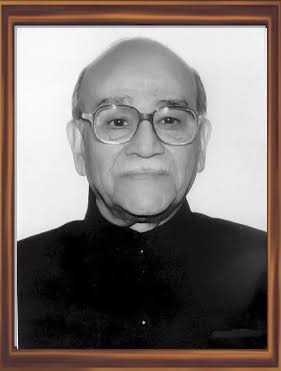
Krishna Kripalani (29 September 1907 – 27 April 1992) was an Indian freedom fighter, writer, scholar, educationist and parliamentarian who made important contributions to Indian literature and cultural institutions.
Born in Karachi, then part of British India, Kripalani became closely associated with Rabindranath Tagore and Visva-Bharati at Santiniketan. He taught at Visva-Bharati from 1933 to 1946 and developed a deep understanding of Tagore’s life, ideas and literary contribution. The Indira Gandhi National Centre for the Arts describes him as a particularly sensitive interpreter of Tagore’s life and achievement.
Kripalani was also active in India’s freedom movement. He was arrested during the Civil Disobedience Movement in 1931. After independence, he took on important responsibilities in the literary and cultural life of the country, including becoming the first Secretary of the Sahitya Akademi, serving from 1954 to 1971.
In 1969, the Government of India honoured him with the Padma Bhushan, one of the country’s major civilian honours. He later served as a nominated member of the Rajya Sabha from 1974 to 1980.
2. Quick Facts
| Particular | Information |
|---|---|
| Full Name | Krishna Ramchand Kripalani / Krishna R. Kripalani |
| Common Name | Krishna Kripalani |
| Date of Birth | 29 September 1907 |
| Place of Birth | Karachi, Sindh, British India (now Pakistan) |
| Nationality | Indian |
| Profession | Writer, scholar, freedom fighter, educationist, literary administrator and parliamentarian |
| Field of Achievement | Literature, education, cultural administration and public service |
| Father | Ramchand B. Kripalani |
| Spouse | Nandita |
| Major Award | Padma Bhushan, 1969 |
| Rajya Sabha | Nominated member, 1974–1980 |
| Visva-Bharati | Teacher, 1933–1946 |
| Sahitya Akademi | First Secretary, 1954–1971 |
| Date of Death | 27 April 1992 |
| Place of Death | Santiniketan, West Bengal |
The Rajya Sabha’s official biographical record identifies him as Krishna, son of Ramchand B. Kripalani, born on 29 September 1907, a B.A. and Bar-at-Law, an author on Tagore, Gandhi and Indian literature, and a recipient of the Padma Bhushan.
3. Award Information
Padma Bhushan
Award Name
Padma Bhushan
Award Category
Civilian Award – contribution to literature, education and public/cultural life
Award Year
1969
Krishna Kripalani was awarded the Padma Bhushan in 1969. His recognition was connected with his substantial contribution to Indian education and literature and his wider cultural and public service.
Presented By
The President of India traditionally presents the Padma Awards. Krishna Kripalani was therefore a recipient of a national civilian honour conferred by the Government of India.
Date of Ceremony
The exact date of Krishna Kripalani’s individual Padma Bhushan presentation is not clearly established in the reliable publicly accessible sources consulted for this article.
Blog recommendation: Do not publish an exact ceremony date unless you have an official archival Padma Awards record confirming it.
Citation / Official Reason
The accessible official biographical sources establish that Kripalani received the Padma Bhushan and identify his contributions as a writer and public figure. The Rajya Sabha record specifically describes him as an author of books on Tagore, Gandhi and Indian literature.
The IGNCA further highlights his contribution as a biographer and interpreter of Tagore, as well as his writings on Gandhi, Nehru, Indian nationalism and modern Indian literature.
Previous Recipients
The Padma Bhushan is awarded annually to multiple people in different fields, so there is no single previous recipient comparable to a sequential award such as an individual championship.
Next Recipients
Likewise, there was no single “next recipient.” Many individuals received the Padma Bhushan in 1969.
Important: For a blog, it is better to write “other Padma Bhushan recipients of 1969” rather than assigning one person as Krishna Kripalani’s previous or next recipient.
4. Why Did Krishna Kripalani Receive the Award?
Krishna Kripalani received the Padma Bhushan in 1969 in recognition of a life devoted to Indian literature, education, cultural institutions and public service.
His achievements included:
- Writing important works on Rabindranath Tagore and Mahatma Gandhi.
- Teaching at Visva-Bharati for 13 years.
- Becoming the first Secretary of the Sahitya Akademi.
- Helping develop India’s national literary institution.
- Contributing to the study and promotion of modern Indian literature.
- Participating in India’s freedom movement.
- Serving in public life as a nominated member of the Rajya Sabha.
- Working with major cultural and educational institutions.
The Nehru Archive records his teaching at Visva-Bharati from 1933–46, his service as Sahitya Akademi secretary from 1954–71, his Padma Bhushan in 1969 and his Rajya Sabha nomination in 1974.
5. Early Life
Krishna Kripalani was born on 29 September 1907 in Karachi, then part of British India. He was the son of Ramchand B. Kripalani.
He grew up during a period of major political and cultural change in India. The nationalist movement was becoming increasingly influential, while debates concerning education, Indian culture, literature and independence were shaping the country’s intellectual life.
His early experiences eventually led him toward both public service and literature.
He became interested in Indian languages and culture and later developed a particularly close intellectual relationship with Rabindranath Tagore and the cultural environment of Santiniketan.
6. Education
Kripalani completed his early education in Karachi and Hyderabad and later graduated from the University of Bombay. He subsequently travelled to Britain for higher studies.
In London, he studied for the Bar at Lincoln’s Inn and pursued subjects including:
- History
- Economics
- Political Science
- Law
- Anthropology
This broad education was important in shaping his later career. Rather than restricting himself to one discipline, Kripalani combined law, history, politics, literature and cultural studies.
His multidisciplinary background later became visible in his writings on Gandhi, Tagore, Indian nationalism and modern Indian literature.
7. Career Journey
Beginning as a Lawyer
After returning to India, Kripalani began practising law in Lahore. His legal career, however, was interrupted by his involvement in India’s freedom movement.
Participation in the Freedom Movement
Kripalani became attracted to Mahatma Gandhi’s Civil Disobedience Movement and was arrested in 1931. The IGNCA describes his early career as a lawyer at Karachi before his involvement in the movement led to imprisonment.
This experience marked an important turning point in his life.
Joining Visva-Bharati
After his release, Kripalani became increasingly interested in Bengali and Indian culture. He eventually went to Santiniketan, where he became associated with Rabindranath Tagore and Visva-Bharati.
He joined Visva-Bharati in 1933 and taught there until 1946.
His close association with Tagore became one of the defining features of his intellectual career.
Indian National Congress
In 1946, Kripalani joined the Indian National Congress and served as its General Secretary. Sources state that he entered this role following requests from J. B. Kripalani and Jawaharlal Nehru.
He subsequently took on various responsibilities connected with public affairs and national life.
Sahitya Akademi
One of his most important institutional contributions came after independence.
When the Sahitya Akademi was established in 1954, Krishna Kripalani became its first Secretary. He held the position until 1971.
This made him one of the important figures in the early development of India’s national literary institution.
Rajya Sabha
Kripalani was nominated to the Rajya Sabha in 1974 and served until 1980. The official Rajya Sabha biographical record confirms this period of service.
Later Cultural Work
After his work at the Sahitya Akademi, he continued to contribute to India’s cultural and educational institutions, including work associated with the National Book Trust and the Indian Institute of Advanced Study.
8. Major Achievements
1. First Secretary of the Sahitya Akademi
One of Kripalani’s most important institutional achievements was serving as the first Secretary of the Sahitya Akademi from 1954 to 1971.
He therefore played a role in shaping India’s national literary institution during its formative years.
2. Author of a Major Tagore Biography
His book Rabindranath Tagore: A Biography became one of his best-known works.
The IGNCA describes the biography as one of the notable works on Tagore and emphasises Kripalani’s intimate association with Tagore and his understanding of the historical period in which Tagore lived.
3. Writer on Mahatma Gandhi
Kripalani also wrote extensively about Gandhi, including works examining Gandhi’s life, thought and place in modern India.
4. Contribution to Indian Literary Studies
His Modern Indian Literature: A Panoramic Glimpse reflected his broad interest in India’s literary traditions and modern literary development.
5. Padma Bhushan
He received the Padma Bhushan in 1969, recognising his wider contribution to Indian public and cultural life.
6. Rajya Sabha Member
His nomination to the Rajya Sabha demonstrated the recognition he received not only as a writer but also as a public intellectual.
9. Contribution to the Nation
Krishna Kripalani contributed to India in several interconnected ways.
Contribution to literature
His books helped introduce and explain major figures and themes of modern Indian history and literature to a wider readership.
Contribution to Tagore studies
His close relationship with Rabindranath Tagore gave his writings a particularly valuable perspective. The IGNCA describes his intimate association with Tagore as an important element of his work as a biographer.
Contribution to literary institutions
As the first Secretary of the Sahitya Akademi, Kripalani helped establish the foundations of one of India’s leading national literary institutions.
Contribution to the freedom movement
His participation in the Civil Disobedience Movement and subsequent imprisonment connected his life directly with India’s independence struggle.
Contribution to public life
His later service in the Rajya Sabha gave him an opportunity to contribute to national public affairs.
10. Other Awards and Honours
The most prominent nationally documented civilian honour associated with Krishna Kripalani is:
| Year | Honour |
| 1969 | Padma Bhushan |
| 1974–1980 | Nominated Member of the Rajya Sabha |
His institutional honours are also significant. He was appointed the first Secretary of the Sahitya Akademi in 1954 and served in that position until 1971.
Rather than listing unverified awards from secondary websites, it is safer for a blog to distinguish between formal awards and important appointments/recognitions.
11. Legacy and Influence
Krishna Kripalani’s legacy rests particularly on his role as a bridge between India’s freedom movement, literature, education and cultural institutions.
His work remains relevant for students and researchers studying:
- Rabindranath Tagore
- Mahatma Gandhi
- Indian nationalism
- Modern Indian literature
- Santiniketan and Visva-Bharati
- The development of India’s literary institutions
The IGNCA preserves a Krishna Kripalani Collection containing 860 volumes, including rare books from his private library. The collection was gifted to the institution in 1986 and contains material relating to Gandhian studies, philosophy, modern history and Tagore studies.
This preservation of his library itself demonstrates the continuing scholarly value of his intellectual legacy.
12. Interesting Facts About Krishna Kripalani
1. He was closely associated with Rabindranath Tagore
Kripalani spent many years at Santiniketan and worked at Visva-Bharati from 1933 to 1946.
2. He began his career as a lawyer
Before becoming primarily known as a writer and cultural administrator, he practised law.
3. He was imprisoned during the freedom movement
His involvement in the Civil Disobedience Movement led to his arrest in 1931.
4. He was the first Secretary of the Sahitya Akademi
This is one of the most important facts about his career and should feature prominently in any biography of him.
5. He wrote about both Tagore and Gandhi
His literary work covered two of the most influential figures of modern Indian history.
6. He became a Rajya Sabha member
He was a nominated member of the Rajya Sabha from 1974 to 1980.
7. His private library is preserved
The IGNCA holds 860 volumes from his private collection, including rare works.
8. His wife was connected to the Tagore family
Kripalani married Nandita, a granddaughter of Rabindranath Tagore. This further strengthened his personal connection with the Tagore family and Santiniketan.
13. Quotes
Krishna Kripalani is better known today through his books and scholarship than through a large collection of widely authenticated personal quotations.
For a blog, it is therefore advisable not to use unattributed motivational quotations circulating online under his name.
A useful scholarly description of his work comes from the IGNCA, which characterises him as a particularly sensitive interpreter of Tagore’s life and achievement and emphasises his ability to connect the personal and historical dimensions of his subjects.
You can also quote from his published books, but any direct quotation should be checked against the original edition for accuracy and copyright compliance.
14. Timeline
| Year | Event |
| 1907 | Born on 29 September in Karachi |
| Early years | Received education in Karachi and Hyderabad |
| 1920s | Graduated from the University of Bombay |
| Late 1920s/early 1930s | Went to London for higher studies and legal training |
| 1931 | Participated in the Civil Disobedience Movement and was arrested |
| 1933 | Joined Visva-Bharati at Santiniketan |
| 1933–1946 | Taught at Visva-Bharati |
| 1946 | Joined the Indian National Congress as General Secretary |
| 1950s | Continued major work in literature and public affairs |
| 1954 | Became the first Secretary of the Sahitya Akademi |
| 1954–1971 | Served as Sahitya Akademi Secretary |
| 1960s | Published important works on Indian literature, Gandhi and Tagore |
| 1969 | Received the Padma Bhushan |
| 1971 | Completed his long tenure as Sahitya Akademi Secretary |
| 1974 | Nominated to the Rajya Sabha |
| 1974–1980 | Served as a Rajya Sabha member |
| 1986 | Donated his private library to the IGNCA |
| 1992 | Died on 27 April at Santiniketan |
The dates for his Visva-Bharati and Sahitya Akademi service are supported by institutional sources including the Nehru Archive and IGNCA.
15. References
For a credible blog article, prioritize institutional sources over unsourced biography websites.
1. Rajya Sabha – Official Biographical Sketch
The Rajya Sabha’s official record confirms his birth date, education, authorship, Padma Bhushan and Rajya Sabha membership.
2. Indira Gandhi National Centre for the Arts (IGNCA)
The IGNCA provides valuable information about Kripalani’s life, his association with Tagore, his work at Visva-Bharati and his private library.
3. Nehru Archive
The Nehru Archive records his work at Visva-Bharati, his service as Secretary of the Sahitya Akademi, Padma Bhushan and Rajya Sabha membership.
4. Sahitya Akademi
Sahitya Akademi publications and records are useful for documenting Kripalani’s contribution to Indian literary institutions and his writings.
5. Government and Padma Award Records
The Padma Bhushan was conferred on Krishna Kripalani in 1969. For publication, it is preferable to cross-check the official Government of India Padma Awards database when preparing the final version.
16. Related Personalities
Readers interested in Krishna Kripalani may also be interested in:
Rabindranath Tagore
Poet, philosopher and Nobel laureate who had a profound influence on Kripalani’s intellectual life.
Mahatma Gandhi
Leader of India’s freedom movement whose life and ideas were important subjects of Kripalani’s writing.
Jawaharlal Nehru
India’s first Prime Minister, with whom Kripalani worked in public and literary affairs.
J. B. Kripalani
Freedom fighter and Congress leader who was associated with Krishna Kripalani’s entry into national political work.
Nandita Kripalani
Krishna Kripalani’s wife and a member of the extended Tagore family.
Sarvepalli Radhakrishnan
Philosopher, former President of India and an important figure in India’s cultural and educational life.
Mahadevi Varma
One of the leading figures of modern Hindi literature and a prominent personality in the wider literary world in which the Sahitya Akademi operated.
17. Frequently Asked Questions (FAQ)
Who was Krishna Kripalani?
Krishna Kripalani was an Indian freedom fighter, writer, scholar, educationist, literary administrator and parliamentarian who made major contributions to Indian literature and cultural institutions.
When was Krishna Kripalani born?
He was born on 29 September 1907 in Karachi, then part of British India.
When did Krishna Kripalani die?
He died on 27 April 1992 at Santiniketan, West Bengal.
Which award did Krishna Kripalani receive?
He received the Padma Bhushan in 1969.
Why did Krishna Kripalani receive the Padma Bhushan?
He was recognised for his substantial contribution to Indian literature, education, cultural institutions and public life. His work included important writings on Tagore, Gandhi and Indian literature.
What was Krishna Kripalani’s most important institutional position?
He was the first Secretary of the Sahitya Akademi, serving from 1954 to 1971.
What was Krishna Kripalani’s connection with Rabindranath Tagore?
Kripalani taught at Visva-Bharati in Santiniketan from 1933 to 1946 and became a close associate of Tagore. He later wrote a major biography of Tagore.
What books did Krishna Kripalani write?
Among his notable works are:
- Rabindranath Tagore: A Biography
- Gandhi: A Life
- Modern Indian Literature: A Panoramic Glimpse
- Gandhi: The Modern Mahatma
- Dwarakanath Tagore: A Forgotten Pioneer
The IGNCA particularly highlights his writings on Tagore, Gandhi, Nehru and modern Indian literature.
Was Krishna Kripalani a freedom fighter?
Yes. He participated in the Civil Disobedience Movement and was imprisoned in 1931.
Was Krishna Kripalani a member of Parliament?
Yes. He was a nominated member of the Rajya Sabha from 1974 to 1980.
Where is Krishna Kripalani’s library?
The IGNCA preserves his private collection of approximately 860 volumes, including rare books.
What is Krishna Kripalani’s greatest legacy?
His greatest legacy is his contribution to Indian literary and cultural life—particularly his work on Tagore and Gandhi and his role in establishing and developing the Sahitya Akademi as its first Secretary.
Conclusion
Krishna Kripalani occupies a distinctive place in modern Indian history because his life brought together freedom struggle, literature, education, cultural administration and public service.
From his early years in Karachi and his legal studies in London to his imprisonment during the freedom movement, his years at Visva-Bharati and his close association with Rabindranath Tagore, his career reflected the intellectual and political transformation of India in the twentieth century.
His appointment as the first Secretary of the Sahitya Akademi was particularly significant. He helped shape an institution that became central to the promotion and recognition of Indian literature. His writings on Tagore, Gandhi and modern Indian literature further established his reputation as a scholar and interpreter of India’s cultural heritage.
The Padma Bhushan in 1969 recognised this broad contribution. His later service in the Rajya Sabha demonstrated that his influence extended beyond literature into public life.
Krishna Kripalani died in Santiniketan in 1992, but his books, institutional work and preserved personal library continue to provide valuable resources for understanding Tagore, Gandhi, Indian nationalism and modern Indian literature.
For a blog, he can therefore be remembered as a scholar of Indian culture, a freedom fighter, a literary institution-builder and one of the important interpreters of Rabindranath Tagore.
About the Author