

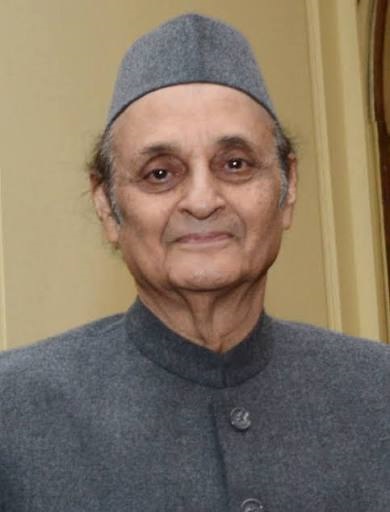
Introduction
Karan Singh is a distinguished Indian politician, diplomat, philosopher, and writer. He has made significant contributions to Indian public life, politics, culture, education, and environmental awareness. As the last ruling monarch of Jammu and Kashmir and later as a democratic leader, he played an important role in the political integration and development of the region. He is also known for promoting Indian philosophy, spirituality, and cultural values.
Early Life
Karan Singh was born into the Dogra royal family of Jammu and Kashmir. He was the son of Hari Singh, the last Maharaja of Jammu and Kashmir.
He grew up during a period of major political changes in India, including the events surrounding independence and the accession of Jammu and Kashmir to India. His early experiences shaped his interest in public service and national affairs.
Birth Date and Death
- Birth: 9 March 1931
- Birthplace: Cannes, France
- Death: Alive as of 2026
Education and Career
Karan Singh received his early education in India and later studied at the University of Delhi. He earned advanced degrees, including a Ph.D. in Political Science from the University of Delhi.
He began his public career at a young age. After his father signed the Instrument of Accession with India, Karan Singh became the Regent of Jammu and Kashmir and later served as the first Sadr-i-Riyasat (Head of State) of Jammu and Kashmir.
He later entered national politics and served in important positions in the Government of India.
Career and Achievements
Karan Singh has had a long and diverse career. His major achievements include:
- Serving as the first Sadr-i-Riyasat of Jammu and Kashmir (1952–1965).
- Serving as the Governor of Jammu and Kashmir (1965–1967).
- Serving as a Member of Parliament in both the Lok Sabha and Rajya Sabha.
- Holding important Union Minister positions, including responsibility for tourism, civil aviation, and health.
- Serving as India’s Ambassador to the United Nations Educational, Scientific and Cultural Organization (UNESCO).
- Promoting education, environmental protection, and cultural preservation.
- Establishing and supporting institutions related to philosophy, culture, and education.
Why Did Karan Singh Receive the Padma Vibhushan Award?
Karan Singh was awarded the Padma Vibhushan in 2005 for his exceptional contribution to public affairs.
He received this prestigious honour because of:
- His decades of dedicated service in Indian public life.
- His contributions to politics, governance, and diplomacy.
- His efforts to promote Indian culture, philosophy, and education.
- His work in environmental conservation and social development.
- His role in strengthening India’s democratic institutions.
Field of Achievements
Karan Singh has contributed significantly in various fields:
1. Politics and Governance
He played an important role in Indian politics and public administration for several decades.
2. Diplomacy
As India’s representative at international platforms, he promoted India’s cultural and diplomatic interests.
3. Education and Philosophy
He has written extensively on Indian philosophy, spirituality, and culture.
4. Environment and Social Service
He has supported environmental awareness and sustainable development initiatives.
5. Cultural Preservation
He has worked to protect and promote India’s rich heritage and traditions.
Awards and Honours
Karan Singh has received several prestigious recognitions, including:
- Padma Vibhushan (2005) – India’s second-highest civilian award.
- Padma Shri (1967) – awarded by the Government of India.
- Several honorary doctorates from universities in India and abroad.
- Recognition for contributions to culture, education, and public service.
Interesting Facts About Karan Singh
- He became the head of Jammu and Kashmir’s government at a very young age.
- He was the last ruling monarch of Jammu and Kashmir to hold constitutional authority.
- He is a scholar of Indian philosophy and spirituality.
- He has written many books and articles on culture, religion, and politics.
- He has been associated with environmental and educational initiatives.
- He is known for promoting dialogue between different cultures and religions.
Legacy and Inspiration
Karan Singh’s life represents a combination of leadership, scholarship, and public service. His journey from a royal background to a democratic leader demonstrates his ability to adapt to changing times and contribute to society.
His work in education, culture, diplomacy, and environmental awareness continues to inspire students, leaders, and social thinkers.
Contribution to the Nation
Karan Singh contributed to India by:
- Supporting the process of democratic development in Jammu and Kashmir.
- Serving the nation through political and administrative roles.
- Promoting Indian culture and philosophical traditions.
- Representing India internationally through diplomacy.
- Encouraging education, environmental awareness, and social harmony.
Conclusion
Karan Singh is a respected Indian statesman whose contributions extend beyond politics into culture, education, philosophy, and diplomacy. His lifelong commitment to public service and national development earned him the prestigious Padma Vibhushan award. Through his leadership, writings, and social initiatives, he continues to influence Indian public life and inspire future generations.
About the Author




