

1. Introduction
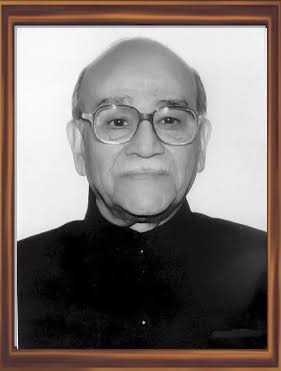
Kalyanji Vithalbhai Mehta (1890–1973) was an Indian freedom movement activist, social worker and politician from Gujarat. He played an important role in the political mobilisation of peasants in Gujarat and was associated with Mahatma Gandhi, the Kheda Satyagraha and the Bardoli movement.
He became particularly important in the development of nationalist political organisation in the Bardoli and Surat regions. Along with his brother Kunverji Vithalbhai Mehta, he worked for social reform, education and political awareness among rural communities. Historical research on the Bardoli movement describes the Mehta brothers as important organisers who helped create the groundwork for the later 1928 Bardoli Satyagraha led by Vallabhbhai Patel.
Kalyanji’s connection with Gandhi goes back to at least the 1910s. Gandhi’s collected correspondence identifies him as a Congress leader of Surat District. In 1918, Gandhi entrusted Kalyanji and Kunverji with work connected with investigating agricultural conditions during the Kheda Satyagraha.
After India’s independence, Kalyanji continued in public life. When Gujarat became a separate state on 1 May 1960, he became the first Speaker of the Gujarat Legislative Assembly, holding the position until 19 August 1960.
In recognition of his contribution to public and social life, he received the Padma Bhushan in 1967. The original Government of India notification described him as a Social Worker, Gujarat, while the current Padma Awards database places him under Literature and Education.
2. Quick Facts
| Particular | Information |
|---|---|
| Full Name | Kalyanji Vithalbhai Mehta |
| Popular Name | Kalyanji V. Mehta |
| Birth Year | 1890 |
| Death Year | 1973 |
| Place of Birth | Gujarat, Bombay Presidency, British India* |
| Nationality | Indian |
| Profession | Freedom fighter, social worker and politician |
| Political Affiliation | Indian National Congress |
| Main Field of Achievement | Social work, freedom movement and public life |
| Known For | Work in Kheda and Bardoli, political mobilisation in Gujarat |
| Major Political Office | First Speaker of Gujarat Legislative Assembly |
| Speaker’s Term | 1 May 1960 – 19 August 1960 |
| Major Award | Padma Bhushan |
| Award Year | 1967 |
| Award Field in Current Padma Database | Literature and Education |
| Original Gazette Description | Social Worker, Gujarat |
| Died | 1973 |
*The exact birthplace is not sufficiently established in the authoritative sources consulted, so it is better not to publish a specific village or town without an archival source.
The Gandhi Papers identify him as Kalyanji Vithalbhai Mehta, a Congress leader from Surat District.
3. Award Information
Padma Bhushan
Award Name
Padma Bhushan
Award Category
Literature and Education in the current Government of India’s searchable Padma Awards database.
Award Year
1967
Presented By
The award was conferred by the President of India. The 1967 notification was issued by the President’s Secretariat on 26 January 1967. At that time, Dr. Sarvepalli Radhakrishnan was President of India.
However, the notification date should not automatically be treated as the investiture/ceremony date.
Date of Ceremony
A reliable source establishing the exact date on which Kalyanji Vithalbhai Mehta physically received the Padma Bhushan could not be established from the sources consulted.
For a blog, it is safest to write:
Award announced: 26 January 1967
rather than inventing an investiture date.
Citation / Official Description
The original Gazette of India notification lists:
“Shri Kalyanji Vithalbhai Mehta, Social Worker, Gujarat.”
This is particularly useful for your blog because it gives the government’s contemporary description of his contribution.
Important Classification Note
There is a discrepancy worth mentioning.
The original 1967 Gazette notification describes Mehta as a Social Worker, while the current Government of India’s Padma Awards dashboard lists him under Literature and Education.
For historical accuracy, your article can mention both, rather than silently choosing one.
Previous Recipients
In the Padma Bhushan’s Literature and Education category, 1966 recipients included figures such as Jodh Singh, Haribhau Upadhyaya and Vinayak Sitaram Sarwate.
Next Recipients
Among the 1968 Padma Bhushan recipients in Literature and Education were Acharya Vishva Bandhu, K. Shivaram Karanth, Vishnu Sakharam Khandekar and others.
4. Why Did Kalyanji Vithalbhai Mehta Receive the Award?
Kalyanji Vithalbhai Mehta received the Padma Bhushan in 1967 in recognition of his long public service.
The original award notification identifies him specifically as a social worker from Gujarat.
His contribution developed over several decades and included:
- Participation in India’s freedom movement.
- Organisation of nationalist activities in Gujarat.
- Work among rural and agricultural communities.
- Contribution to the political mobilisation that preceded the Bardoli Satyagraha.
- Promotion of education and social reform.
- Association with Mahatma Gandhi’s constructive and political programmes.
- Public service after independence.
- Service as the first Speaker of the Gujarat Legislative Assembly.
Thus, his Padma Bhushan should be understood in the context of his long-term social and public service, rather than simply his brief tenure as Speaker.
5. Early Life
Kalyanji Vithalbhai Mehta was born in 1890 in Gujarat.
He belonged to the Leva Patidar community. His father, Vithalbhai Patel, was a policeman and was associated with the Arya Samaj, according to biographical accounts.
His younger brother Kunverji Vithalbhai Mehta also became an important political organiser in Gujarat.
The brothers became involved in nationalist politics at an early age. In 1907, Kalyanji and Kunverji attended the Indian National Congress session at Surat. During the famous Surat Split, they supported the extremist/nationalist wing associated with Bal Gangadhar Tilak.
This early experience helped shape Kalyanji’s political outlook and his later involvement in the freedom movement.
6. Education
Detailed records of Kalyanji Vithalbhai Mehta’s formal education are limited in the readily available authoritative sources.
Historical research does, however, indicate that education was an important part of the social and political programme developed by Kalyanji and his brother in the Bardoli region.
The brothers worked to increase political awareness and organisation among local communities. Their activities included constructive programmes and educational initiatives that helped prepare the region for later nationalist campaigns.
Important Note for Bloggers
Do not publish an exact school, college, degree or year of graduation unless you have an archival biography confirming it. Unlike many later politicians, Mehta’s educational details are not well documented in the sources currently available online.
7. Career Journey
Early Political Activism
Kalyanji became involved in nationalist politics during the early 20th century.
His participation in the 1907 Congress session at Surat demonstrated his early commitment to the nationalist movement.
Work with Mahatma Gandhi
By the 1910s, he had become a Congress organiser in Surat District.
Gandhi’s correspondence contains several references to him. A January 1917 letter from Gandhi was addressed to “Bhaishri Kalyanji Vithalbhai Mehta” at the Patel Bandhu Office in Surat. The document identifies him as a Congress leader of Surat District.
Another Gandhi correspondence record from 1917 shows that Gandhi was in contact with Kalyanji on matters including education and political resolutions.
Kheda Satyagraha
In 1918, Gandhi entrusted Kalyanji and Kunverji with investigating agricultural conditions and crop prices in connection with the Kheda Satyagraha.
The Kheda movement became one of the important early examples of Gandhian mass mobilisation against colonial revenue policies.
Bardoli Organisation
Kalyanji and Kunverji became important organisers in Bardoli.
Their work predated the famous Bardoli Satyagraha of 1928. Historical scholarship describes the brothers as having helped build the political and social organisation that made the later mass movement possible.
They helped organise local communities and develop political consciousness among agricultural groups.
Bardoli Satyagraha
When the Bombay Presidency government increased land revenue in Bardoli, local leaders sought assistance from Vallabhbhai Patel.
Kalyanji and Kunverji were among those who approached Patel and helped establish the organisational groundwork for the campaign.
The Bardoli Satyagraha became one of the most successful mass movements of the Indian freedom struggle.
Public Life After Independence
After independence, Kalyanji continued his public career.
When Gujarat became a separate state on 1 May 1960, Kalyanji V. Mehta became the first Speaker of the Gujarat Legislative Assembly. His tenure lasted until 19 August 1960.
Although his tenure as Speaker was short, the position was historically significant because he was the first person to occupy that constitutional office in the newly formed state.
8. Major Achievements
Kalyanji Vithalbhai Mehta’s major achievements include:
- Participating in nationalist politics from the early 20th century.
- Supporting Bal Gangadhar Tilak during the 1907 Surat Congress split.
- Becoming a Congress leader in Surat District.
- Working in connection with the Kheda Satyagraha of 1918.
- Helping organise nationalist activity in the Bardoli region.
- Helping create the groundwork for the Bardoli Satyagraha of 1928.
- Working for rural social and political mobilisation.
- Serving as the first Speaker of the Gujarat Legislative Assembly.
- Receiving the Padma Bhushan in 1967.
9. Contribution to the Nation
Contribution to the Freedom Movement
Kalyanji’s most important contribution was his work in the Indian independence movement.
Rather than being remembered only for holding a political office after independence, he had already spent decades working for nationalist causes.
His association with Gandhi and the Congress movement connected him to some of the most important political campaigns in Gujarat.
Contribution to Peasant Mobilisation
Kalyanji and Kunverji played an important role in organising rural communities in the Bardoli region.
Their work helped establish the social and political networks later used during the 1928 Bardoli Satyagraha. Academic research has described the two brothers as major local organisers in the development of Bardoli’s nationalist politics.
Contribution to Social Reform
The original Padma Bhushan notification’s description of Kalyanji as a “Social Worker” reflects the broader nature of his public service.
His activities extended beyond electoral politics into education, community organisation and rural mobilisation.
Contribution to Gujarat’s Parliamentary Institutions
As the first Speaker of the Gujarat Legislative Assembly, he helped establish the traditions and procedures of the newly created state’s legislature.
10. Other Awards and Honours
Padma Bhushan – 1967
The most important national honour associated with Kalyanji Vithalbhai Mehta is the Padma Bhushan, awarded in 1967.
The original Gazette described him as:
Social Worker, Gujarat.
The current Padma database categorises the award under Literature and Education.
First Speaker of Gujarat Legislative Assembly
Although not an award, this is one of his most important constitutional honours. He became the first Speaker of the Gujarat Legislative Assembly when Gujarat was formed as a separate state in 1960.
11. Legacy and Influence
Kalyanji Vithalbhai Mehta’s legacy is closely connected with the freedom movement in Gujarat.
His historical importance lies partly in the fact that his work began well before the famous Bardoli Satyagraha. Together with Kunverji, he helped develop political organisation and social networks among the people of Bardoli.
The Bardoli movement is generally associated with Vallabhbhai Patel, who led the 1928 Satyagraha. However, the organisational groundwork created by local leaders such as Kalyanji and Kunverji was important to the movement’s success.
His later role as Gujarat’s first Assembly Speaker adds another dimension to his legacy: he moved from the anti-colonial political struggle to institution-building in independent India.
The Padma Bhushan recognition in 1967 further cemented his reputation as a public servant.
12. Interesting Facts
1. He was the first Speaker of Gujarat
Kalyanji V. Mehta became the first Speaker of the Gujarat Legislative Assembly when the state was created on 1 May 1960.
2. He entered politics very young
He and his brother Kunverji attended the 1907 Congress session at Surat.
3. He supported Bal Gangadhar Tilak
During the Surat Split, the brothers supported Tilak’s side of the Congress.
4. Gandhi personally corresponded with him
The Gandhi Papers preserve letters addressed to Kalyanji Vithalbhai Mehta from the 1910s.
5. He was involved before the Bardoli Satyagraha
His work in Bardoli began before Vallabhbhai Patel led the famous 1928 campaign.
6. His Padma Bhushan record has an interesting classification
The original 1967 Gazette describes him as a Social Worker, while the current Padma database places him under Literature and Education.
7. His Padma Bhushan was awarded in the same year as several famous Indians
The 1967 Padma Bhushan list also included personalities such as Mulk Raj Anand, Ravi Shankar, Ramanathan Krishnan, Mihir Sen and Ali Akbar Khan.
13. Quotes
There are very few reliably sourced direct quotations from Kalyanji Vithalbhai Mehta available online.
For a factual biography, it is better not to create or attribute motivational quotations to him without a primary source.
However, Gandhi’s correspondence provides documentary evidence of their communication. For example, Gandhi addressed him in a 1917 letter as “Bhaishri Kalyanji Vithalbhai Mehta.”
For your blog, you can use a descriptive line instead of a fabricated quotation:
“Kalyanji Vithalbhai Mehta devoted his life to social service, rural mobilisation and India’s freedom movement.”
This should be presented as your own description, not as a quotation from Mehta.
14. Timeline
| Year | Event |
| 1890 | Born in Gujarat |
| 1907 | Attended the Indian National Congress session at Surat with his brother Kunverji |
| 1907 | Supported Bal Gangadhar Tilak during the Surat Split |
| 1917 | Corresponded with Mahatma Gandhi on political and educational matters |
| 1918 | Worked in connection with the Kheda Satyagraha |
| 1920s | Continued political and social organisation in Gujarat |
| 1928 | Helped create the organisational groundwork for the Bardoli Satyagraha |
| 1928 | Worked with local leaders associated with the Bardoli campaign |
| 1947 | India became independent; Mehta continued in public life |
| 1 May 1960 | Became the first Speaker of the Gujarat Legislative Assembly |
| 19 August 1960 | Completed his term as Gujarat Assembly Speaker |
| 26 January 1967 | Padma Bhushan announced by the President of India |
| 1967 | Received national recognition as a Padma Bhushan awardee |
| 1973 | Died |
The 1907, 1917 and 1918 milestones are supported by historical Gandhi records, while the Speaker dates are documented in the historical list of Gujarat Assembly Speakers.
15. References
1. Government of India – Padma Awards
The official Padma Awards database lists Shri Kalyanji Vithalbhai Mehta – Padma Bhushan (1967) – Gujarat and currently categorises him under Literature and Education.
2. 1967 Gazette of India
The original Presidential notification is particularly valuable because it identifies him as:
“Shri Kalyanji Vithalbhai Mehta, Social Worker, Gujarat.”
3. Gandhi Papers / Gandhipedia
The collected works of Mahatma Gandhi contain correspondence with Kalyanji Vithalbhai Mehta and identify him as a Congress leader of Surat District.
4. Gandhi correspondence, 1918
A Gandhi document records Kalyanji’s connection with the work surrounding the Kheda Satyagraha period.
5. Historical research on Bardoli
Academic research on the Bardoli Satyagraha identifies Kalyanji and Kunverji Mehta as important local organisers who helped create the groundwork for the 1928 movement.
6. Gujarat Legislative Assembly Speaker list
Historical records list Kalyanji V. Mehta as the first Speaker of the Gujarat Legislative Assembly, serving from 1 May 1960 to 19 August 1960.
16. Related Personalities
Mahatma Gandhi
Gandhi worked closely with many Gujarat-based Congress organisers, including Kalyanji Mehta. His correspondence with Mehta dates back to the 1910s.
Vallabhbhai Patel
Patel led the 1928 Bardoli Satyagraha. Kalyanji and Kunverji Mehta were among the local organisers who helped build the political groundwork for the campaign.
Kunverji Vithalbhai Mehta
Kalyanji’s brother and close political associate. Together they helped organise nationalist activities in Bardoli and Gujarat.
Bal Gangadhar Tilak
Kalyanji and Kunverji supported Tilak during the 1907 Surat Split of the Indian National Congress.
Vithalbhai Patel
Vithalbhai Patel was a prominent nationalist and the first elected President/Speaker of the Central Legislative Assembly. He should not be confused with Kalyanji Vithalbhai Mehta, despite the similarity in names.
Mahadev Desai
Gandhi’s close associate and secretary, who was deeply involved in the documentation and organisation of Gandhian campaigns, including Bardoli.
17. Frequently Asked Questions (FAQ)
Who was Kalyanji Vithalbhai Mehta?
Kalyanji Vithalbhai Mehta was an Indian freedom movement activist, social worker and politician from Gujarat. He was associated with Mahatma Gandhi’s political work and later became the first Speaker of the Gujarat Legislative Assembly.
When was Kalyanji Vithalbhai Mehta born?
He was born in 1890.
When did Kalyanji Vithalbhai Mehta die?
He died in 1973.
What was Kalyanji Vithalbhai Mehta famous for?
He is best remembered for his role in Gujarat’s freedom movement, his work in the Kheda and Bardoli regions, his association with Gandhi, and his service as the first Speaker of the Gujarat Legislative Assembly.
Was Kalyanji Vithalbhai Mehta involved in the Bardoli Satyagraha?
Yes. Kalyanji and his brother Kunverji were important local organisers whose earlier work helped create the political and social conditions for the 1928 Bardoli Satyagraha.
What was his connection with Mahatma Gandhi?
Kalyanji was a Congress leader in Surat District and corresponded with Gandhi from at least the 1910s. Gandhi also entrusted Kalyanji and Kunverji with work connected with the Kheda Satyagraha in 1918.
Who was the first Speaker of the Gujarat Legislative Assembly?
Kalyanji V. Mehta was the first Speaker. He served from 1 May 1960 to 19 August 1960.
Which award did Kalyanji Vithalbhai Mehta receive?
He received the Padma Bhushan in 1967.
In which field did he receive the Padma Bhushan?
The current Government of India Padma database lists his field as Literature and Education.
Why does the original award notification call him a social worker?
The original 1967 Gazette of India notification describes him as “Social Worker, Gujarat.” This reflects the contemporary official description of his contribution.
Is Kalyanji Vithalbhai Mehta the same person as Vithalbhai Patel?
No. They were different people. Vithalbhai Patel was a major nationalist leader and parliamentary figure, whereas Kalyanji Vithalbhai Mehta was a Gujarat-based freedom movement organiser, social worker and later the first Speaker of the Gujarat Assembly.
What was Kalyanji Mehta’s contribution to India’s independence?
His major contribution was grassroots political and social mobilisation in Gujarat, particularly in the Kheda and Bardoli regions. His work helped build the local organisation that supported later Gandhian movements.
Did Kalyanji Mehta receive the Padma Shri?
No. He received the Padma Bhushan, which is a higher Padma award category. The official 1967 notification lists him among the Padma Bhushan recipients.
Conclusion
Kalyanji Vithalbhai Mehta was an important but relatively less-known figure in the history of India’s freedom movement and Gujarat’s political development.
His public career stretched from the nationalist politics of the early 20th century to the establishment of democratic institutions in independent Gujarat. His work with rural communities and his association with Gandhi helped strengthen the organisational foundations of Gujarat’s freedom movement.
His contribution is especially significant in the history of the Bardoli Satyagraha, where local organisation was essential to the success of Vallabhbhai Patel’s 1928 campaign.
After independence, Mehta entered the new constitutional order and became the first Speaker of the Gujarat Legislative Assembly. His long public service was recognised by the Government of India with the Padma Bhushan in 1967.
For a blog, the most accurate way to describe him is therefore:
“Kalyanji Vithalbhai Mehta was a Gujarat freedom movement leader, social worker and politician who helped organise nationalist activities in Kheda and Bardoli, later becoming the first Speaker of the Gujarat Legislative Assembly and a 1967 Padma Bhushan awardee.”
About the Author